

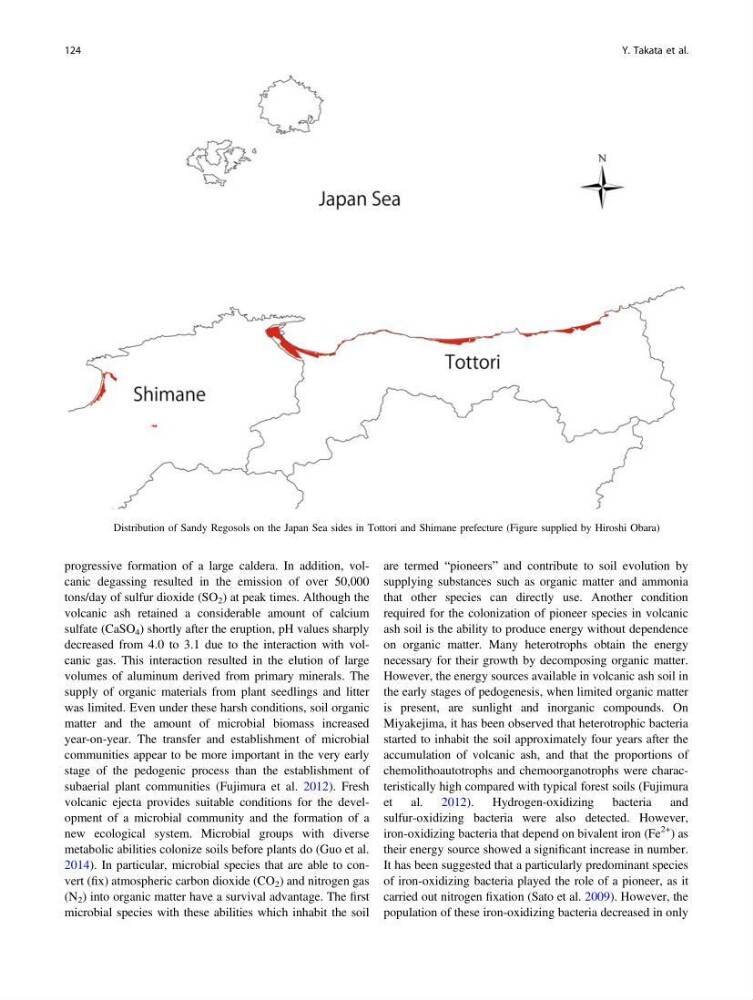
Fig. 4.53 Distribution of Sandy Regosols on the Japan Sea sides in Tottori and Shimane prefecture (Figure supplied by Hiroshi Obara)
progressive formation of a large caldera. In addition, volcanic degassing resulted in the emission of over 50,000
tons/day of sulfur dioxide (SO 2 ) at peak times. Although the
volcanic ash retained a considerable amount of calcium
sulfate (CaSO 4 ) shortly after the eruption, pH values sharply
decreased from 4.0 to 3.1 due to the interaction with volcanic gas. This interaction resulted in the elution of large
volumes of aluminum derived from primary minerals. The
supply of organic materials from plant seedlings and litter
was limited. Even under these harsh conditions, soil organic
matter and the amount of microbial biomass increased
year-on-year. The transfer and establishment of microbial
communities appear to be more important in the very early
stage of the pedogenic process than the establishment of
subaerial plant communities (Fujimura et al. 2012). Fresh
volcanic ejecta provides suitable conditions for the development of a microbial community and the formation of a
new ecological system. Microbial groups with diverse
metabolic abilities colonize soils before plants do (Guo et al.
2014). In particular, microbial species that are able to convert (fix) atmospheric carbon dioxide (CO 2 ) and nitrogen gas
(N 2 ) into organic matter have a survival advantage. The first
microbial species with these abilities which inhabit the soil
are termed “pioneers” and contribute to soil evolution by
supplying substances such as organic matter and ammonia
that other species can directly use. Another condition
required for the colonization of pioneer species in volcanic
ash soil is the ability to produce energy without dependence
on organic matter. Many heterotrophs obtain the energy
necessary for their growth by decomposing organic matter.
However, the energy sources available in volcanic ash soil in
the early stages of pedogenesis, when limited organic matter
is present, are sunlight and inorganic compounds. On
Miyakejima, it has been observed that heterotrophic bacteria
started to inhabit the soil approximately four years after the
accumulation of volcanic ash, and that the proportions of
chemolithoautotrophs and chemoorganotrophs were characteristically high compared with typical forest soils (Fujimura
et al. 2012). Hydrogen-oxidizing bacteria and
sulfur-oxidizing bacteria were also detected. However,
iron-oxidizing bacteria that depend on bivalent iron (Fe
2+ ) as
their energy source showed a significant increase in number.
It has been suggested that a particularly predominant species
of iron-oxidizing bacteria played the role of a pioneer, as it
carried out nitrogen fixation (Sato et al. 2009). However, the
population of these iron-oxidizing bacteria decreased in only
124
Y. Takata et al.
progressive formation of a large caldera. In addition, volcanic degassing resulted in the emission of over 50,000
tons/day of sulfur dioxide (SO 2 ) at peak times. Although the
volcanic ash retained a considerable amount of calcium
sulfate (CaSO 4 ) shortly after the eruption, pH values sharply
decreased from 4.0 to 3.1 due to the interaction with volcanic gas. This interaction resulted in the elution of large
volumes of aluminum derived from primary minerals. The
supply of organic materials from plant seedlings and litter
was limited. Even under these harsh conditions, soil organic
matter and the amount of microbial biomass increased
year-on-year. The transfer and establishment of microbial
communities appear to be more important in the very early
stage of the pedogenic process than the establishment of
subaerial plant communities (Fujimura et al. 2012). Fresh
volcanic ejecta provides suitable conditions for the development of a microbial community and the formation of a
new ecological system. Microbial groups with diverse
metabolic abilities colonize soils before plants do (Guo et al.
2014). In particular, microbial species that are able to convert (fix) atmospheric carbon dioxide (CO 2 ) and nitrogen gas
(N 2 ) into organic matter have a survival advantage. The first
microbial species with these abilities which inhabit the soil
are termed “pioneers” and contribute to soil evolution by
supplying substances such as organic matter and ammonia
that other species can directly use. Another condition
required for the colonization of pioneer species in volcanic
ash soil is the ability to produce energy without dependence
on organic matter. Many heterotrophs obtain the energy
necessary for their growth by decomposing organic matter.
However, the energy sources available in volcanic ash soil in
the early stages of pedogenesis, when limited organic matter
is present, are sunlight and inorganic compounds. On
Miyakejima, it has been observed that heterotrophic bacteria
started to inhabit the soil approximately four years after the
accumulation of volcanic ash, and that the proportions of
chemolithoautotrophs and chemoorganotrophs were characteristically high compared with typical forest soils (Fujimura
et al. 2012). Hydrogen-oxidizing bacteria and
sulfur-oxidizing bacteria were also detected. However,
iron-oxidizing bacteria that depend on bivalent iron (Fe
2+ ) as
their energy source showed a significant increase in number.
It has been suggested that a particularly predominant species
of iron-oxidizing bacteria played the role of a pioneer, as it
carried out nitrogen fixation (Sato et al. 2009). However, the
population of these iron-oxidizing bacteria decreased in only
124
Y. Takata et al.