

4.10 Regosols
4.10.1 Volcanogenous Regosols
Japan has one of the highest concentrations of active volcanoes in the world. Its 111 active volcanoes, which cover
less than 0.3% of the global subaerial land area, account for
10% of the world’s currently active volcanoes. The ejecta
from volcanoes are important parent materials for regenerating soils in Japan. In recent years, several Japanese volcanoes have erupted, including Mt. Usu (2000), Miyakejima
(2000), Shinmoedake (2011 and 2018), and Mt. Ontake
(2014). Initial soil formation (early stage of pedogenesis) has
begun in sites of recent ejecta deposition with vegetation
recovery. A very weakly developed soil pedon observed in
some ejecta deposits means that such deposits can be classified as Volcanogenous Regosols. The formation of active
Al and Fe compounds in tandem with the cumulation of
organic matter in volcanic ash soils is termed “andosolization” (Duchaufouur 1977). Soils having a developed A
horizon (with regosolic andic soil properties) from andosolization are classified as Regosolic Andosols. In this
section, the initial soil-forming process of Volcanogenous
Regosols is reported.
In general, observations of the initial soil formation
process are very difficult to obtain in the field. However,
such observations are possible to obtain in Miyakejima
(Miyake Island), a volcanic island. This island has erupted
several times in the last 100 years, making it an ideal
experimental field location for documenting soil formation
from volcanic ejecta over time (Kato et al. 2005).
(1) Early-stage pedogenesis resulting from scoria
Miyakejima is a volcanic island on the Philippine Plate
located approximately 180 km southwest of central Tokyo.
The island is characterized by a humid warm temperate
climate. The mean annual air temperature is 17.7 °C, and the
mean annual precipitation is 2954 mm as of 2018.
Miyakejima volcano erupted in 1874, 1940, 1962, 1983, and
2000. Activity prior to the 2000 eruption displayed an
eruption style characteristic of basaltic magmas. As seen at
Kilauea Volcano, Hawaii, basaltic magma released into the
atmosphere fragments and forms scoria as dissolved gas
escapes from individual globules. The accumulation of
scoria forms a unique geographical surface, shaped like an
inverted bowl, that is known as a “scoria cone.” At
Miyakejima, scoria cones of different eruption ages exist in
isolation from one another. Each of these cones has the
capacity to act as a growth medium for seeds dispersed from
surrounding forests. Although local seed dispersal occurs on
a yearly basis, no plants have ever grown on the youngest
(1983) scoria cone. In contrast, perennial plants (Fallopia
japonica var., Miscanthus condensatus) have formed communities on the 1940 and 1962 scoria cones, and
deciduous/evergreen broad-leaved mixed forests (Alnus sieboldiana Matsum., Machilus thunbergi) have formed on the
oldest (1874) scoria cone. Thus, plant succession can be
observed at Miyakejima. In essence, Miyakejima was an
experimental field area prior to the 2000 eruption, where soil
formation factors, topography, parent material, and climate
were similar, and only plants varied over time.
On Miyakejima, soils developed on the eruption products
include a variety of profile morphologies (Fig. 4.51), a
well-developed A horizon over the C horizon (A/C type) and
lack an A horizon type (only consisted from C horizons). The
particle size of scoriaceous material in these soils decreased
through the initial soil formation process during the 125-year
period. The decrease in the particle size of scoriaceous material
is a result of soil weathering. Additionally, the length of plant
roots and the thickness of the A layer both increase with an
increase in the number of roots. Transition of mixed forests has
also taken place on Miyakejima. However, even for deposits of
the 1874 scoria, the development of a distinct soil B horizon is
not observed. As plant succession proceeds in older deposits,
the amount of soil organic matter, CEC, and the amount of
exchangeable bases increases (Fig. 4.51). However, the formation of secondary clay minerals is not observed in this site. The
increase in CEC is largely associated with the amount of soil
organic matter accumulation. The CEC and the amounts of
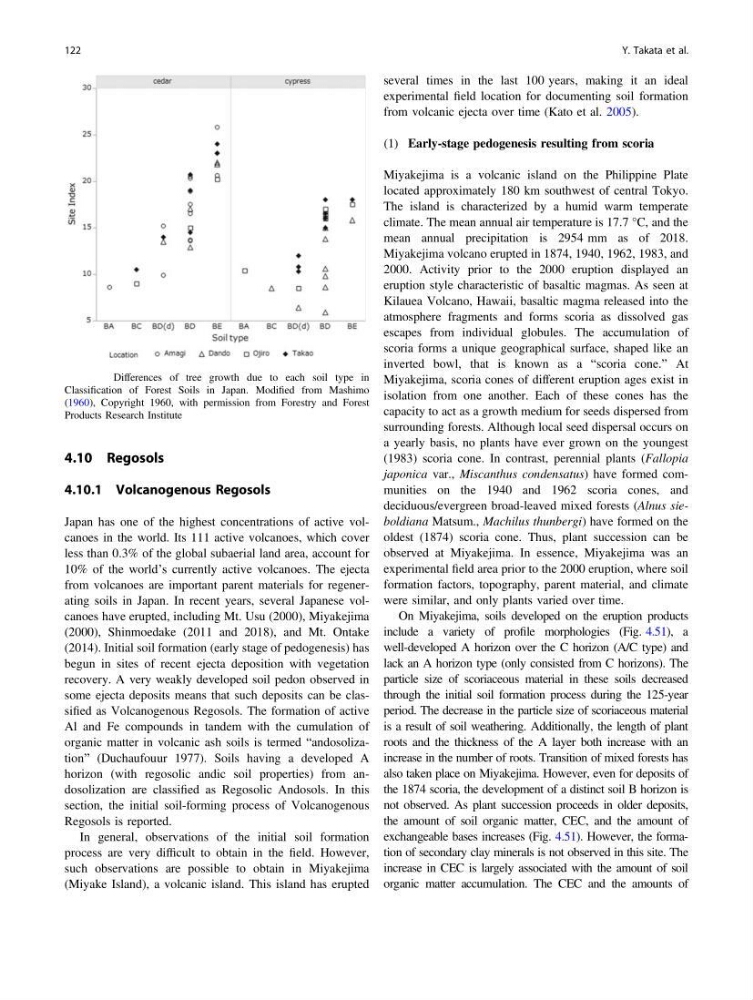
Fig. 4.50 Differences of tree growth due to each soil type in
Classification of Forest Soils in Japan. Modified from Mashimo
(1960), Copyright 1960, with permission from Forestry and Forest
Products Research Institute
122
Y. Takata et al.
4.10.1 Volcanogenous Regosols
Japan has one of the highest concentrations of active volcanoes in the world. Its 111 active volcanoes, which cover
less than 0.3% of the global subaerial land area, account for
10% of the world’s currently active volcanoes. The ejecta
from volcanoes are important parent materials for regenerating soils in Japan. In recent years, several Japanese volcanoes have erupted, including Mt. Usu (2000), Miyakejima
(2000), Shinmoedake (2011 and 2018), and Mt. Ontake
(2014). Initial soil formation (early stage of pedogenesis) has
begun in sites of recent ejecta deposition with vegetation
recovery. A very weakly developed soil pedon observed in
some ejecta deposits means that such deposits can be classified as Volcanogenous Regosols. The formation of active
Al and Fe compounds in tandem with the cumulation of
organic matter in volcanic ash soils is termed “andosolization” (Duchaufouur 1977). Soils having a developed A
horizon (with regosolic andic soil properties) from andosolization are classified as Regosolic Andosols. In this
section, the initial soil-forming process of Volcanogenous
Regosols is reported.
In general, observations of the initial soil formation
process are very difficult to obtain in the field. However,
such observations are possible to obtain in Miyakejima
(Miyake Island), a volcanic island. This island has erupted
several times in the last 100 years, making it an ideal
experimental field location for documenting soil formation
from volcanic ejecta over time (Kato et al. 2005).
(1) Early-stage pedogenesis resulting from scoria
Miyakejima is a volcanic island on the Philippine Plate
located approximately 180 km southwest of central Tokyo.
The island is characterized by a humid warm temperate
climate. The mean annual air temperature is 17.7 °C, and the
mean annual precipitation is 2954 mm as of 2018.
Miyakejima volcano erupted in 1874, 1940, 1962, 1983, and
2000. Activity prior to the 2000 eruption displayed an
eruption style characteristic of basaltic magmas. As seen at
Kilauea Volcano, Hawaii, basaltic magma released into the
atmosphere fragments and forms scoria as dissolved gas
escapes from individual globules. The accumulation of
scoria forms a unique geographical surface, shaped like an
inverted bowl, that is known as a “scoria cone.” At
Miyakejima, scoria cones of different eruption ages exist in
isolation from one another. Each of these cones has the
capacity to act as a growth medium for seeds dispersed from
surrounding forests. Although local seed dispersal occurs on
a yearly basis, no plants have ever grown on the youngest
(1983) scoria cone. In contrast, perennial plants (Fallopia
japonica var., Miscanthus condensatus) have formed communities on the 1940 and 1962 scoria cones, and
deciduous/evergreen broad-leaved mixed forests (Alnus sieboldiana Matsum., Machilus thunbergi) have formed on the
oldest (1874) scoria cone. Thus, plant succession can be
observed at Miyakejima. In essence, Miyakejima was an
experimental field area prior to the 2000 eruption, where soil
formation factors, topography, parent material, and climate
were similar, and only plants varied over time.
On Miyakejima, soils developed on the eruption products
include a variety of profile morphologies (Fig. 4.51), a
well-developed A horizon over the C horizon (A/C type) and
lack an A horizon type (only consisted from C horizons). The
particle size of scoriaceous material in these soils decreased
through the initial soil formation process during the 125-year
period. The decrease in the particle size of scoriaceous material
is a result of soil weathering. Additionally, the length of plant
roots and the thickness of the A layer both increase with an
increase in the number of roots. Transition of mixed forests has
also taken place on Miyakejima. However, even for deposits of
the 1874 scoria, the development of a distinct soil B horizon is
not observed. As plant succession proceeds in older deposits,
the amount of soil organic matter, CEC, and the amount of
exchangeable bases increases (Fig. 4.51). However, the formation of secondary clay minerals is not observed in this site. The
increase in CEC is largely associated with the amount of soil
organic matter accumulation. The CEC and the amounts of
Fig. 4.50 Differences of tree growth due to each soil type in
Classification of Forest Soils in Japan. Modified from Mashimo
(1960), Copyright 1960, with permission from Forestry and Forest
Products Research Institute
122
Y. Takata et al.