

soils, according to the water condition; the former occurs in
wetter conditions than the latter. Pseudogley soils are divided into three subgroups, Aeric Pseudogley soil, Haplic
Pseudogley soil, and groundwater–aquic soil, according to
the groundwater status. The Aeric subgroup is more oxidized
than the Haplic subgroup, while the groundwater–aquic
subgroup has a gley layer in the subsoil and is more
reductive than the Haplic subgroup. Stagnogley soils are
divided into two subgroups, Epi-peaty Stagnogley soil and
Haplic Stagnogley soil, according to the water condition; the
groundwater level of the Epi-peaty subgroup, which has a
peat layer on the surface, is shallower than that of the Haplic
subgroup (Fig. 4.40).
The ascending sequence from freely to poorly drained for
the aforementioned soils is as follows: Haplic Brown Forest
soils, Aquic Brown Forest soils, Aeric Pseudogley soils,
Haplic Pseudogley soils, groundwater–aquic Pseudogley
soils, Haplic Stagnogley soils, Epi-peaty Stagnogley soils,
and Peat soils. These soils are distributed in a complex
manner according to the water condition in the terrace.
4.8 Eutrosols
A “Eutrosol” is a soil with a high base saturation, that is,
with a eutric condition. Eutrosol is a unique and uncommon
soil name: As far as we know, this term is used only by the
Japanese soil classification system.
4.8.1 Genesis and Characteristics
After the end of World War II, as national soil surveys progressed in Japan, the presence of dark red-colored soils and
soils with high base saturation were reported. The term “dark
red soil” was first reported by Takehara in 1961, who named
the soil on the Ryukyu limestone in Iriomote Island as “calcareous dark red soil” (Takehara 1961). In 1966, in a soil
survey in Kochi Prefecture, soils derived from serpentinite or
limestone were morphologically named as “dark red soil,” so
as to distinguish them from “red soil.” Dark red-colored soil
was also found on hydrothermally altered igneous rocks. This
type of soil is usually strongly acidic and has a low base
saturation. After that, the “dark red soil” soil group was
established in the “Classification of Forest Soil in Japan
(1975)” (Forest Soils Division 1976) and was subdivided into
three subgroups such as Eutric, Dystric, and Volcanogenous.
The term “dark red soil” has been widely used since the
“Classification of Cultivated Soils in Japan, Third Approximation” (Cultivated Soil Classification Committee 1995).
Soils termed “dark red soil” generally show high base
saturation, although some do not. Furthermore, soils can be
classified into this soil group even if they are not dark red in
color; for example, this was the case for the aforementioned
soil from the Ryukyu limestone. This causes confusion in the
application of the soil classification system. The Fifth Committee for Soil Classification and Nomenclature of the Japanese Society of Pedology has been discussing changes in Soil
Classification System of Japan and has reviewed the classification of “dark red soil” and related soils distributed in the
country. Considering that these soils contain non-dark-reddish
soil with a Eutric condition, the committee decided that it was
better to prioritize not soil color but rather Eutric condition
and did not adopt “dark red soil” as a soil name. Eutrosols
were finally established as a new soil great group (The Fifth
Committee for Soil Classification and Nomenclature 2017).
4.8.2 Classification
The general properties of Eutrosols are the presence of either
a Cambic horizon or Argic horizon whose base saturation of
the subsurface horizon is more than 50%. In the case of
agricultural land, Eutrosols should not require acidity correction measures such as lime application. The criteria of
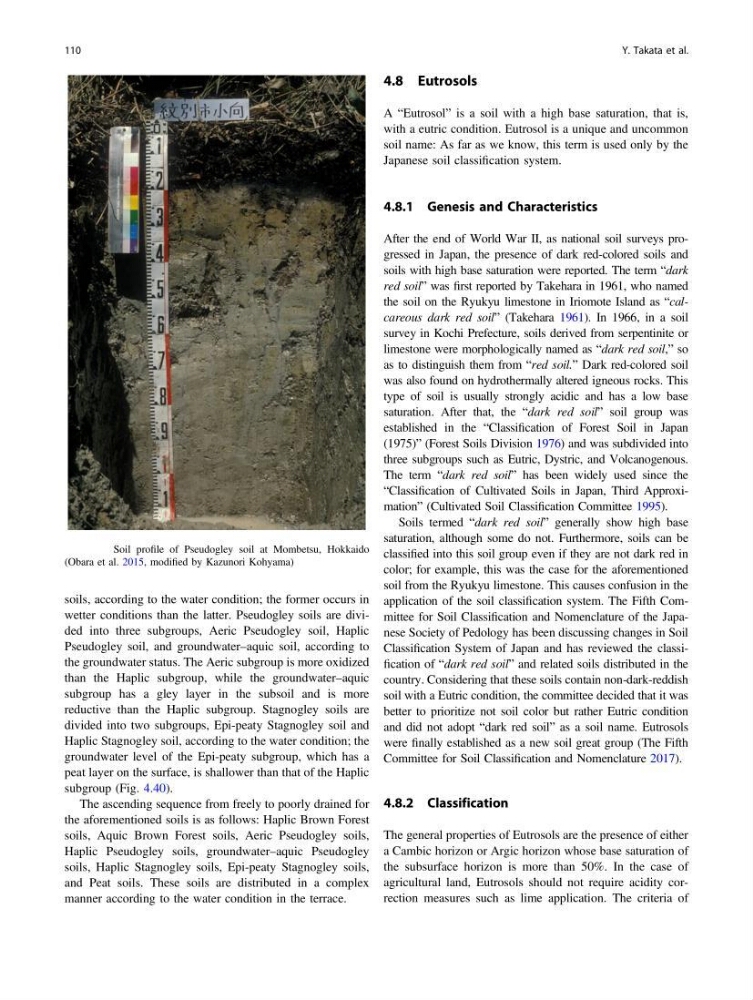
Fig. 4.39 Soil profile of Pseudogley soil at Mombetsu, Hokkaido
(Obara et al. 2015, modified by Kazunori Kohyama)
110
Y. Takata et al.
wetter conditions than the latter. Pseudogley soils are divided into three subgroups, Aeric Pseudogley soil, Haplic
Pseudogley soil, and groundwater–aquic soil, according to
the groundwater status. The Aeric subgroup is more oxidized
than the Haplic subgroup, while the groundwater–aquic
subgroup has a gley layer in the subsoil and is more
reductive than the Haplic subgroup. Stagnogley soils are
divided into two subgroups, Epi-peaty Stagnogley soil and
Haplic Stagnogley soil, according to the water condition; the
groundwater level of the Epi-peaty subgroup, which has a
peat layer on the surface, is shallower than that of the Haplic
subgroup (Fig. 4.40).
The ascending sequence from freely to poorly drained for
the aforementioned soils is as follows: Haplic Brown Forest
soils, Aquic Brown Forest soils, Aeric Pseudogley soils,
Haplic Pseudogley soils, groundwater–aquic Pseudogley
soils, Haplic Stagnogley soils, Epi-peaty Stagnogley soils,
and Peat soils. These soils are distributed in a complex
manner according to the water condition in the terrace.
4.8 Eutrosols
A “Eutrosol” is a soil with a high base saturation, that is,
with a eutric condition. Eutrosol is a unique and uncommon
soil name: As far as we know, this term is used only by the
Japanese soil classification system.
4.8.1 Genesis and Characteristics
After the end of World War II, as national soil surveys progressed in Japan, the presence of dark red-colored soils and
soils with high base saturation were reported. The term “dark
red soil” was first reported by Takehara in 1961, who named
the soil on the Ryukyu limestone in Iriomote Island as “calcareous dark red soil” (Takehara 1961). In 1966, in a soil
survey in Kochi Prefecture, soils derived from serpentinite or
limestone were morphologically named as “dark red soil,” so
as to distinguish them from “red soil.” Dark red-colored soil
was also found on hydrothermally altered igneous rocks. This
type of soil is usually strongly acidic and has a low base
saturation. After that, the “dark red soil” soil group was
established in the “Classification of Forest Soil in Japan
(1975)” (Forest Soils Division 1976) and was subdivided into
three subgroups such as Eutric, Dystric, and Volcanogenous.
The term “dark red soil” has been widely used since the
“Classification of Cultivated Soils in Japan, Third Approximation” (Cultivated Soil Classification Committee 1995).
Soils termed “dark red soil” generally show high base
saturation, although some do not. Furthermore, soils can be
classified into this soil group even if they are not dark red in
color; for example, this was the case for the aforementioned
soil from the Ryukyu limestone. This causes confusion in the
application of the soil classification system. The Fifth Committee for Soil Classification and Nomenclature of the Japanese Society of Pedology has been discussing changes in Soil
Classification System of Japan and has reviewed the classification of “dark red soil” and related soils distributed in the
country. Considering that these soils contain non-dark-reddish
soil with a Eutric condition, the committee decided that it was
better to prioritize not soil color but rather Eutric condition
and did not adopt “dark red soil” as a soil name. Eutrosols
were finally established as a new soil great group (The Fifth
Committee for Soil Classification and Nomenclature 2017).
4.8.2 Classification
The general properties of Eutrosols are the presence of either
a Cambic horizon or Argic horizon whose base saturation of
the subsurface horizon is more than 50%. In the case of
agricultural land, Eutrosols should not require acidity correction measures such as lime application. The criteria of
Fig. 4.39 Soil profile of Pseudogley soil at Mombetsu, Hokkaido
(Obara et al. 2015, modified by Kazunori Kohyama)
110
Y. Takata et al.