

(Fig. 4.26). This acidity can induce the eluviation of Al and
Fe from the E horizon. Proton consumption due to the
mineralization or sorption of organic acids and nitrate uptake
by plants in the Bs horizon results in the precipitation of Al
and Fe and the illuviation of SRO minerals.
Podzolization also affects the composition of crystalline
clay minerals. In Japan, hydroxyl-interlayered vermiculite is
common in silicate clays produced through the weathering
of mica (originating from bedrock or aeolian dust). Intensive
acidification by organic acids drives the release of interlayered Al from the hydroxyl-interlayered vermiculite and the
further weathering of vermiculite to smectite in the E horizon. In the Bs horizons, the high concentrations of Al in soil
solution can support the Al-interlayering of vermiculite or
the stability of hydroxyl-interlayered vermiculite (Funakawa
et al. 1992; Kitagawa 2005).
4.4.5 Soil-Forming Factors Affecting
Podzolization
Time: Most Podzols in the Northern Hemisphere were formed
after the ice sheets began to retreat around ten thousand years
ago. Among soil-forming processes, podzolization is relatively
fast. Podzol formation requires at most hundreds of years in
the case of sandy parent materials. Erosion and the input of
volcanic ash and aeolian dust initializes soil formation. Podzols may have been formed from volcanic ash deposited
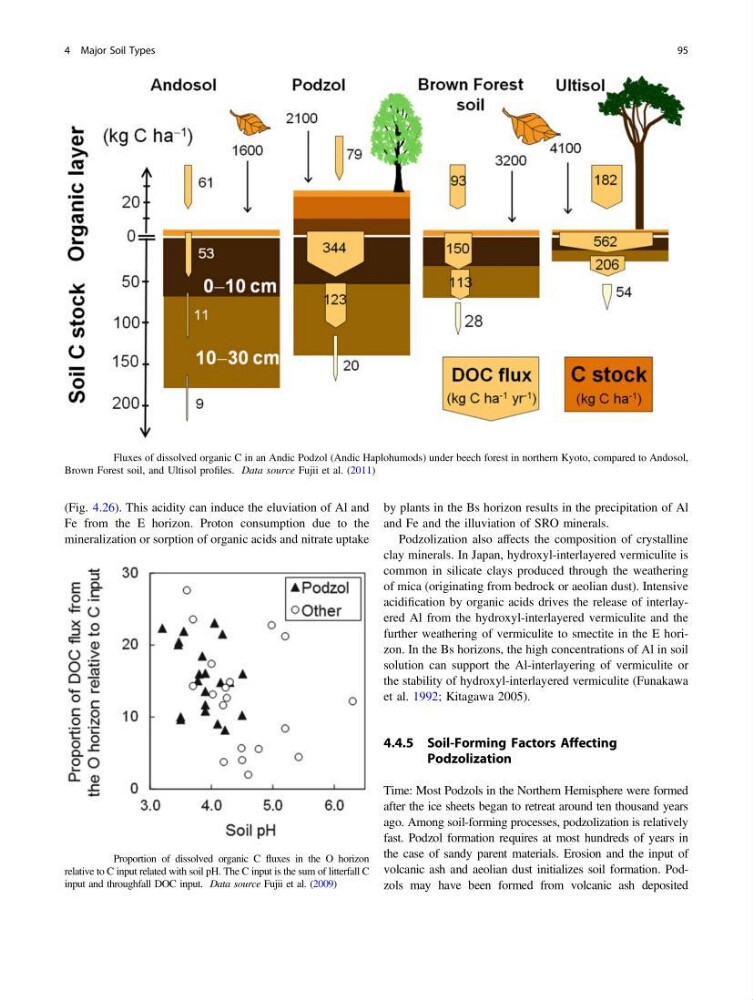
Fig. 4.24 Fluxes of dissolved organic C in an Andic Podzol (Andic Haplohumods) under beech forest in northern Kyoto, compared to Andosol,
Brown Forest soil, and Ultisol profiles. Data source Fujii et al. (2011)
Fig. 4.25 Proportion of dissolved organic C fluxes in the O horizon
relative to C input related with soil pH. The C input is the sum of litterfall C
input and throughfall DOC input. Data source Fujii et al. (2009)
4 Major Soil Types
95
Fe from the E horizon. Proton consumption due to the
mineralization or sorption of organic acids and nitrate uptake
by plants in the Bs horizon results in the precipitation of Al
and Fe and the illuviation of SRO minerals.
Podzolization also affects the composition of crystalline
clay minerals. In Japan, hydroxyl-interlayered vermiculite is
common in silicate clays produced through the weathering
of mica (originating from bedrock or aeolian dust). Intensive
acidification by organic acids drives the release of interlayered Al from the hydroxyl-interlayered vermiculite and the
further weathering of vermiculite to smectite in the E horizon. In the Bs horizons, the high concentrations of Al in soil
solution can support the Al-interlayering of vermiculite or
the stability of hydroxyl-interlayered vermiculite (Funakawa
et al. 1992; Kitagawa 2005).
4.4.5 Soil-Forming Factors Affecting
Podzolization
Time: Most Podzols in the Northern Hemisphere were formed
after the ice sheets began to retreat around ten thousand years
ago. Among soil-forming processes, podzolization is relatively
fast. Podzol formation requires at most hundreds of years in
the case of sandy parent materials. Erosion and the input of
volcanic ash and aeolian dust initializes soil formation. Podzols may have been formed from volcanic ash deposited
Fig. 4.24 Fluxes of dissolved organic C in an Andic Podzol (Andic Haplohumods) under beech forest in northern Kyoto, compared to Andosol,
Brown Forest soil, and Ultisol profiles. Data source Fujii et al. (2011)
Fig. 4.25 Proportion of dissolved organic C fluxes in the O horizon
relative to C input related with soil pH. The C input is the sum of litterfall C
input and throughfall DOC input. Data source Fujii et al. (2009)
4 Major Soil Types
95