

correspond to the Andosol group in the Soil Classification
System of Japan.
In the Soil Classification System of Japan, brown-colored
soils developed under forest vegetation, which contains large
accumulations of humus, are classified as Andosols and
included in the Brown-humic subgroup. This classification
system enables the distinction between Andosols in Forest
and Brown Forest soils derived from non-volcanic ash. This
contributes to a more accurate evaluation of the carbon
sequestration potential of soil, which has received considerable attention as a countermeasure to global warming.
Imaya et al. (2010a) reported that the carbon sequestration
potential at a depth of 1 m is 6.6 kg m
−2 for Brown Forest
soils with a small amount of active Al (acid oxalate
extractable Al [Al o ]; non-volcanic ash soil), which contrasts
with a value of 24 kg m
−2 for Brown Forest soils with large
amounts of active Al (Al o of 2% or more; volcanic ash soil).
It was also important to include the Brown-humic subgroups
into the Andosol great group to facilitate comparison with
international soil classification systems.
(4) Classification of Non-allophanic Andosols
Non-allophanic Andosols had become a driving force for a
paradigm shift in the central concepts for volcanic ash soils,
from “the existence of a lot of allophane” to the “existence of
a lot of active Al and/or Fe” in the soil classification systems
inside and outside of Japan. Non-allophanic Andosols are
strongly acidic soils mainly consisting of 2:1 to 2:1:1
intermediate clay minerals and are defined as having
non-allophanic andic soil properties.
Non-allophanic andic soil properties meet all of the following requirements:
(1) have andic soil properties; and
(2) have either:
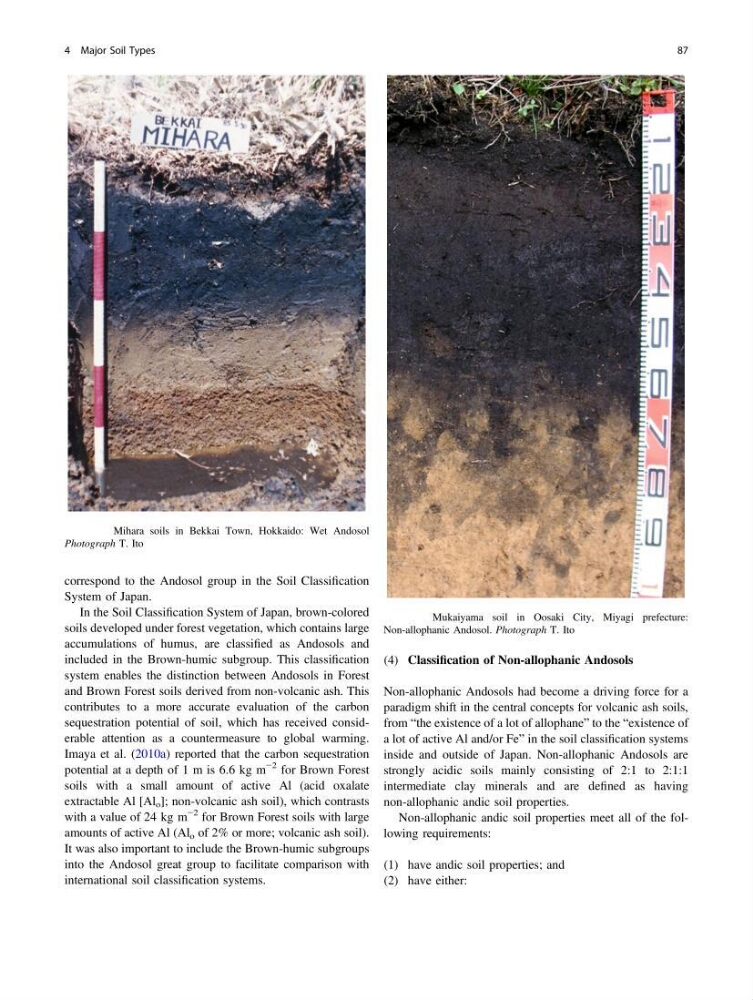
Fig. 4.16 Mihara soils in Bekkai Town, Hokkaido: Wet Andosol
Photograph T. Ito
Fig. 4.17 Mukaiyama soil in Oosaki City, Miyagi prefecture:
Non-allophanic Andosol. Photograph T. Ito
4 Major Soil Types
87
System of Japan.
In the Soil Classification System of Japan, brown-colored
soils developed under forest vegetation, which contains large
accumulations of humus, are classified as Andosols and
included in the Brown-humic subgroup. This classification
system enables the distinction between Andosols in Forest
and Brown Forest soils derived from non-volcanic ash. This
contributes to a more accurate evaluation of the carbon
sequestration potential of soil, which has received considerable attention as a countermeasure to global warming.
Imaya et al. (2010a) reported that the carbon sequestration
potential at a depth of 1 m is 6.6 kg m
−2 for Brown Forest
soils with a small amount of active Al (acid oxalate
extractable Al [Al o ]; non-volcanic ash soil), which contrasts
with a value of 24 kg m
−2 for Brown Forest soils with large
amounts of active Al (Al o of 2% or more; volcanic ash soil).
It was also important to include the Brown-humic subgroups
into the Andosol great group to facilitate comparison with
international soil classification systems.
(4) Classification of Non-allophanic Andosols
Non-allophanic Andosols had become a driving force for a
paradigm shift in the central concepts for volcanic ash soils,
from “the existence of a lot of allophane” to the “existence of
a lot of active Al and/or Fe” in the soil classification systems
inside and outside of Japan. Non-allophanic Andosols are
strongly acidic soils mainly consisting of 2:1 to 2:1:1
intermediate clay minerals and are defined as having
non-allophanic andic soil properties.
Non-allophanic andic soil properties meet all of the following requirements:
(1) have andic soil properties; and
(2) have either:
Fig. 4.16 Mihara soils in Bekkai Town, Hokkaido: Wet Andosol
Photograph T. Ito
Fig. 4.17 Mukaiyama soil in Oosaki City, Miyagi prefecture:
Non-allophanic Andosol. Photograph T. Ito
4 Major Soil Types
87