

short-range order minerals and/or Al(Fe)–humus complexes
derived from humus, with Al and Fe leached from the surface horizon. The WRB classification system and the USDA
Soil Taxonomy give priority to podzolization, so that Podzols derived from volcanic ash are not included in Andosols
or Andisols. On the other hand, the Soil Classification
System of Japan gives priority to specific properties—a large
amount of active Al and/or Fe and humus—different from
other soil groups, so the Andosol great group is keyed out
before the Podzolic great group and Podzols derived from
volcanic ash are included as Andosols. The Podzolic group
was defined as soil having “an eluvial horizon,” “spodic
horizon (morphological features),” or “spodic horizon (analytical results).”
(3) Classification of Brown soils derived from volcanic
ash under forest vegetation
For the classification of Japanese soils, the distinction
between the Andosol great group and Brown Forest soils
derived from volcanic ash was a critical issue. According to
the Forest Soil Classification System of Japan (1976), Brown
Forest soils—brown soils developed under forest vegetation
—are the most abundant soils among forest soils, which
make this soil type one of the most important. Because
existing forest soil maps cannot separate Brown Forest soils
derived from volcanic ash and those derived from
non-volcanic ash, some researchers have considered it
impractical to include Brown Forest soils that have been
strongly affected by volcanic ash as Andosols. On the other
hand, brown-colored highly humified soils are classified as
Fulvic Andosols in the WRB classification and as Fulvudands in the USDA Soil Taxonomy, both of which
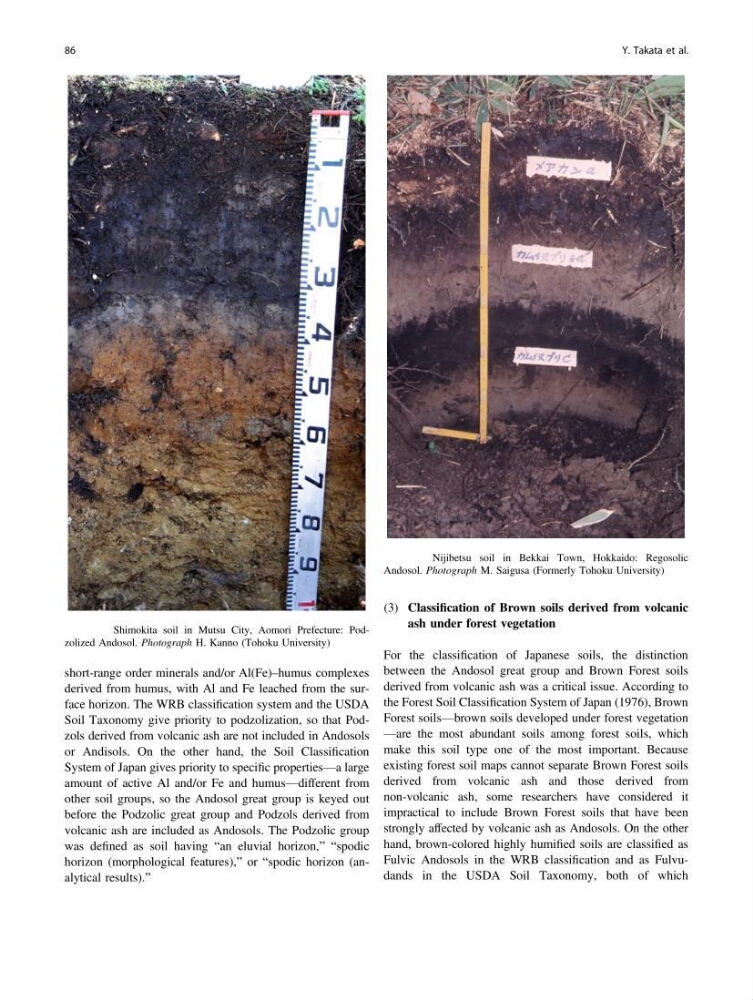
Fig. 4.14 Shimokita soil in Mutsu City, Aomori Prefecture: Podzolized Andosol. Photograph H. Kanno (Tohoku University)
Fig. 4.15 Nijibetsu soil in Bekkai Town, Hokkaido: Regosolic
Andosol. Photograph M. Saigusa (Formerly Tohoku University)
86
Y. Takata et al.
derived from humus, with Al and Fe leached from the surface horizon. The WRB classification system and the USDA
Soil Taxonomy give priority to podzolization, so that Podzols derived from volcanic ash are not included in Andosols
or Andisols. On the other hand, the Soil Classification
System of Japan gives priority to specific properties—a large
amount of active Al and/or Fe and humus—different from
other soil groups, so the Andosol great group is keyed out
before the Podzolic great group and Podzols derived from
volcanic ash are included as Andosols. The Podzolic group
was defined as soil having “an eluvial horizon,” “spodic
horizon (morphological features),” or “spodic horizon (analytical results).”
(3) Classification of Brown soils derived from volcanic
ash under forest vegetation
For the classification of Japanese soils, the distinction
between the Andosol great group and Brown Forest soils
derived from volcanic ash was a critical issue. According to
the Forest Soil Classification System of Japan (1976), Brown
Forest soils—brown soils developed under forest vegetation
—are the most abundant soils among forest soils, which
make this soil type one of the most important. Because
existing forest soil maps cannot separate Brown Forest soils
derived from volcanic ash and those derived from
non-volcanic ash, some researchers have considered it
impractical to include Brown Forest soils that have been
strongly affected by volcanic ash as Andosols. On the other
hand, brown-colored highly humified soils are classified as
Fulvic Andosols in the WRB classification and as Fulvudands in the USDA Soil Taxonomy, both of which
Fig. 4.14 Shimokita soil in Mutsu City, Aomori Prefecture: Podzolized Andosol. Photograph H. Kanno (Tohoku University)
Fig. 4.15 Nijibetsu soil in Bekkai Town, Hokkaido: Regosolic
Andosol. Photograph M. Saigusa (Formerly Tohoku University)
86
Y. Takata et al.