

104
M. P. Ramos and O. O. Chisari
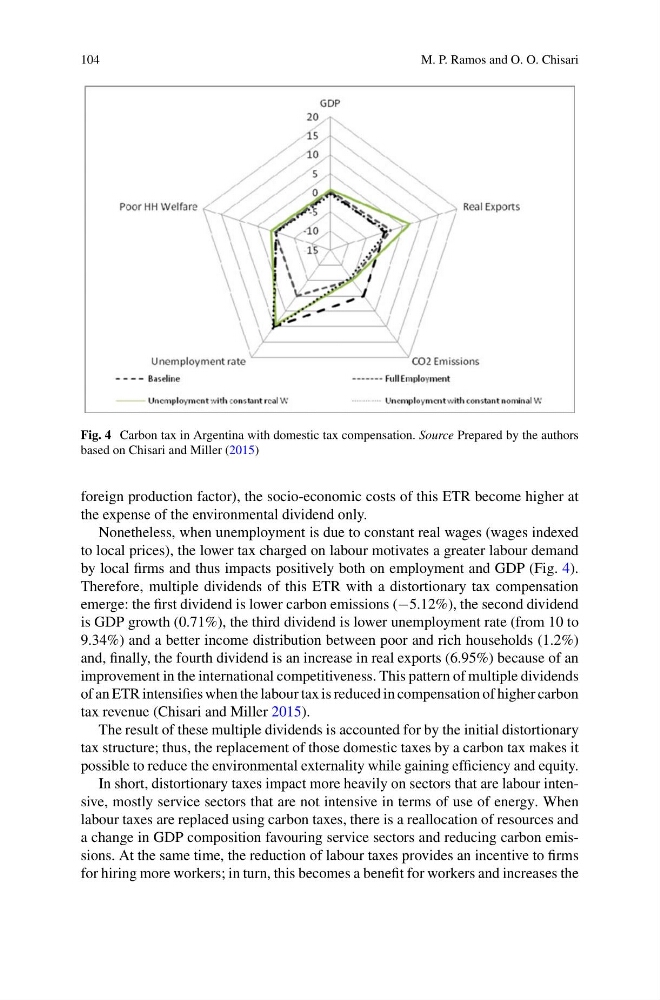
Fig. 4 Carbon tax in Argentina with domestic tax compensation. Source Prepared by the authors
based on Chisari and Miller (2015)
foreign production factor), the socio-economic costs of this ETR become higher at
the expense of the environmental dividend only.
Nonetheless, when unemployment is due to constant real wages (wages indexed
to local prices), the lower tax charged on labour motivates a greater labour demand
by local firms and thus impacts positively both on employment and GDP (Fig. 4).
Therefore, multiple dividends of this ETR with a distortionary tax compensation
emerge: the first dividend is lower carbon emissions (−5.12%), the second dividend
is GDP growth (0.71%), the third dividend is lower unemployment rate (from 10 to
9.34%) and a better income distribution between poor and rich households (1.2%)
and, finally, the fourth dividend is an increase in real exports (6.95%) because of an
improvement in the international competitiveness. This pattern of multiple dividends
of an ETR intensifies when the labour tax is reduced in compensation of higher carbon
tax revenue (Chisari and Miller 2015).
The result of these multiple dividends is accounted for by the initial distortionary
tax structure; thus, the replacement of those domestic taxes by a carbon tax makes it
possible to reduce the environmental externality while gaining efficiency and equity.
In short, distortionary taxes impact more heavily on sectors that are labour intensive, mostly service sectors that are not intensive in terms of use of energy. When
labour taxes are replaced using carbon taxes, there is a reallocation of resources and
a change in GDP composition favouring service sectors and reducing carbon emissions. At the same time, the reduction of labour taxes provides an incentive to firms
for hiring more workers; in turn, this becomes a benefit for workers and increases the
M. P. Ramos and O. O. Chisari
Fig. 4 Carbon tax in Argentina with domestic tax compensation. Source Prepared by the authors
based on Chisari and Miller (2015)
foreign production factor), the socio-economic costs of this ETR become higher at
the expense of the environmental dividend only.
Nonetheless, when unemployment is due to constant real wages (wages indexed
to local prices), the lower tax charged on labour motivates a greater labour demand
by local firms and thus impacts positively both on employment and GDP (Fig. 4).
Therefore, multiple dividends of this ETR with a distortionary tax compensation
emerge: the first dividend is lower carbon emissions (−5.12%), the second dividend
is GDP growth (0.71%), the third dividend is lower unemployment rate (from 10 to
9.34%) and a better income distribution between poor and rich households (1.2%)
and, finally, the fourth dividend is an increase in real exports (6.95%) because of an
improvement in the international competitiveness. This pattern of multiple dividends
of an ETR intensifies when the labour tax is reduced in compensation of higher carbon
tax revenue (Chisari and Miller 2015).
The result of these multiple dividends is accounted for by the initial distortionary
tax structure; thus, the replacement of those domestic taxes by a carbon tax makes it
possible to reduce the environmental externality while gaining efficiency and equity.
In short, distortionary taxes impact more heavily on sectors that are labour intensive, mostly service sectors that are not intensive in terms of use of energy. When
labour taxes are replaced using carbon taxes, there is a reallocation of resources and
a change in GDP composition favouring service sectors and reducing carbon emissions. At the same time, the reduction of labour taxes provides an incentive to firms
for hiring more workers; in turn, this becomes a benefit for workers and increases the