

93
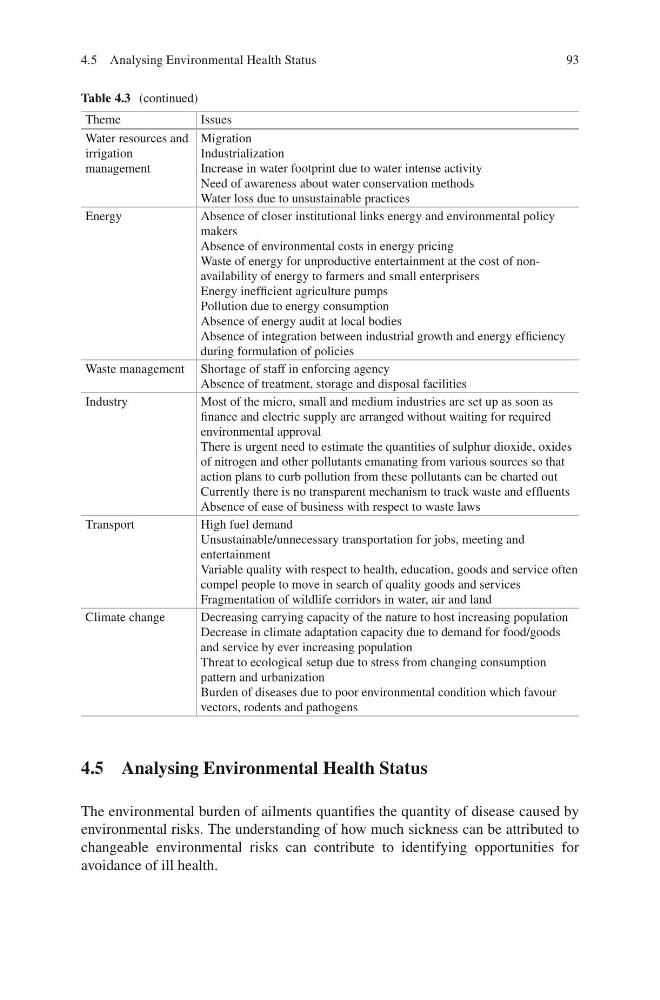
Table 4.3 (continued)
Theme
Issues
Water resources and
irrigation
management
Migration
Industrialization
Increase in water footprint due to water intense activity
Need of awareness about water conservation methods
Water loss due to unsustainable practices
Energy
Absence of closer institutional links energy and environmental policy
makers
Absence of environmental costs in energy pricing
Waste of energy for unproductive entertainment at the cost of nonavailability of energy to farmers and small enterprisers
Energy inefficient agriculture pumps
Pollution due to energy consumption
Absence of energy audit at local bodies
Absence of integration between industrial growth and energy efficiency
during formulation of policies
Waste management Shortage of staff in enforcing agency
Absence of treatment, storage and disposal facilities
Industry
Most of the micro, small and medium industries are set up as soon as
finance and electric supply are arranged without waiting for required
environmental approval
There is urgent need to estimate the quantities of sulphur dioxide, oxides
of nitrogen and other pollutants emanating from various sources so that
action plans to curb pollution from these pollutants can be charted out
Currently there is no transparent mechanism to track waste and effluents
Absence of ease of business with respect to waste laws
Transport
High fuel demand
Unsustainable/unnecessary transportation for jobs, meeting and
entertainment
Variable quality with respect to health, education, goods and service often
compel people to move in search of quality goods and services
Fragmentation of wildlife corridors in water, air and land
Climate change
Decreasing carrying capacity of the nature to host increasing population
Decrease in climate adaptation capacity due to demand for food/goods
and service by ever increasing population
Threat to ecological setup due to stress from changing consumption
pattern and urbanization
Burden of diseases due to poor environmental condition which favour
vectors, rodents and pathogens
4.5 Analysing Environmental Health Status
The environmental burden of ailments quantifies the quantity of disease caused by
environmental risks. The understanding of how much sickness can be attributed to
changeable environmental risks can contribute to identifying opportunities for
avoidance of ill health.
4.5 Analysing Environmental Health Status
Table 4.3 (continued)
Theme
Issues
Water resources and
irrigation
management
Migration
Industrialization
Increase in water footprint due to water intense activity
Need of awareness about water conservation methods
Water loss due to unsustainable practices
Energy
Absence of closer institutional links energy and environmental policy
makers
Absence of environmental costs in energy pricing
Waste of energy for unproductive entertainment at the cost of nonavailability of energy to farmers and small enterprisers
Energy inefficient agriculture pumps
Pollution due to energy consumption
Absence of energy audit at local bodies
Absence of integration between industrial growth and energy efficiency
during formulation of policies
Waste management Shortage of staff in enforcing agency
Absence of treatment, storage and disposal facilities
Industry
Most of the micro, small and medium industries are set up as soon as
finance and electric supply are arranged without waiting for required
environmental approval
There is urgent need to estimate the quantities of sulphur dioxide, oxides
of nitrogen and other pollutants emanating from various sources so that
action plans to curb pollution from these pollutants can be charted out
Currently there is no transparent mechanism to track waste and effluents
Absence of ease of business with respect to waste laws
Transport
High fuel demand
Unsustainable/unnecessary transportation for jobs, meeting and
entertainment
Variable quality with respect to health, education, goods and service often
compel people to move in search of quality goods and services
Fragmentation of wildlife corridors in water, air and land
Climate change
Decreasing carrying capacity of the nature to host increasing population
Decrease in climate adaptation capacity due to demand for food/goods
and service by ever increasing population
Threat to ecological setup due to stress from changing consumption
pattern and urbanization
Burden of diseases due to poor environmental condition which favour
vectors, rodents and pathogens
4.5 Analysing Environmental Health Status
The environmental burden of ailments quantifies the quantity of disease caused by
environmental risks. The understanding of how much sickness can be attributed to
changeable environmental risks can contribute to identifying opportunities for
avoidance of ill health.
4.5 Analysing Environmental Health Status