

92
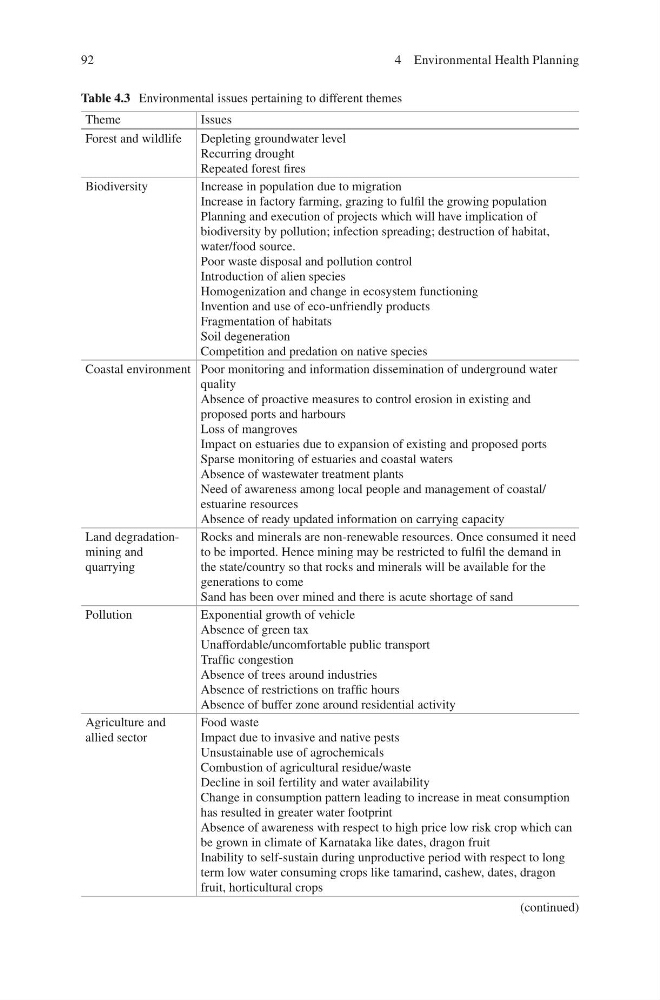
Table 4.3 Environmental issues pertaining to different themes
Theme
Issues
Forest and wildlife Depleting groundwater level
Recurring drought
Repeated forest fires
Biodiversity
Increase in population due to migration
Increase in factory farming, grazing to fulfil the growing population
Planning and execution of projects which will have implication of
biodiversity by pollution; infection spreading; destruction of habitat,
water/food source.
Poor waste disposal and pollution control
Introduction of alien species
Homogenization and change in ecosystem functioning
Invention and use of eco-unfriendly products
Fragmentation of habitats
Soil degeneration
Competition and predation on native species
Coastal environment Poor monitoring and information dissemination of underground water
quality
Absence of proactive measures to control erosion in existing and
proposed ports and harbours
Loss of mangroves
Impact on estuaries due to expansion of existing and proposed ports
Sparse monitoring of estuaries and coastal waters
Absence of wastewater treatment plants
Need of awareness among local people and management of coastal/
estuarine resources
Absence of ready updated information on carrying capacity
Land degradationmining and
quarrying
Rocks and minerals are non-renewable resources. Once consumed it need
to be imported. Hence mining may be restricted to fulfil the demand in
the state/country so that rocks and minerals will be available for the
generations to come
Sand has been over mined and there is acute shortage of sand
Pollution
Exponential growth of vehicle
Absence of green tax
Unaffordable/uncomfortable public transport
Traffic congestion
Absence of trees around industries
Absence of restrictions on traffic hours
Absence of buffer zone around residential activity
Agriculture and
allied sector
Food waste
Impact due to invasive and native pests
Unsustainable use of agrochemicals
Combustion of agricultural residue/waste
Decline in soil fertility and water availability
Change in consumption pattern leading to increase in meat consumption
has resulted in greater water footprint
Absence of awareness with respect to high price low risk crop which can
be grown in climate of Karnataka like dates, dragon fruit
Inability to self-sustain during unproductive period with respect to long
term low water consuming crops like tamarind, cashew, dates, dragon
fruit, horticultural crops
(continued)
4 Environmental Health Planning
Table 4.3 Environmental issues pertaining to different themes
Theme
Issues
Forest and wildlife Depleting groundwater level
Recurring drought
Repeated forest fires
Biodiversity
Increase in population due to migration
Increase in factory farming, grazing to fulfil the growing population
Planning and execution of projects which will have implication of
biodiversity by pollution; infection spreading; destruction of habitat,
water/food source.
Poor waste disposal and pollution control
Introduction of alien species
Homogenization and change in ecosystem functioning
Invention and use of eco-unfriendly products
Fragmentation of habitats
Soil degeneration
Competition and predation on native species
Coastal environment Poor monitoring and information dissemination of underground water
quality
Absence of proactive measures to control erosion in existing and
proposed ports and harbours
Loss of mangroves
Impact on estuaries due to expansion of existing and proposed ports
Sparse monitoring of estuaries and coastal waters
Absence of wastewater treatment plants
Need of awareness among local people and management of coastal/
estuarine resources
Absence of ready updated information on carrying capacity
Land degradationmining and
quarrying
Rocks and minerals are non-renewable resources. Once consumed it need
to be imported. Hence mining may be restricted to fulfil the demand in
the state/country so that rocks and minerals will be available for the
generations to come
Sand has been over mined and there is acute shortage of sand
Pollution
Exponential growth of vehicle
Absence of green tax
Unaffordable/uncomfortable public transport
Traffic congestion
Absence of trees around industries
Absence of restrictions on traffic hours
Absence of buffer zone around residential activity
Agriculture and
allied sector
Food waste
Impact due to invasive and native pests
Unsustainable use of agrochemicals
Combustion of agricultural residue/waste
Decline in soil fertility and water availability
Change in consumption pattern leading to increase in meat consumption
has resulted in greater water footprint
Absence of awareness with respect to high price low risk crop which can
be grown in climate of Karnataka like dates, dragon fruit
Inability to self-sustain during unproductive period with respect to long
term low water consuming crops like tamarind, cashew, dates, dragon
fruit, horticultural crops
(continued)
4 Environmental Health Planning