

3 Sea-Level Rise (SLR) and Its Implication on Human Security …
47
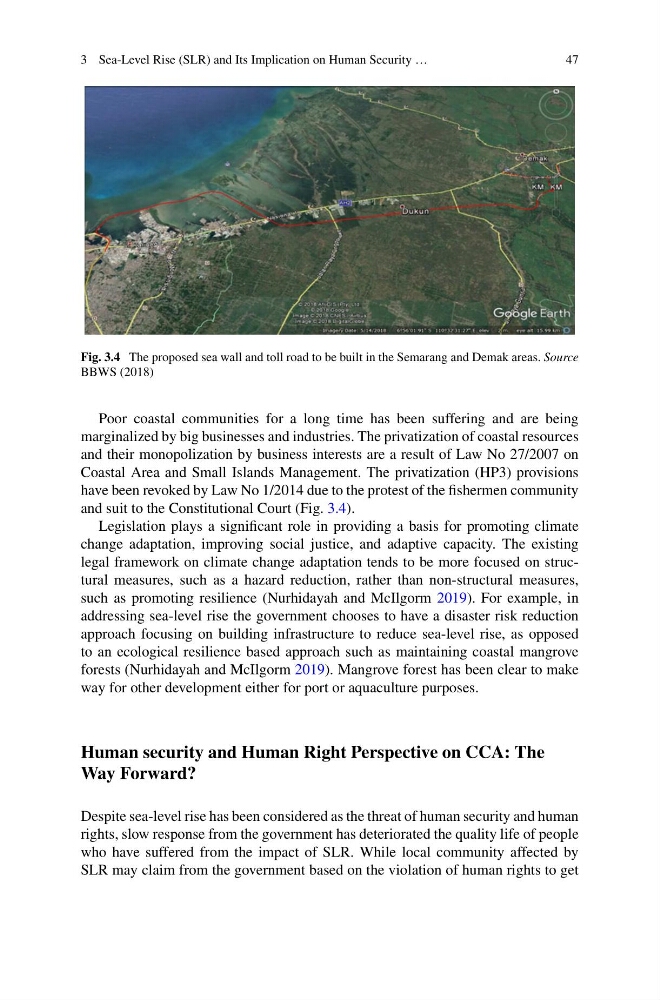
Fig. 3.4 The proposed sea wall and toll road to be built in the Semarang and Demak areas. Source
BBWS (2018)
Poor coastal communities for a long time has been suffering and are being
marginalized by big businesses and industries. The privatization of coastal resources
and their monopolization by business interests are a result of Law No 27/2007 on
Coastal Area and Small Islands Management. The privatization (HP3) provisions
have been revoked by Law No 1/2014 due to the protest of the fishermen community
and suit to the Constitutional Court (Fig. 3.4).
Legislation plays a significant role in providing a basis for promoting climate
change adaptation, improving social justice, and adaptive capacity. The existing
legal framework on climate change adaptation tends to be more focused on structural measures, such as a hazard reduction, rather than non-structural measures,
such as promoting resilience (Nurhidayah and McIlgorm 2019). For example, in
addressing sea-level rise the government chooses to have a disaster risk reduction
approach focusing on building infrastructure to reduce sea-level rise, as opposed
to an ecological resilience based approach such as maintaining coastal mangrove
forests (Nurhidayah and McIlgorm 2019). Mangrove forest has been clear to make
way for other development either for port or aquaculture purposes.
Human security and Human Right Perspective on CCA: The
Way Forward?
Despite sea-level rise has been considered as the threat of human security and human
rights, slow response from the government has deteriorated the quality life of people
who have suffered from the impact of SLR. While local community affected by
SLR may claim from the government based on the violation of human rights to get
47
Fig. 3.4 The proposed sea wall and toll road to be built in the Semarang and Demak areas. Source
BBWS (2018)
Poor coastal communities for a long time has been suffering and are being
marginalized by big businesses and industries. The privatization of coastal resources
and their monopolization by business interests are a result of Law No 27/2007 on
Coastal Area and Small Islands Management. The privatization (HP3) provisions
have been revoked by Law No 1/2014 due to the protest of the fishermen community
and suit to the Constitutional Court (Fig. 3.4).
Legislation plays a significant role in providing a basis for promoting climate
change adaptation, improving social justice, and adaptive capacity. The existing
legal framework on climate change adaptation tends to be more focused on structural measures, such as a hazard reduction, rather than non-structural measures,
such as promoting resilience (Nurhidayah and McIlgorm 2019). For example, in
addressing sea-level rise the government chooses to have a disaster risk reduction
approach focusing on building infrastructure to reduce sea-level rise, as opposed
to an ecological resilience based approach such as maintaining coastal mangrove
forests (Nurhidayah and McIlgorm 2019). Mangrove forest has been clear to make
way for other development either for port or aquaculture purposes.
Human security and Human Right Perspective on CCA: The
Way Forward?
Despite sea-level rise has been considered as the threat of human security and human
rights, slow response from the government has deteriorated the quality life of people
who have suffered from the impact of SLR. While local community affected by
SLR may claim from the government based on the violation of human rights to get