

158
M. Kasim
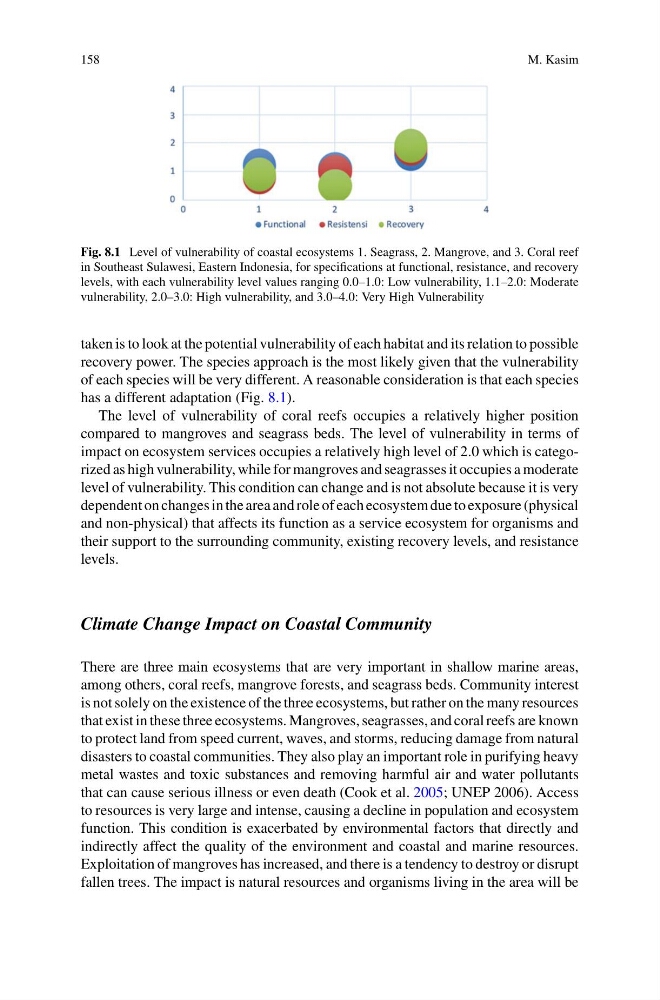
Fig. 8.1 Level of vulnerability of coastal ecosystems 1. Seagrass, 2. Mangrove, and 3. Coral reef
in Southeast Sulawesi, Eastern Indonesia, for specifications at functional, resistance, and recovery
levels, with each vulnerability level values ranging 0.0–1.0: Low vulnerability, 1.1–2.0: Moderate
vulnerability, 2.0–3.0: High vulnerability, and 3.0–4.0: Very High Vulnerability
taken is to look at the potential vulnerability of each habitat and its relation to possible
recovery power. The species approach is the most likely given that the vulnerability
of each species will be very different. A reasonable consideration is that each species
has a different adaptation (Fig. 8.1).
The level of vulnerability of coral reefs occupies a relatively higher position
compared to mangroves and seagrass beds. The level of vulnerability in terms of
impact on ecosystem services occupies a relatively high level of 2.0 which is categorized as high vulnerability, while for mangroves and seagrasses it occupies a moderate
level of vulnerability. This condition can change and is not absolute because it is very
dependent on changes in the area and role of each ecosystem due to exposure (physical
and non-physical) that affects its function as a service ecosystem for organisms and
their support to the surrounding community, existing recovery levels, and resistance
levels.
Climate Change Impact on Coastal Community
There are three main ecosystems that are very important in shallow marine areas,
among others, coral reefs, mangrove forests, and seagrass beds. Community interest
is not solely on the existence of the three ecosystems, but rather on the many resources
that exist in these three ecosystems. Mangroves, seagrasses, and coral reefs are known
to protect land from speed current, waves, and storms, reducing damage from natural
disasters to coastal communities. They also play an important role in purifying heavy
metal wastes and toxic substances and removing harmful air and water pollutants
that can cause serious illness or even death (Cook et al. 2005; UNEP 2006). Access
to resources is very large and intense, causing a decline in population and ecosystem
function. This condition is exacerbated by environmental factors that directly and
indirectly affect the quality of the environment and coastal and marine resources.
Exploitation of mangroves has increased, and there is a tendency to destroy or disrupt
fallen trees. The impact is natural resources and organisms living in the area will be
M. Kasim
Fig. 8.1 Level of vulnerability of coastal ecosystems 1. Seagrass, 2. Mangrove, and 3. Coral reef
in Southeast Sulawesi, Eastern Indonesia, for specifications at functional, resistance, and recovery
levels, with each vulnerability level values ranging 0.0–1.0: Low vulnerability, 1.1–2.0: Moderate
vulnerability, 2.0–3.0: High vulnerability, and 3.0–4.0: Very High Vulnerability
taken is to look at the potential vulnerability of each habitat and its relation to possible
recovery power. The species approach is the most likely given that the vulnerability
of each species will be very different. A reasonable consideration is that each species
has a different adaptation (Fig. 8.1).
The level of vulnerability of coral reefs occupies a relatively higher position
compared to mangroves and seagrass beds. The level of vulnerability in terms of
impact on ecosystem services occupies a relatively high level of 2.0 which is categorized as high vulnerability, while for mangroves and seagrasses it occupies a moderate
level of vulnerability. This condition can change and is not absolute because it is very
dependent on changes in the area and role of each ecosystem due to exposure (physical
and non-physical) that affects its function as a service ecosystem for organisms and
their support to the surrounding community, existing recovery levels, and resistance
levels.
Climate Change Impact on Coastal Community
There are three main ecosystems that are very important in shallow marine areas,
among others, coral reefs, mangrove forests, and seagrass beds. Community interest
is not solely on the existence of the three ecosystems, but rather on the many resources
that exist in these three ecosystems. Mangroves, seagrasses, and coral reefs are known
to protect land from speed current, waves, and storms, reducing damage from natural
disasters to coastal communities. They also play an important role in purifying heavy
metal wastes and toxic substances and removing harmful air and water pollutants
that can cause serious illness or even death (Cook et al. 2005; UNEP 2006). Access
to resources is very large and intense, causing a decline in population and ecosystem
function. This condition is exacerbated by environmental factors that directly and
indirectly affect the quality of the environment and coastal and marine resources.
Exploitation of mangroves has increased, and there is a tendency to destroy or disrupt
fallen trees. The impact is natural resources and organisms living in the area will be