

1 Introduction
3
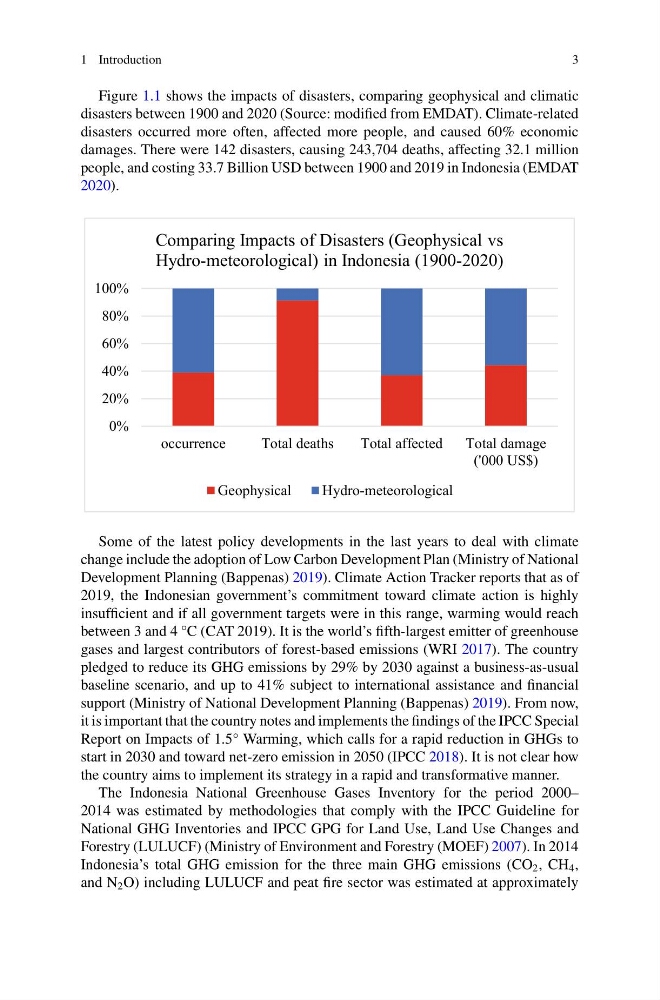
Figure 1.1 shows the impacts of disasters, comparing geophysical and climatic
disasters between 1900 and 2020 (Source: modified from EMDAT). Climate-related
disasters occurred more often, affected more people, and caused 60% economic
damages. There were 142 disasters, causing 243,704 deaths, affecting 32.1 million
people, and costing 33.7 Billion USD between 1900 and 2019 in Indonesia (EMDAT
2020).
0%
20%
40%
60%
80%
100%
occurrence
Total deaths
Total affected
Total damage
('000 US$)
Comparing Impacts of Disasters (Geophysical vs
Hydro-meteorological) in Indonesia (1900-2020)
Geophysical
Hydro-meteorological
Some of the latest policy developments in the last years to deal with climate
change include the adoption of Low Carbon Development Plan (Ministry of National
Development Planning (Bappenas) 2019). Climate Action Tracker reports that as of
2019, the Indonesian government’s commitment toward climate action is highly
insufficient and if all government targets were in this range, warming would reach
between 3 and 4 °C (CAT 2019). It is the world’s fifth-largest emitter of greenhouse
gases and largest contributors of forest-based emissions (WRI 2017). The country
pledged to reduce its GHG emissions by 29% by 2030 against a business-as-usual
baseline scenario, and up to 41% subject to international assistance and financial
support (Ministry of National Development Planning (Bappenas) 2019). From now,
it is important that the country notes and implements the findings of the IPCC Special
Report on Impacts of 1.5° Warming, which calls for a rapid reduction in GHGs to
start in 2030 and toward net-zero emission in 2050 (IPCC 2018). It is not clear how
the country aims to implement its strategy in a rapid and transformative manner.
The Indonesia National Greenhouse Gases Inventory for the period 2000–
2014 was estimated by methodologies that comply with the IPCC Guideline for
National GHG Inventories and IPCC GPG for Land Use, Land Use Changes and
Forestry (LULUCF) (Ministry of Environment and Forestry (MOEF) 2007). In 2014
Indonesia’s total GHG emission for the three main GHG emissions (CO 2 , CH 4 ,
and N 2 O) including LULUCF and peat fire sector was estimated at approximately
3
Figure 1.1 shows the impacts of disasters, comparing geophysical and climatic
disasters between 1900 and 2020 (Source: modified from EMDAT). Climate-related
disasters occurred more often, affected more people, and caused 60% economic
damages. There were 142 disasters, causing 243,704 deaths, affecting 32.1 million
people, and costing 33.7 Billion USD between 1900 and 2019 in Indonesia (EMDAT
2020).
0%
20%
40%
60%
80%
100%
occurrence
Total deaths
Total affected
Total damage
('000 US$)
Comparing Impacts of Disasters (Geophysical vs
Hydro-meteorological) in Indonesia (1900-2020)
Geophysical
Hydro-meteorological
Some of the latest policy developments in the last years to deal with climate
change include the adoption of Low Carbon Development Plan (Ministry of National
Development Planning (Bappenas) 2019). Climate Action Tracker reports that as of
2019, the Indonesian government’s commitment toward climate action is highly
insufficient and if all government targets were in this range, warming would reach
between 3 and 4 °C (CAT 2019). It is the world’s fifth-largest emitter of greenhouse
gases and largest contributors of forest-based emissions (WRI 2017). The country
pledged to reduce its GHG emissions by 29% by 2030 against a business-as-usual
baseline scenario, and up to 41% subject to international assistance and financial
support (Ministry of National Development Planning (Bappenas) 2019). From now,
it is important that the country notes and implements the findings of the IPCC Special
Report on Impacts of 1.5° Warming, which calls for a rapid reduction in GHGs to
start in 2030 and toward net-zero emission in 2050 (IPCC 2018). It is not clear how
the country aims to implement its strategy in a rapid and transformative manner.
The Indonesia National Greenhouse Gases Inventory for the period 2000–
2014 was estimated by methodologies that comply with the IPCC Guideline for
National GHG Inventories and IPCC GPG for Land Use, Land Use Changes and
Forestry (LULUCF) (Ministry of Environment and Forestry (MOEF) 2007). In 2014
Indonesia’s total GHG emission for the three main GHG emissions (CO 2 , CH 4 ,
and N 2 O) including LULUCF and peat fire sector was estimated at approximately