

2
R. Djalante et al.
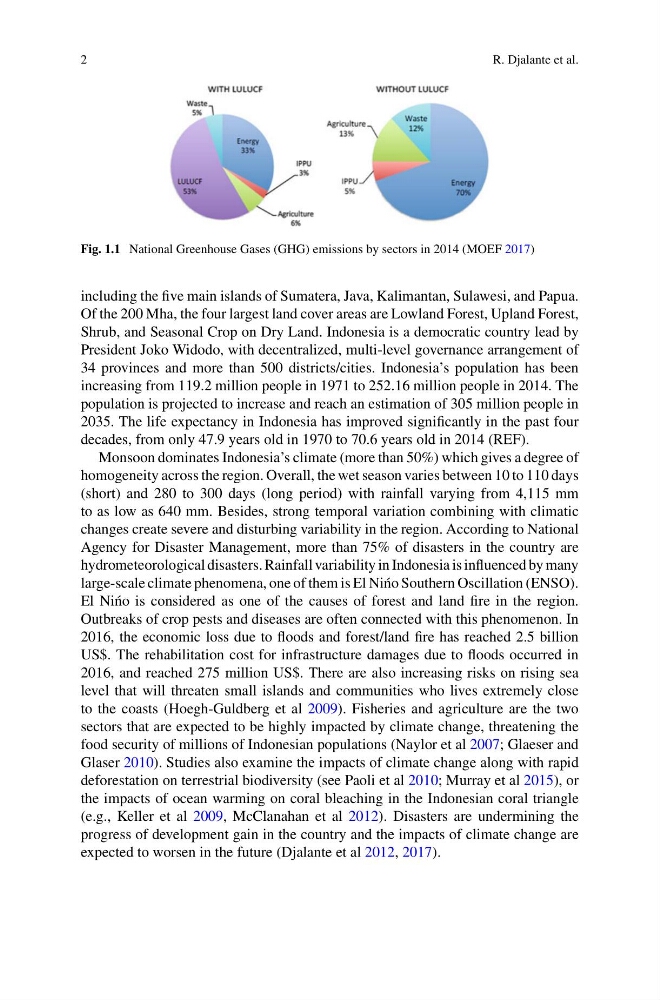
Fig. 1.1 National Greenhouse Gases (GHG) emissions by sectors in 2014 (MOEF 2017)
including the five main islands of Sumatera, Java, Kalimantan, Sulawesi, and Papua.
Of the 200 Mha, the four largest land cover areas are Lowland Forest, Upland Forest,
Shrub, and Seasonal Crop on Dry Land. Indonesia is a democratic country lead by
President Joko Widodo, with decentralized, multi-level governance arrangement of
34 provinces and more than 500 districts/cities. Indonesia’s population has been
increasing from 119.2 million people in 1971 to 252.16 million people in 2014. The
population is projected to increase and reach an estimation of 305 million people in
2035. The life expectancy in Indonesia has improved significantly in the past four
decades, from only 47.9 years old in 1970 to 70.6 years old in 2014 (REF).
Monsoon dominates Indonesia’s climate (more than 50%) which gives a degree of
homogeneity across the region. Overall, the wet season varies between 10 to 110 days
(short) and 280 to 300 days (long period) with rainfall varying from 4,115 mm
to as low as 640 mm. Besides, strong temporal variation combining with climatic
changes create severe and disturbing variability in the region. According to National
Agency for Disaster Management, more than 75% of disasters in the country are
hydrometeorological disasters. Rainfall variability in Indonesia is influenced by many
large-scale climate phenomena, one of them is El Ni´ no Southern Oscillation (ENSO).
El Ni´ no is considered as one of the causes of forest and land fire in the region.
Outbreaks of crop pests and diseases are often connected with this phenomenon. In
2016, the economic loss due to floods and forest/land fire has reached 2.5 billion
US$. The rehabilitation cost for infrastructure damages due to floods occurred in
2016, and reached 275 million US$. There are also increasing risks on rising sea
level that will threaten small islands and communities who lives extremely close
to the coasts (Hoegh-Guldberg et al 2009). Fisheries and agriculture are the two
sectors that are expected to be highly impacted by climate change, threatening the
food security of millions of Indonesian populations (Naylor et al 2007; Glaeser and
Glaser 2010). Studies also examine the impacts of climate change along with rapid
deforestation on terrestrial biodiversity (see Paoli et al 2010; Murray et al 2015), or
the impacts of ocean warming on coral bleaching in the Indonesian coral triangle
(e.g., Keller et al 2009, McClanahan et al 2012). Disasters are undermining the
progress of development gain in the country and the impacts of climate change are
expected to worsen in the future (Djalante et al 2012, 2017).
R. Djalante et al.
Fig. 1.1 National Greenhouse Gases (GHG) emissions by sectors in 2014 (MOEF 2017)
including the five main islands of Sumatera, Java, Kalimantan, Sulawesi, and Papua.
Of the 200 Mha, the four largest land cover areas are Lowland Forest, Upland Forest,
Shrub, and Seasonal Crop on Dry Land. Indonesia is a democratic country lead by
President Joko Widodo, with decentralized, multi-level governance arrangement of
34 provinces and more than 500 districts/cities. Indonesia’s population has been
increasing from 119.2 million people in 1971 to 252.16 million people in 2014. The
population is projected to increase and reach an estimation of 305 million people in
2035. The life expectancy in Indonesia has improved significantly in the past four
decades, from only 47.9 years old in 1970 to 70.6 years old in 2014 (REF).
Monsoon dominates Indonesia’s climate (more than 50%) which gives a degree of
homogeneity across the region. Overall, the wet season varies between 10 to 110 days
(short) and 280 to 300 days (long period) with rainfall varying from 4,115 mm
to as low as 640 mm. Besides, strong temporal variation combining with climatic
changes create severe and disturbing variability in the region. According to National
Agency for Disaster Management, more than 75% of disasters in the country are
hydrometeorological disasters. Rainfall variability in Indonesia is influenced by many
large-scale climate phenomena, one of them is El Ni´ no Southern Oscillation (ENSO).
El Ni´ no is considered as one of the causes of forest and land fire in the region.
Outbreaks of crop pests and diseases are often connected with this phenomenon. In
2016, the economic loss due to floods and forest/land fire has reached 2.5 billion
US$. The rehabilitation cost for infrastructure damages due to floods occurred in
2016, and reached 275 million US$. There are also increasing risks on rising sea
level that will threaten small islands and communities who lives extremely close
to the coasts (Hoegh-Guldberg et al 2009). Fisheries and agriculture are the two
sectors that are expected to be highly impacted by climate change, threatening the
food security of millions of Indonesian populations (Naylor et al 2007; Glaeser and
Glaser 2010). Studies also examine the impacts of climate change along with rapid
deforestation on terrestrial biodiversity (see Paoli et al 2010; Murray et al 2015), or
the impacts of ocean warming on coral bleaching in the Indonesian coral triangle
(e.g., Keller et al 2009, McClanahan et al 2012). Disasters are undermining the
progress of development gain in the country and the impacts of climate change are
expected to worsen in the future (Djalante et al 2012, 2017).