

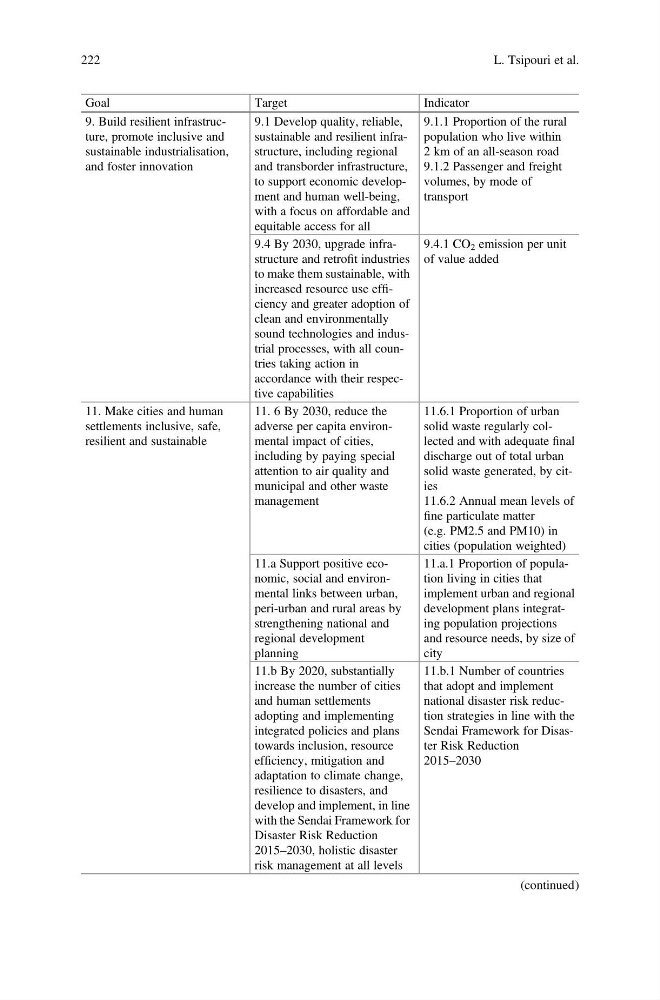
Goal
Target
Indicator
9. Build resilient infrastructure, promote inclusive and
sustainable industrialisation,
and foster innovation
9.1 Develop quality, reliable,
sustainable and resilient infrastructure, including regional
and transborder infrastructure,
to support economic development and human well-being,
with a focus on affordable and
equitable access for all
9.1.1 Proportion of the rural
population who live within
2 km of an all-season road
9.1.2 Passenger and freight
volumes, by mode of
transport
9.4 By 2030, upgrade infrastructure and retrofit industries
to make them sustainable, with
increased resource use efficiency and greater adoption of
clean and environmentally
sound technologies and industrial processes, with all countries taking action in
accordance with their respective capabilities
9.4.1 CO 2 emission per unit
of value added
11. Make cities and human
settlements inclusive, safe,
resilient and sustainable
11. 6 By 2030, reduce the
adverse per capita environmental impact of cities,
including by paying special
attention to air quality and
municipal and other waste
management
11.6.1 Proportion of urban
solid waste regularly collected and with adequate final
discharge out of total urban
solid waste generated, by cities
11.6.2 Annual mean levels of
fine particulate matter
(e.g. PM2.5 and PM10) in
cities (population weighted)
11.a Support positive economic, social and environmental links between urban,
peri-urban and rural areas by
strengthening national and
regional development
planning
11.a.1 Proportion of population living in cities that
implement urban and regional
development plans integrating population projections
and resource needs, by size of
city
11.b By 2020, substantially
increase the number of cities
and human settlements
adopting and implementing
integrated policies and plans
towards inclusion, resource
efficiency, mitigation and
adaptation to climate change,
resilience to disasters, and
develop and implement, in line
with the Sendai Framework for
Disaster Risk Reduction
2015–2030, holistic disaster
risk management at all levels
11.b.1 Number of countries
that adopt and implement
national disaster risk reduction strategies in line with the
Sendai Framework for Disaster Risk Reduction
2015–2030
(continued)
222
L. Tsipouri et al.
Target
Indicator
9. Build resilient infrastructure, promote inclusive and
sustainable industrialisation,
and foster innovation
9.1 Develop quality, reliable,
sustainable and resilient infrastructure, including regional
and transborder infrastructure,
to support economic development and human well-being,
with a focus on affordable and
equitable access for all
9.1.1 Proportion of the rural
population who live within
2 km of an all-season road
9.1.2 Passenger and freight
volumes, by mode of
transport
9.4 By 2030, upgrade infrastructure and retrofit industries
to make them sustainable, with
increased resource use efficiency and greater adoption of
clean and environmentally
sound technologies and industrial processes, with all countries taking action in
accordance with their respective capabilities
9.4.1 CO 2 emission per unit
of value added
11. Make cities and human
settlements inclusive, safe,
resilient and sustainable
11. 6 By 2030, reduce the
adverse per capita environmental impact of cities,
including by paying special
attention to air quality and
municipal and other waste
management
11.6.1 Proportion of urban
solid waste regularly collected and with adequate final
discharge out of total urban
solid waste generated, by cities
11.6.2 Annual mean levels of
fine particulate matter
(e.g. PM2.5 and PM10) in
cities (population weighted)
11.a Support positive economic, social and environmental links between urban,
peri-urban and rural areas by
strengthening national and
regional development
planning
11.a.1 Proportion of population living in cities that
implement urban and regional
development plans integrating population projections
and resource needs, by size of
city
11.b By 2020, substantially
increase the number of cities
and human settlements
adopting and implementing
integrated policies and plans
towards inclusion, resource
efficiency, mitigation and
adaptation to climate change,
resilience to disasters, and
develop and implement, in line
with the Sendai Framework for
Disaster Risk Reduction
2015–2030, holistic disaster
risk management at all levels
11.b.1 Number of countries
that adopt and implement
national disaster risk reduction strategies in line with the
Sendai Framework for Disaster Risk Reduction
2015–2030
(continued)
222
L. Tsipouri et al.