

the regulator tries to prevent monopoly behaviour by imposing a cap on prices, known as
price regulation, it estimates the price level
required for the TSO to recover its costs.
The TSO then has incentives to exaggerate the
costs it faces, and secure price caps greater than
its actual costs, a problem known as adverse
selection. In this case, the TSO can underinvest
and continue to set high prices. If instead the
regulator tries to prevent monopoly behaviour by
paying the TSO for its costs plus a regulated
return (cost-of-service regulation), the TSO does
not have any incentive to take necessary measures to decrease its costs, a problem known as
moral hazard. In contrast to these approaches,
performance-based regulation seeks simultaneously to address both monopoly profits and
underinvestment. An example of performancebased regulation is the imposition of a price (or
revenue) cap, which is adjusted every year by the
rate of inflation and target rate of productivity
growth. The TSO is constrained in exaggerating
its costs by the regulator conducting benchmark
analysis and detailed studies of the TSO’s historical accounts. The TSO has some incentive to
lower its costs because it can retain the difference
between the price cap and its actual costs as
profits.
Performance-based regulation is still evolving
and there is no consensus on the optimal mechanism. Several forms of performance-based regulation have been adopted and these continue to
evolve. An example of their evolution is the
introduction in the UK of the retail price inflation
minus X (RPI-X) mechanism in 1992, and its
eventual replacement by the revenue = incentives
+ innovation + outputs (RIIO) mechanism in
2013, which is described in Box 2. A key challenge in performance-based regulation is its high
information burden. The regulator has to review
the TSO’s accounts and business plans and
undertake benchmark analysis.
Box 2: Performance-based regulation
in the UK
The UK introduced performance-based
regulation in electricity networks in 1992
with the RPI-X mechanism, eventually
replacing this in 2013 with the more
sophisticated RIIO mechanism:
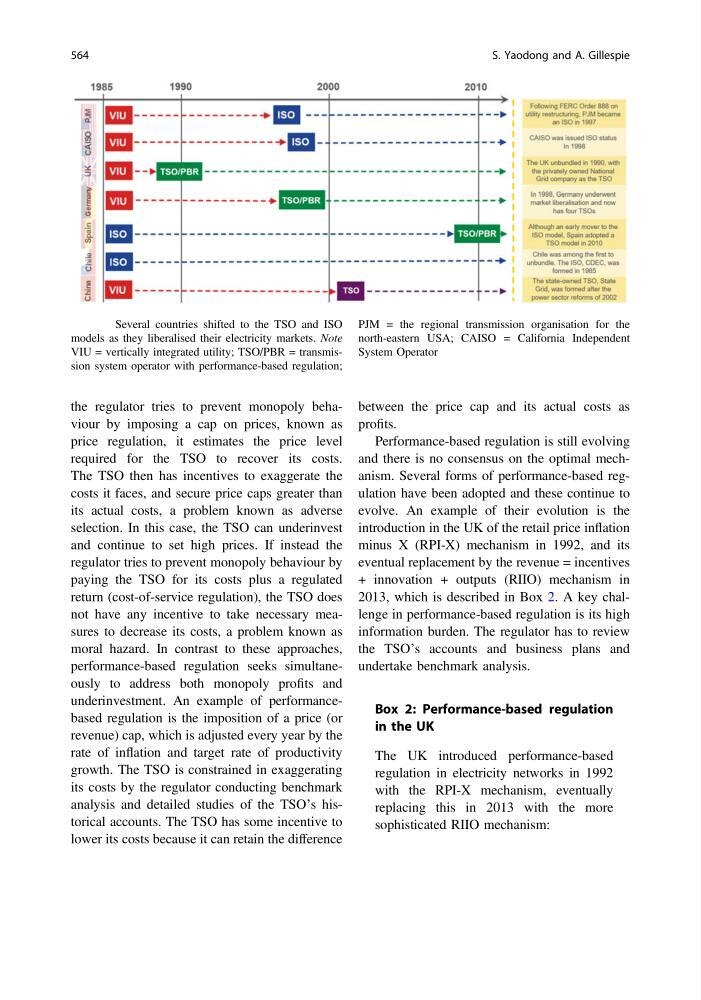
Fig. 66 Several countries shifted to the TSO and ISO
models as they liberalised their electricity markets. Note
VIU = vertically integrated utility; TSO/PBR = transmission system operator with performance-based regulation;
PJM = the regional transmission organisation for the
north-eastern USA; CAISO = California Independent
System Operator
564
S. Yaodong and A. Gillespie
price regulation, it estimates the price level
required for the TSO to recover its costs.
The TSO then has incentives to exaggerate the
costs it faces, and secure price caps greater than
its actual costs, a problem known as adverse
selection. In this case, the TSO can underinvest
and continue to set high prices. If instead the
regulator tries to prevent monopoly behaviour by
paying the TSO for its costs plus a regulated
return (cost-of-service regulation), the TSO does
not have any incentive to take necessary measures to decrease its costs, a problem known as
moral hazard. In contrast to these approaches,
performance-based regulation seeks simultaneously to address both monopoly profits and
underinvestment. An example of performancebased regulation is the imposition of a price (or
revenue) cap, which is adjusted every year by the
rate of inflation and target rate of productivity
growth. The TSO is constrained in exaggerating
its costs by the regulator conducting benchmark
analysis and detailed studies of the TSO’s historical accounts. The TSO has some incentive to
lower its costs because it can retain the difference
between the price cap and its actual costs as
profits.
Performance-based regulation is still evolving
and there is no consensus on the optimal mechanism. Several forms of performance-based regulation have been adopted and these continue to
evolve. An example of their evolution is the
introduction in the UK of the retail price inflation
minus X (RPI-X) mechanism in 1992, and its
eventual replacement by the revenue = incentives
+ innovation + outputs (RIIO) mechanism in
2013, which is described in Box 2. A key challenge in performance-based regulation is its high
information burden. The regulator has to review
the TSO’s accounts and business plans and
undertake benchmark analysis.
Box 2: Performance-based regulation
in the UK
The UK introduced performance-based
regulation in electricity networks in 1992
with the RPI-X mechanism, eventually
replacing this in 2013 with the more
sophisticated RIIO mechanism:
Fig. 66 Several countries shifted to the TSO and ISO
models as they liberalised their electricity markets. Note
VIU = vertically integrated utility; TSO/PBR = transmission system operator with performance-based regulation;
PJM = the regional transmission organisation for the
north-eastern USA; CAISO = California Independent
System Operator
564
S. Yaodong and A. Gillespie