

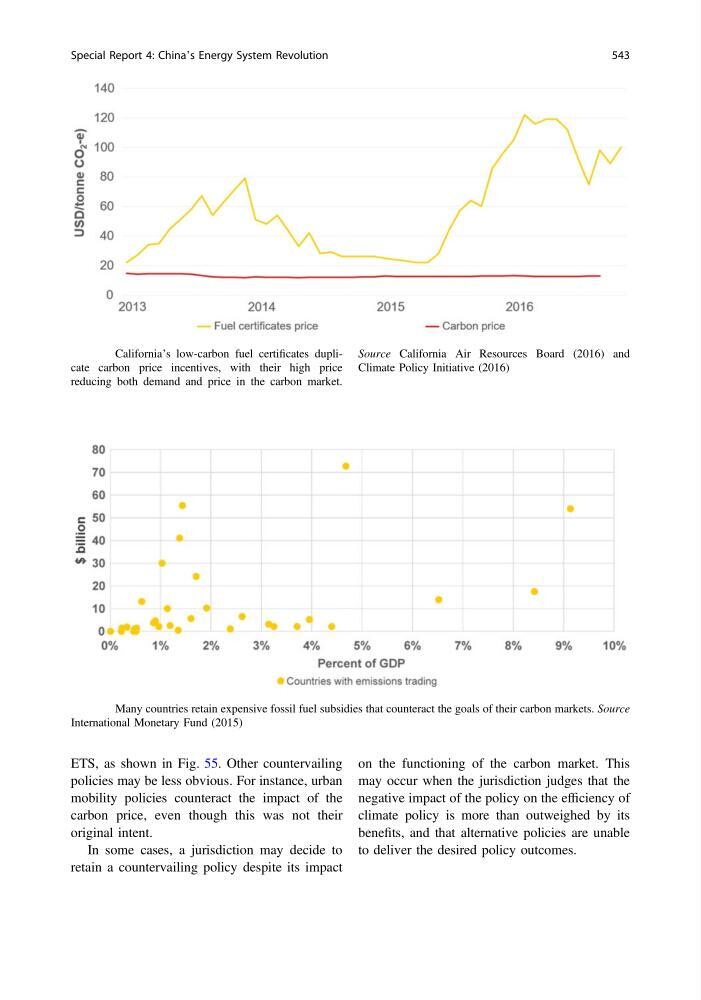
ETS, as shown in Fig. 55. Other countervailing
policies may be less obvious. For instance, urban
mobility policies counteract the impact of the
carbon price, even though this was not their
original intent.
In some cases, a jurisdiction may decide to
retain a countervailing policy despite its impact
on the functioning of the carbon market. This
may occur when the jurisdiction judges that the
negative impact of the policy on the efficiency of
climate policy is more than outweighed by its
benefits, and that alternative policies are unable
to deliver the desired policy outcomes.
Fig. 54 California’s low-carbon fuel certificates duplicate carbon price incentives, with their high price
reducing both demand and price in the carbon market.
Source California Air Resources Board (2016) and
Climate Policy Initiative (2016)
Fig. 55 Many countries retain expensive fossil fuel subsidies that counteract the goals of their carbon markets. Source
International Monetary Fund (2015)
Special Report 4: China’s Energy System Revolution
543
policies may be less obvious. For instance, urban
mobility policies counteract the impact of the
carbon price, even though this was not their
original intent.
In some cases, a jurisdiction may decide to
retain a countervailing policy despite its impact
on the functioning of the carbon market. This
may occur when the jurisdiction judges that the
negative impact of the policy on the efficiency of
climate policy is more than outweighed by its
benefits, and that alternative policies are unable
to deliver the desired policy outcomes.
Fig. 54 California’s low-carbon fuel certificates duplicate carbon price incentives, with their high price
reducing both demand and price in the carbon market.
Source California Air Resources Board (2016) and
Climate Policy Initiative (2016)
Fig. 55 Many countries retain expensive fossil fuel subsidies that counteract the goals of their carbon markets. Source
International Monetary Fund (2015)
Special Report 4: China’s Energy System Revolution
543