

conservative assumptions creates a projection
bias towards the continuation of current trends.
This can have real effects on the functioning of a
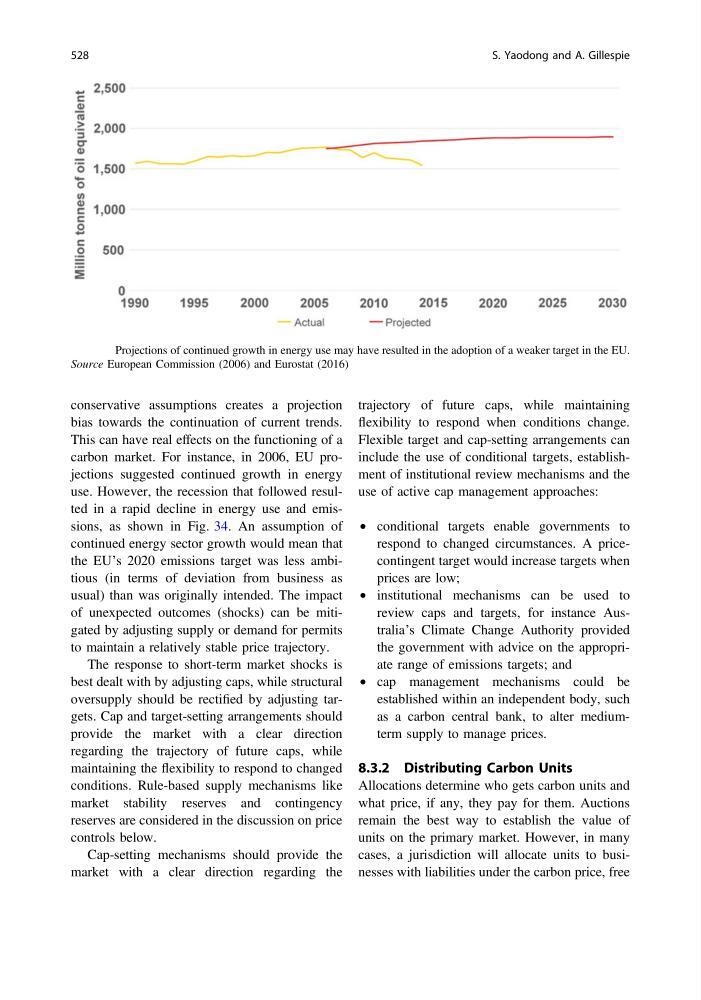
carbon market. For instance, in 2006, EU projections suggested continued growth in energy
use. However, the recession that followed resulted in a rapid decline in energy use and emissions, as shown in Fig. 34. An assumption of
continued energy sector growth would mean that
the EU’s 2020 emissions target was less ambitious (in terms of deviation from business as
usual) than was originally intended. The impact
of unexpected outcomes (shocks) can be mitigated by adjusting supply or demand for permits
to maintain a relatively stable price trajectory.
The response to short-term market shocks is
best dealt with by adjusting caps, while structural
oversupply should be rectified by adjusting targets. Cap and target-setting arrangements should
provide the market with a clear direction
regarding the trajectory of future caps, while
maintaining the flexibility to respond to changed
conditions. Rule-based supply mechanisms like
market stability reserves and contingency
reserves are considered in the discussion on price
controls below.
Cap-setting mechanisms should provide the
market with a clear direction regarding the
trajectory of future caps, while maintaining
flexibility to respond when conditions change.
Flexible target and cap-setting arrangements can
include the use of conditional targets, establishment of institutional review mechanisms and the
use of active cap management approaches:
• conditional targets enable governments to
respond to changed circumstances. A pricecontingent target would increase targets when
prices are low;
• institutional mechanisms can be used to
review caps and targets, for instance Australia’s Climate Change Authority provided
the government with advice on the appropriate range of emissions targets; and
• cap management mechanisms could be
established within an independent body, such
as a carbon central bank, to alter mediumterm supply to manage prices.
8.3.2 Distributing Carbon Units
Allocations determine who gets carbon units and
what price, if any, they pay for them. Auctions
remain the best way to establish the value of
units on the primary market. However, in many
cases, a jurisdiction will allocate units to businesses with liabilities under the carbon price, free
Fig. 34 Projections of continued growth in energy use may have resulted in the adoption of a weaker target in the EU.
Source European Commission (2006) and Eurostat (2016)
528
S. Yaodong and A. Gillespie
bias towards the continuation of current trends.
This can have real effects on the functioning of a
carbon market. For instance, in 2006, EU projections suggested continued growth in energy
use. However, the recession that followed resulted in a rapid decline in energy use and emissions, as shown in Fig. 34. An assumption of
continued energy sector growth would mean that
the EU’s 2020 emissions target was less ambitious (in terms of deviation from business as
usual) than was originally intended. The impact
of unexpected outcomes (shocks) can be mitigated by adjusting supply or demand for permits
to maintain a relatively stable price trajectory.
The response to short-term market shocks is
best dealt with by adjusting caps, while structural
oversupply should be rectified by adjusting targets. Cap and target-setting arrangements should
provide the market with a clear direction
regarding the trajectory of future caps, while
maintaining the flexibility to respond to changed
conditions. Rule-based supply mechanisms like
market stability reserves and contingency
reserves are considered in the discussion on price
controls below.
Cap-setting mechanisms should provide the
market with a clear direction regarding the
trajectory of future caps, while maintaining
flexibility to respond when conditions change.
Flexible target and cap-setting arrangements can
include the use of conditional targets, establishment of institutional review mechanisms and the
use of active cap management approaches:
• conditional targets enable governments to
respond to changed circumstances. A pricecontingent target would increase targets when
prices are low;
• institutional mechanisms can be used to
review caps and targets, for instance Australia’s Climate Change Authority provided
the government with advice on the appropriate range of emissions targets; and
• cap management mechanisms could be
established within an independent body, such
as a carbon central bank, to alter mediumterm supply to manage prices.
8.3.2 Distributing Carbon Units
Allocations determine who gets carbon units and
what price, if any, they pay for them. Auctions
remain the best way to establish the value of
units on the primary market. However, in many
cases, a jurisdiction will allocate units to businesses with liabilities under the carbon price, free
Fig. 34 Projections of continued growth in energy use may have resulted in the adoption of a weaker target in the EU.
Source European Commission (2006) and Eurostat (2016)
528
S. Yaodong and A. Gillespie