

Variability. A key feature of many low-carbon
power technologies is that they are variable
generators. This means that they generate on an
as-available basis rather than on demand, i.e.
they require the sun to be shining or the wind to
be blowing in order to generate power. Flexible
power generation and/or storage capacity is
required to make up for this variability and to
accommodate renewables into the power grid in
a way that maintains security of supply. Furthermore, variable renewables, such as wind and
solar, may frequently deviate from forecast levels
even when the sun is shining and the wind is
blowing, requiring greater short-term balancing
between electricity demand and supply to correct
for forecast errors. Power systems are already
designed to manage variability. However, with
greater renewables penetration, the demand for
more frequent and greater levels of balancing are
also likely to increase.
Low operating costs. Variable renewables,
such as wind and solar, have zero or a very low
marginal cost of operation once they have been
built. This, combined with their variable nature
(or intermittency), is already impacting the efficiency of existing liberalised wholesale power
markets and the ability of these markets to deliver long-term investment in capacity. Specifically, renewable energy generators, bidding in
the wholesale power market at their operating (or
marginal) costs, have lowered average power
prices. At the lower average price, conventional
plants have found it difficult to recover their
costs, and additional incentives have been
required to invest in long-term capacity necessary to manage intermittency. This has reduced
the ability of wholesale power markets to deliver
energy security alongside the other two trilemma
objectives.
Locational constraints. Renewables tend to be
less flexible in terms of their location compared
to conventional (fossil-based) power plants,
requiring investment in grid expansion to
accommodate and integrate them into the power
system. They can be located far from demand
centres, with optimal sites for wind and solar
only coincidentally located close to urban areas
and with network infrastructure required to connect supply with demand. Small-scale renewables, such as roof-top solar, may sell power into
local distribution networks, but network investment is required to allow these new two-way
flows of power without congestion.
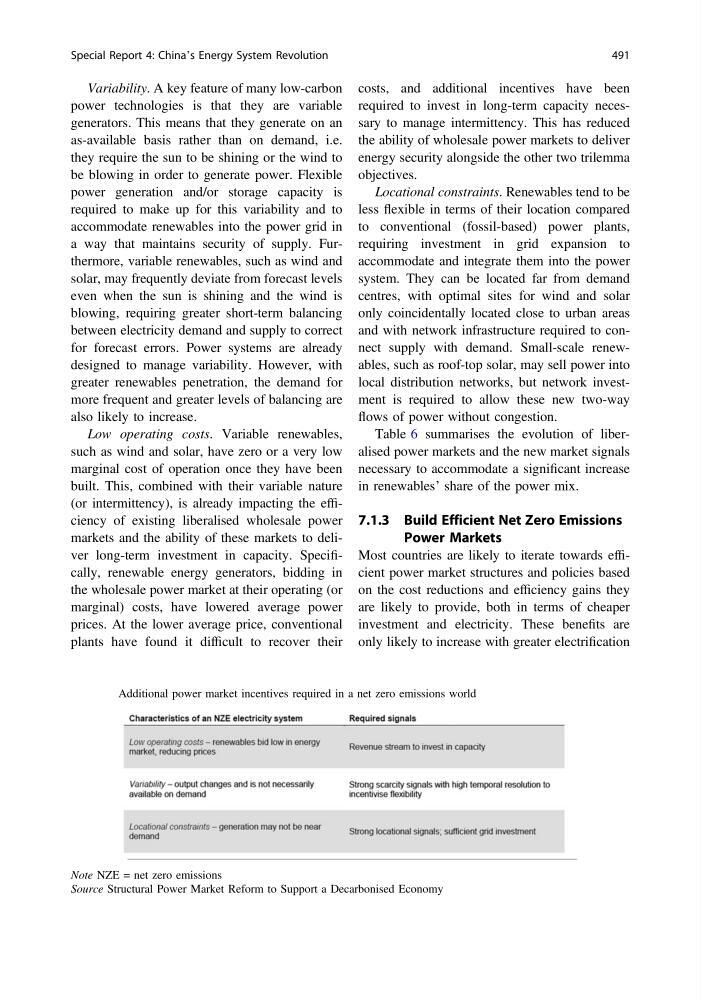
Table 6 summarises the evolution of liberalised power markets and the new market signals
necessary to accommodate a significant increase
in renewables’ share of the power mix.
7.1.3 Build Efficient Net Zero Emissions
Power Markets
Most countries are likely to iterate towards efficient power market structures and policies based
on the cost reductions and efficiency gains they
are likely to provide, both in terms of cheaper
investment and electricity. These benefits are
only likely to increase with greater electrification
Table 6 Additional power market incentives required in a net zero emissions world
Note NZE = net zero emissions
Source Structural Power Market Reform to Support a Decarbonised Economy
Special Report 4: China’s Energy System Revolution
491
power technologies is that they are variable
generators. This means that they generate on an
as-available basis rather than on demand, i.e.
they require the sun to be shining or the wind to
be blowing in order to generate power. Flexible
power generation and/or storage capacity is
required to make up for this variability and to
accommodate renewables into the power grid in
a way that maintains security of supply. Furthermore, variable renewables, such as wind and
solar, may frequently deviate from forecast levels
even when the sun is shining and the wind is
blowing, requiring greater short-term balancing
between electricity demand and supply to correct
for forecast errors. Power systems are already
designed to manage variability. However, with
greater renewables penetration, the demand for
more frequent and greater levels of balancing are
also likely to increase.
Low operating costs. Variable renewables,
such as wind and solar, have zero or a very low
marginal cost of operation once they have been
built. This, combined with their variable nature
(or intermittency), is already impacting the efficiency of existing liberalised wholesale power
markets and the ability of these markets to deliver long-term investment in capacity. Specifically, renewable energy generators, bidding in
the wholesale power market at their operating (or
marginal) costs, have lowered average power
prices. At the lower average price, conventional
plants have found it difficult to recover their
costs, and additional incentives have been
required to invest in long-term capacity necessary to manage intermittency. This has reduced
the ability of wholesale power markets to deliver
energy security alongside the other two trilemma
objectives.
Locational constraints. Renewables tend to be
less flexible in terms of their location compared
to conventional (fossil-based) power plants,
requiring investment in grid expansion to
accommodate and integrate them into the power
system. They can be located far from demand
centres, with optimal sites for wind and solar
only coincidentally located close to urban areas
and with network infrastructure required to connect supply with demand. Small-scale renewables, such as roof-top solar, may sell power into
local distribution networks, but network investment is required to allow these new two-way
flows of power without congestion.
Table 6 summarises the evolution of liberalised power markets and the new market signals
necessary to accommodate a significant increase
in renewables’ share of the power mix.
7.1.3 Build Efficient Net Zero Emissions
Power Markets
Most countries are likely to iterate towards efficient power market structures and policies based
on the cost reductions and efficiency gains they
are likely to provide, both in terms of cheaper
investment and electricity. These benefits are
only likely to increase with greater electrification
Table 6 Additional power market incentives required in a net zero emissions world
Note NZE = net zero emissions
Source Structural Power Market Reform to Support a Decarbonised Economy
Special Report 4: China’s Energy System Revolution
491