

supply, because coal plants remain a low-cost
source of secure supply.
The UK implemented phase 1 of its power
market reform in the mid-2000s but has had to
rapidly update policy to bring costs under control
and maintain sufficient supply. This has created
uncertainty for the up to £100 billion of planned
investment in power generation from 2015 to
2020 (60% of UK infrastructure spending in the
period).
In recent years, innovation in market reform
has begun to address the challenges of balancing
the energy trilemma. These have focused on
auctioning renewable subsidies and capacity
payments to control costs and on incentivising
new solutions to provide flexibility and improve
network management.
Further reform will be needed to deliver a net
zero emissions power system. The supply of
flexible power is not yet sufficient, and demand
for flexibility will increase as more energy
end-uses are electrified, such as transport, which
will likely increase peak loads. Currently,
options such as batteries require multiple revenue
streams to be economically viable, requiring
changes to how value is distributed across the
electricity supply chain. At the same time, the
manufacture of renewable power equipment and
the addition of a technology layer on top of
energy assets, such as with smart meters and the
Internet of things, links the transition to a net
zero emissions energy system with broader
industrial strategy aims.
The efficient coordination of an increasingly
complex net zero emissions power system will be
most efficiently delivered through greater use of
markets. However, due to the challenges of
low-carbon power, the appropriate market structures will be different from the historical standard
market design.
17
7.1.2 Overcome the Market Challenges
of Renewable Power
Another important task during global energy
system reform is to overcome the market challenges of renewable power. Variable renewables,
such as solar and wind, are a crucial part of a net
zero emissions power system, but they have
characteristics that undermine the efficient operation of liberalised power markets as currently
configured.
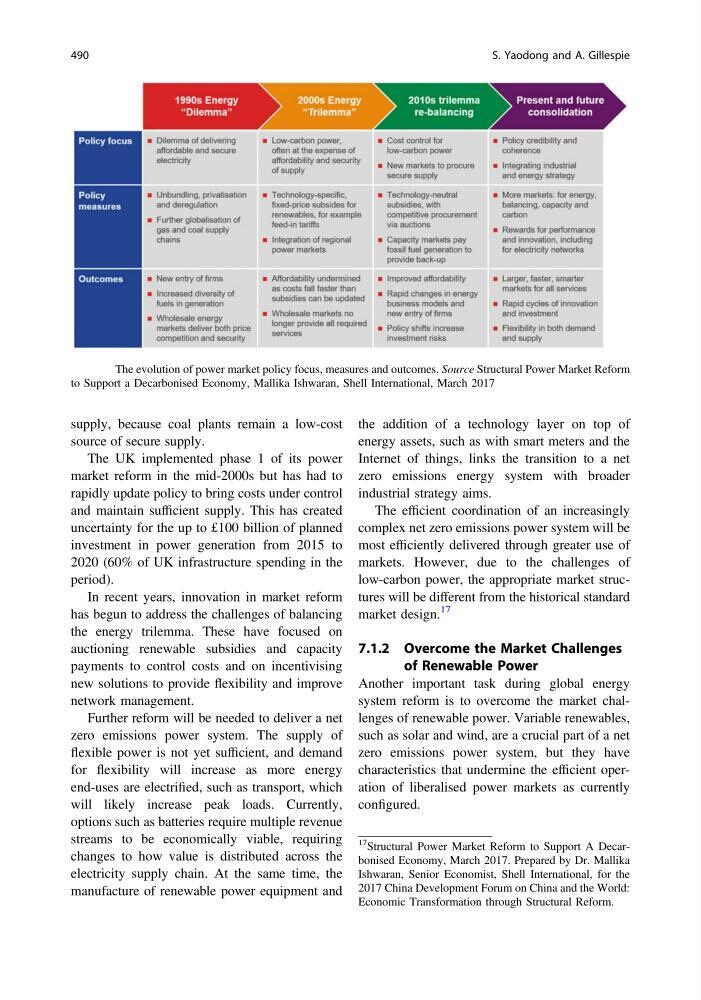
Fig. 16 The evolution of power market policy focus, measures and outcomes. Source Structural Power Market Reform
to Support a Decarbonised Economy, Mallika Ishwaran, Shell International, March 2017
17
Structural Power Market Reform to Support A Decarbonised Economy, March 2017. Prepared by Dr. Mallika
Ishwaran, Senior Economist, Shell International, for the
2017 China Development Forum on China and the World:
Economic Transformation through Structural Reform.
490
S. Yaodong and A. Gillespie
source of secure supply.
The UK implemented phase 1 of its power
market reform in the mid-2000s but has had to
rapidly update policy to bring costs under control
and maintain sufficient supply. This has created
uncertainty for the up to £100 billion of planned
investment in power generation from 2015 to
2020 (60% of UK infrastructure spending in the
period).
In recent years, innovation in market reform
has begun to address the challenges of balancing
the energy trilemma. These have focused on
auctioning renewable subsidies and capacity
payments to control costs and on incentivising
new solutions to provide flexibility and improve
network management.
Further reform will be needed to deliver a net
zero emissions power system. The supply of
flexible power is not yet sufficient, and demand
for flexibility will increase as more energy
end-uses are electrified, such as transport, which
will likely increase peak loads. Currently,
options such as batteries require multiple revenue
streams to be economically viable, requiring
changes to how value is distributed across the
electricity supply chain. At the same time, the
manufacture of renewable power equipment and
the addition of a technology layer on top of
energy assets, such as with smart meters and the
Internet of things, links the transition to a net
zero emissions energy system with broader
industrial strategy aims.
The efficient coordination of an increasingly
complex net zero emissions power system will be
most efficiently delivered through greater use of
markets. However, due to the challenges of
low-carbon power, the appropriate market structures will be different from the historical standard
market design.
17
7.1.2 Overcome the Market Challenges
of Renewable Power
Another important task during global energy
system reform is to overcome the market challenges of renewable power. Variable renewables,
such as solar and wind, are a crucial part of a net
zero emissions power system, but they have
characteristics that undermine the efficient operation of liberalised power markets as currently
configured.
Fig. 16 The evolution of power market policy focus, measures and outcomes. Source Structural Power Market Reform
to Support a Decarbonised Economy, Mallika Ishwaran, Shell International, March 2017
17
Structural Power Market Reform to Support A Decarbonised Economy, March 2017. Prepared by Dr. Mallika
Ishwaran, Senior Economist, Shell International, for the
2017 China Development Forum on China and the World:
Economic Transformation through Structural Reform.
490
S. Yaodong and A. Gillespie