

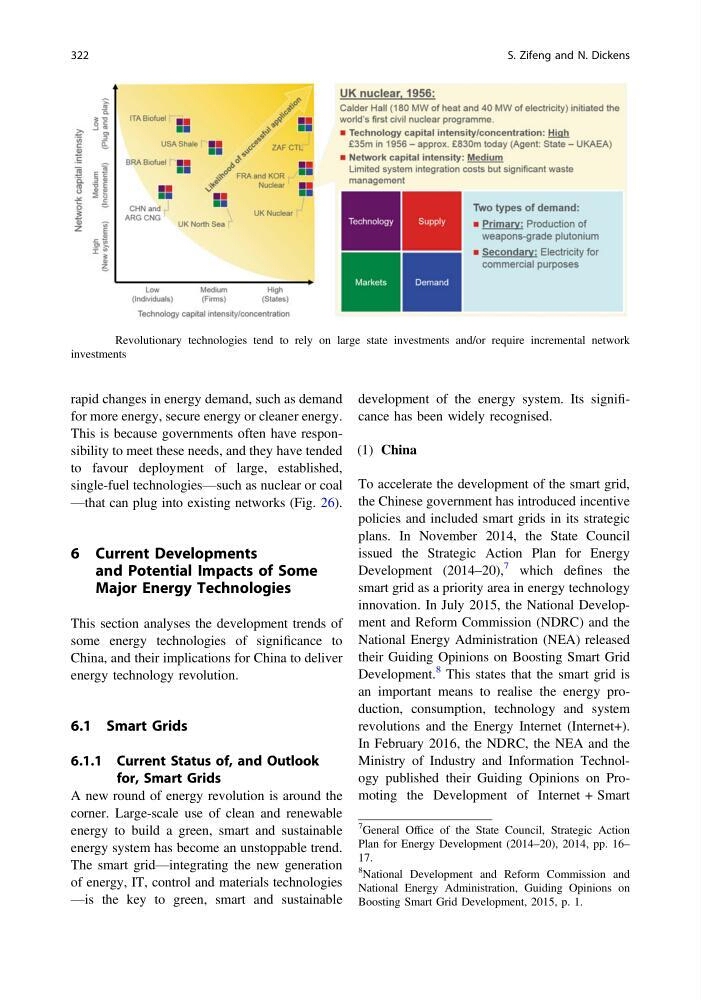
rapid changes in energy demand, such as demand
for more energy, secure energy or cleaner energy.
This is because governments often have responsibility to meet these needs, and they have tended
to favour deployment of large, established,
single-fuel technologies—such as nuclear or coal
—that can plug into existing networks (Fig. 26).
6 Current Developments
and Potential Impacts of Some
Major Energy Technologies
This section analyses the development trends of
some energy technologies of significance to
China, and their implications for China to deliver
energy technology revolution.
6.1 Smart Grids
6.1.1 Current Status of, and Outlook
for, Smart Grids
A new round of energy revolution is around the
corner. Large-scale use of clean and renewable
energy to build a green, smart and sustainable
energy system has become an unstoppable trend.
The smart grid—integrating the new generation
of energy, IT, control and materials technologies
—is the key to green, smart and sustainable
development of the energy system. Its significance has been widely recognised.
(1) China
To accelerate the development of the smart grid,
the Chinese government has introduced incentive
policies and included smart grids in its strategic
plans. In November 2014, the State Council
issued the Strategic Action Plan for Energy
Development (2014–20),
7 which defines the
smart grid as a priority area in energy technology
innovation. In July 2015, the National Development and Reform Commission (NDRC) and the
National Energy Administration (NEA) released
their Guiding Opinions on Boosting Smart Grid
Development.
8 This states that the smart grid is
an important means to realise the energy production, consumption, technology and system
revolutions and the Energy Internet (Internet+).
In February 2016, the NDRC, the NEA and the
Ministry of Industry and Information Technology published their Guiding Opinions on Promoting the Development of Internet + Smart
Fig. 26 Revolutionary technologies tend to rely on large state investments and/or require incremental network
investments
7
General Office of the State Council, Strategic Action
Plan for Energy Development (2014–20), 2014, pp. 16–
17.
8
National Development and Reform Commission and
National Energy Administration, Guiding Opinions on
Boosting Smart Grid Development, 2015, p. 1.
322
S. Zifeng and N. Dickens
for more energy, secure energy or cleaner energy.
This is because governments often have responsibility to meet these needs, and they have tended
to favour deployment of large, established,
single-fuel technologies—such as nuclear or coal
—that can plug into existing networks (Fig. 26).
6 Current Developments
and Potential Impacts of Some
Major Energy Technologies
This section analyses the development trends of
some energy technologies of significance to
China, and their implications for China to deliver
energy technology revolution.
6.1 Smart Grids
6.1.1 Current Status of, and Outlook
for, Smart Grids
A new round of energy revolution is around the
corner. Large-scale use of clean and renewable
energy to build a green, smart and sustainable
energy system has become an unstoppable trend.
The smart grid—integrating the new generation
of energy, IT, control and materials technologies
—is the key to green, smart and sustainable
development of the energy system. Its significance has been widely recognised.
(1) China
To accelerate the development of the smart grid,
the Chinese government has introduced incentive
policies and included smart grids in its strategic
plans. In November 2014, the State Council
issued the Strategic Action Plan for Energy
Development (2014–20),
7 which defines the
smart grid as a priority area in energy technology
innovation. In July 2015, the National Development and Reform Commission (NDRC) and the
National Energy Administration (NEA) released
their Guiding Opinions on Boosting Smart Grid
Development.
8 This states that the smart grid is
an important means to realise the energy production, consumption, technology and system
revolutions and the Energy Internet (Internet+).
In February 2016, the NDRC, the NEA and the
Ministry of Industry and Information Technology published their Guiding Opinions on Promoting the Development of Internet + Smart
Fig. 26 Revolutionary technologies tend to rely on large state investments and/or require incremental network
investments
7
General Office of the State Council, Strategic Action
Plan for Energy Development (2014–20), 2014, pp. 16–
17.
8
National Development and Reform Commission and
National Energy Administration, Guiding Opinions on
Boosting Smart Grid Development, 2015, p. 1.
322
S. Zifeng and N. Dickens