

These can range from acting directly as an
investor with monetary interventions to compensate for: (i) a limited ecosystem of investors
or; (ii) addressing misaligned incentives that
prevent investment in socially beneficial projects.
They can also include non-monetary interventions, such as fostering a culture of innovation
investment, ensuring strong links exist between
all relevant agents in the ecosystem, and providing market support via mid-stream investment
choices and operating standards.
2.2.3 Intervention Policy
(1) Defining success and assessing policy
interventions
It is clear that the inefficiencies within innovation
create a role for public intervention. However,
what defines the success or failure of such intervention is less clear. Innovation is an experimental
process: while discovering viable technologies is
one side of this, the unpredictability of the outcome means that it is not certain that the choice of
support technologies is correct. There are also
valuable spillovers and lessons learned, even
when technologies do not reach the general market. Consequently, defining success purely on the
final, direct output or widespread use of a new
technology does not create the optimal environment for successful innovation. Hence, exploring
both the dynamic pathway of innovation, as well
as the final outcome, is the key to understanding
and assessing public intervention.
First, assessing innovation with hindsight.
Once an innovation project has been completed,
its final outcome is defined by the realised social
value of the innovation and whether the technology reached deployment. Hindsight removes
uncertainty and reveals both the true social value
of the innovation project and the extent to which
it was supported. High social value innovations
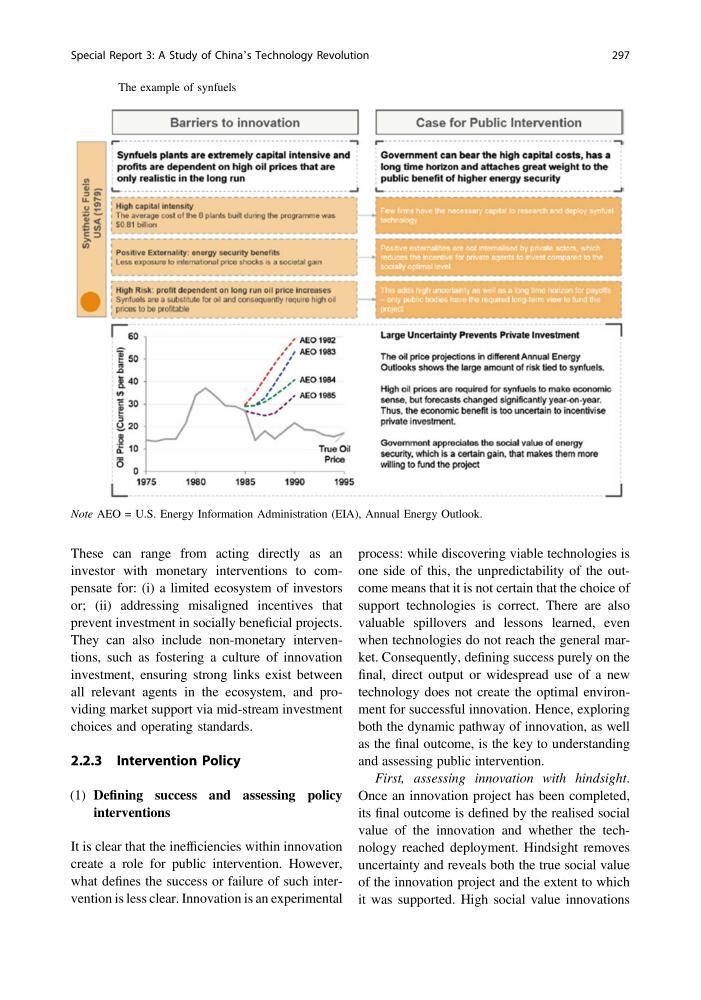
Table 6 The example of synfuels
Note AEO = U.S. Energy Information Administration (EIA), Annual Energy Outlook.
Special Report 3: A Study of China’s Technology Revolution
297
investor with monetary interventions to compensate for: (i) a limited ecosystem of investors
or; (ii) addressing misaligned incentives that
prevent investment in socially beneficial projects.
They can also include non-monetary interventions, such as fostering a culture of innovation
investment, ensuring strong links exist between
all relevant agents in the ecosystem, and providing market support via mid-stream investment
choices and operating standards.
2.2.3 Intervention Policy
(1) Defining success and assessing policy
interventions
It is clear that the inefficiencies within innovation
create a role for public intervention. However,
what defines the success or failure of such intervention is less clear. Innovation is an experimental
process: while discovering viable technologies is
one side of this, the unpredictability of the outcome means that it is not certain that the choice of
support technologies is correct. There are also
valuable spillovers and lessons learned, even
when technologies do not reach the general market. Consequently, defining success purely on the
final, direct output or widespread use of a new
technology does not create the optimal environment for successful innovation. Hence, exploring
both the dynamic pathway of innovation, as well
as the final outcome, is the key to understanding
and assessing public intervention.
First, assessing innovation with hindsight.
Once an innovation project has been completed,
its final outcome is defined by the realised social
value of the innovation and whether the technology reached deployment. Hindsight removes
uncertainty and reveals both the true social value
of the innovation project and the extent to which
it was supported. High social value innovations
Table 6 The example of synfuels
Note AEO = U.S. Energy Information Administration (EIA), Annual Energy Outlook.
Special Report 3: A Study of China’s Technology Revolution
297