

than 22%. This indicates that to achieve the 2030
peak carbon emissions and non-fossil energy
development goals at the same time, China
should take carbon pricing and subsidy policies
into account and coordinate delivery of the two
goals.
In the context of policy optimisation, the
relationship between the peak carbon emission
and non-fossil energy development goals is
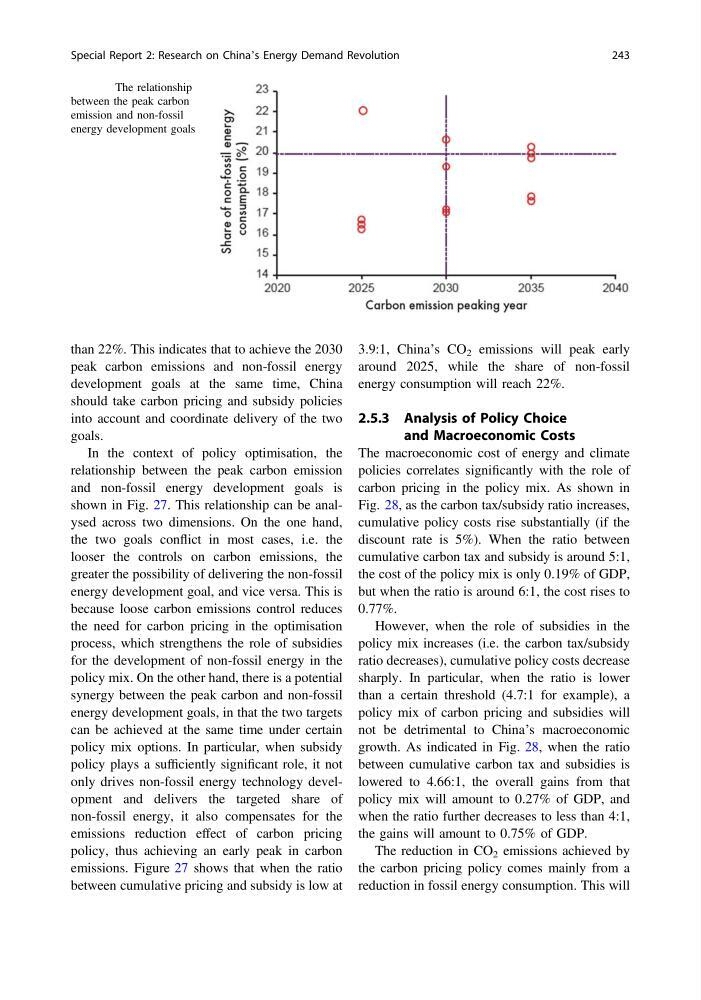
shown in Fig. 27. This relationship can be analysed across two dimensions. On the one hand,
the two goals conflict in most cases, i.e. the
looser the controls on carbon emissions, the
greater the possibility of delivering the non-fossil
energy development goal, and vice versa. This is
because loose carbon emissions control reduces
the need for carbon pricing in the optimisation
process, which strengthens the role of subsidies
for the development of non-fossil energy in the
policy mix. On the other hand, there is a potential
synergy between the peak carbon and non-fossil
energy development goals, in that the two targets
can be achieved at the same time under certain
policy mix options. In particular, when subsidy
policy plays a sufficiently significant role, it not
only drives non-fossil energy technology development and delivers the targeted share of
non-fossil energy, it also compensates for the
emissions reduction effect of carbon pricing
policy, thus achieving an early peak in carbon
emissions. Figure 27 shows that when the ratio
between cumulative pricing and subsidy is low at
3.9:1, China’s CO 2 emissions will peak early
around 2025, while the share of non-fossil
energy consumption will reach 22%.
2.5.3 Analysis of Policy Choice
and Macroeconomic Costs
The macroeconomic cost of energy and climate
policies correlates significantly with the role of
carbon pricing in the policy mix. As shown in
Fig. 28, as the carbon tax/subsidy ratio increases,
cumulative policy costs rise substantially (if the
discount rate is 5%). When the ratio between
cumulative carbon tax and subsidy is around 5:1,
the cost of the policy mix is only 0.19% of GDP,
but when the ratio is around 6:1, the cost rises to
0.77%.
However, when the role of subsidies in the
policy mix increases (i.e. the carbon tax/subsidy
ratio decreases), cumulative policy costs decrease
sharply. In particular, when the ratio is lower
than a certain threshold (4.7:1 for example), a
policy mix of carbon pricing and subsidies will
not be detrimental to China’s macroeconomic
growth. As indicated in Fig. 28, when the ratio
between cumulative carbon tax and subsidies is
lowered to 4.66:1, the overall gains from that
policy mix will amount to 0.27% of GDP, and
when the ratio further decreases to less than 4:1,
the gains will amount to 0.75% of GDP.
The reduction in CO 2 emissions achieved by
the carbon pricing policy comes mainly from a
reduction in fossil energy consumption. This will
Fig. 27 The relationship
between the peak carbon
emission and non-fossil
energy development goals
Special Report 2: Research on China’s Energy Demand Revolution
243
peak carbon emissions and non-fossil energy
development goals at the same time, China
should take carbon pricing and subsidy policies
into account and coordinate delivery of the two
goals.
In the context of policy optimisation, the
relationship between the peak carbon emission
and non-fossil energy development goals is
shown in Fig. 27. This relationship can be analysed across two dimensions. On the one hand,
the two goals conflict in most cases, i.e. the
looser the controls on carbon emissions, the
greater the possibility of delivering the non-fossil
energy development goal, and vice versa. This is
because loose carbon emissions control reduces
the need for carbon pricing in the optimisation
process, which strengthens the role of subsidies
for the development of non-fossil energy in the
policy mix. On the other hand, there is a potential
synergy between the peak carbon and non-fossil
energy development goals, in that the two targets
can be achieved at the same time under certain
policy mix options. In particular, when subsidy
policy plays a sufficiently significant role, it not
only drives non-fossil energy technology development and delivers the targeted share of
non-fossil energy, it also compensates for the
emissions reduction effect of carbon pricing
policy, thus achieving an early peak in carbon
emissions. Figure 27 shows that when the ratio
between cumulative pricing and subsidy is low at
3.9:1, China’s CO 2 emissions will peak early
around 2025, while the share of non-fossil
energy consumption will reach 22%.
2.5.3 Analysis of Policy Choice
and Macroeconomic Costs
The macroeconomic cost of energy and climate
policies correlates significantly with the role of
carbon pricing in the policy mix. As shown in
Fig. 28, as the carbon tax/subsidy ratio increases,
cumulative policy costs rise substantially (if the
discount rate is 5%). When the ratio between
cumulative carbon tax and subsidy is around 5:1,
the cost of the policy mix is only 0.19% of GDP,
but when the ratio is around 6:1, the cost rises to
0.77%.
However, when the role of subsidies in the
policy mix increases (i.e. the carbon tax/subsidy
ratio decreases), cumulative policy costs decrease
sharply. In particular, when the ratio is lower
than a certain threshold (4.7:1 for example), a
policy mix of carbon pricing and subsidies will
not be detrimental to China’s macroeconomic
growth. As indicated in Fig. 28, when the ratio
between cumulative carbon tax and subsidies is
lowered to 4.66:1, the overall gains from that
policy mix will amount to 0.27% of GDP, and
when the ratio further decreases to less than 4:1,
the gains will amount to 0.75% of GDP.
The reduction in CO 2 emissions achieved by
the carbon pricing policy comes mainly from a
reduction in fossil energy consumption. This will
Fig. 27 The relationship
between the peak carbon
emission and non-fossil
energy development goals
Special Report 2: Research on China’s Energy Demand Revolution
243