

the International Energy Agency and Tsinghua
University are lower—they predict China’s
average GDP growth rate to be 5.5% and 6.2%
respectively by 2030. Tsinghua University forecasts China’s economic growth expectation in
three scenarios—Optimistic, Moderate and Pessimistic—in its research report. In this study,
only the forecast in the Moderate scenario is used
for comparison.
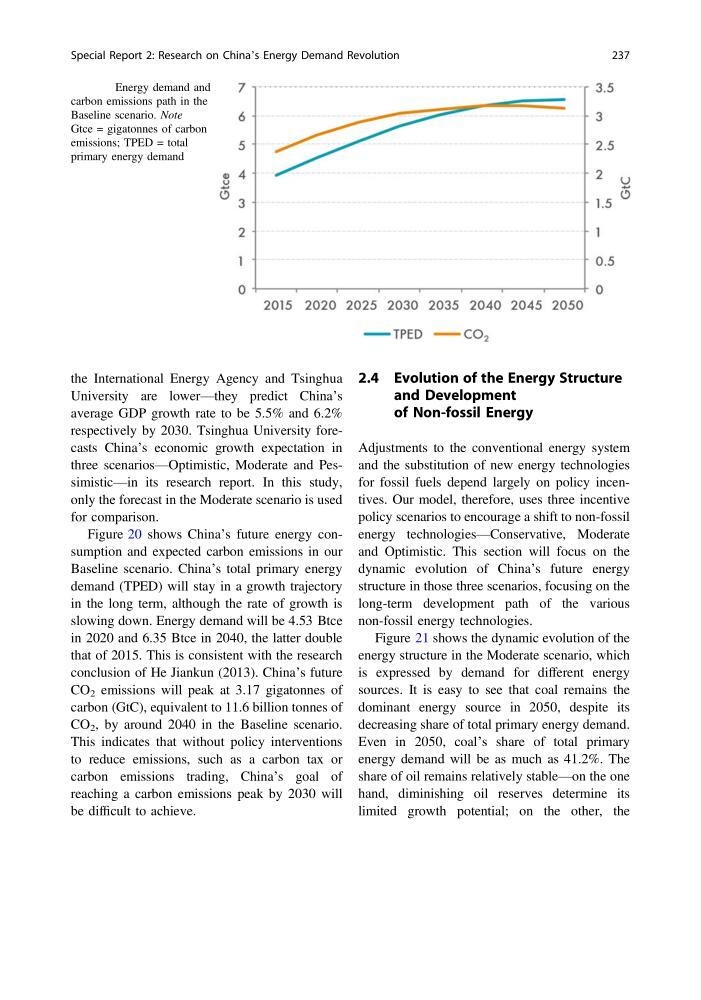
Figure 20 shows China’s future energy consumption and expected carbon emissions in our
Baseline scenario. China’s total primary energy
demand (TPED) will stay in a growth trajectory
in the long term, although the rate of growth is
slowing down. Energy demand will be 4.53 Btce
in 2020 and 6.35 Btce in 2040, the latter double
that of 2015. This is consistent with the research
conclusion of He Jiankun (2013). China’s future
CO 2 emissions will peak at 3.17 gigatonnes of
carbon (GtC), equivalent to 11.6 billion tonnes of
CO 2 , by around 2040 in the Baseline scenario.
This indicates that without policy interventions
to reduce emissions, such as a carbon tax or
carbon emissions trading, China’s goal of
reaching a carbon emissions peak by 2030 will
be difficult to achieve.
2.4 Evolution of the Energy Structure
and Development
of Non-fossil Energy
Adjustments to the conventional energy system
and the substitution of new energy technologies
for fossil fuels depend largely on policy incentives. Our model, therefore, uses three incentive
policy scenarios to encourage a shift to non-fossil
energy technologies—Conservative, Moderate
and Optimistic. This section will focus on the
dynamic evolution of China’s future energy
structure in those three scenarios, focusing on the
long-term development path of the various
non-fossil energy technologies.
Figure 21 shows the dynamic evolution of the
energy structure in the Moderate scenario, which
is expressed by demand for different energy
sources. It is easy to see that coal remains the
dominant energy source in 2050, despite its
decreasing share of total primary energy demand.
Even in 2050, coal’s share of total primary
energy demand will be as much as 41.2%. The
share of oil remains relatively stable—on the one
hand, diminishing oil reserves determine its
limited growth potential; on the other, the
Fig. 20 Energy demand and
carbon emissions path in the
Baseline scenario. Note
Gtce = gigatonnes of carbon
emissions; TPED = total
primary energy demand
Special Report 2: Research on China’s Energy Demand Revolution
237
University are lower—they predict China’s
average GDP growth rate to be 5.5% and 6.2%
respectively by 2030. Tsinghua University forecasts China’s economic growth expectation in
three scenarios—Optimistic, Moderate and Pessimistic—in its research report. In this study,
only the forecast in the Moderate scenario is used
for comparison.
Figure 20 shows China’s future energy consumption and expected carbon emissions in our
Baseline scenario. China’s total primary energy
demand (TPED) will stay in a growth trajectory
in the long term, although the rate of growth is
slowing down. Energy demand will be 4.53 Btce
in 2020 and 6.35 Btce in 2040, the latter double
that of 2015. This is consistent with the research
conclusion of He Jiankun (2013). China’s future
CO 2 emissions will peak at 3.17 gigatonnes of
carbon (GtC), equivalent to 11.6 billion tonnes of
CO 2 , by around 2040 in the Baseline scenario.
This indicates that without policy interventions
to reduce emissions, such as a carbon tax or
carbon emissions trading, China’s goal of
reaching a carbon emissions peak by 2030 will
be difficult to achieve.
2.4 Evolution of the Energy Structure
and Development
of Non-fossil Energy
Adjustments to the conventional energy system
and the substitution of new energy technologies
for fossil fuels depend largely on policy incentives. Our model, therefore, uses three incentive
policy scenarios to encourage a shift to non-fossil
energy technologies—Conservative, Moderate
and Optimistic. This section will focus on the
dynamic evolution of China’s future energy
structure in those three scenarios, focusing on the
long-term development path of the various
non-fossil energy technologies.
Figure 21 shows the dynamic evolution of the
energy structure in the Moderate scenario, which
is expressed by demand for different energy
sources. It is easy to see that coal remains the
dominant energy source in 2050, despite its
decreasing share of total primary energy demand.
Even in 2050, coal’s share of total primary
energy demand will be as much as 41.2%. The
share of oil remains relatively stable—on the one
hand, diminishing oil reserves determine its
limited growth potential; on the other, the
Fig. 20 Energy demand and
carbon emissions path in the
Baseline scenario. Note
Gtce = gigatonnes of carbon
emissions; TPED = total
primary energy demand
Special Report 2: Research on China’s Energy Demand Revolution
237