

to cleaner carriers does not carry similar flexibility benefits. Even so, there are examples of
very fast transitions. The adoption of the Messmer Plan in France in the 1970s and its rapid
deployment of nuclear capacity is an example of
such a rapid transition towards cleaner fuels.
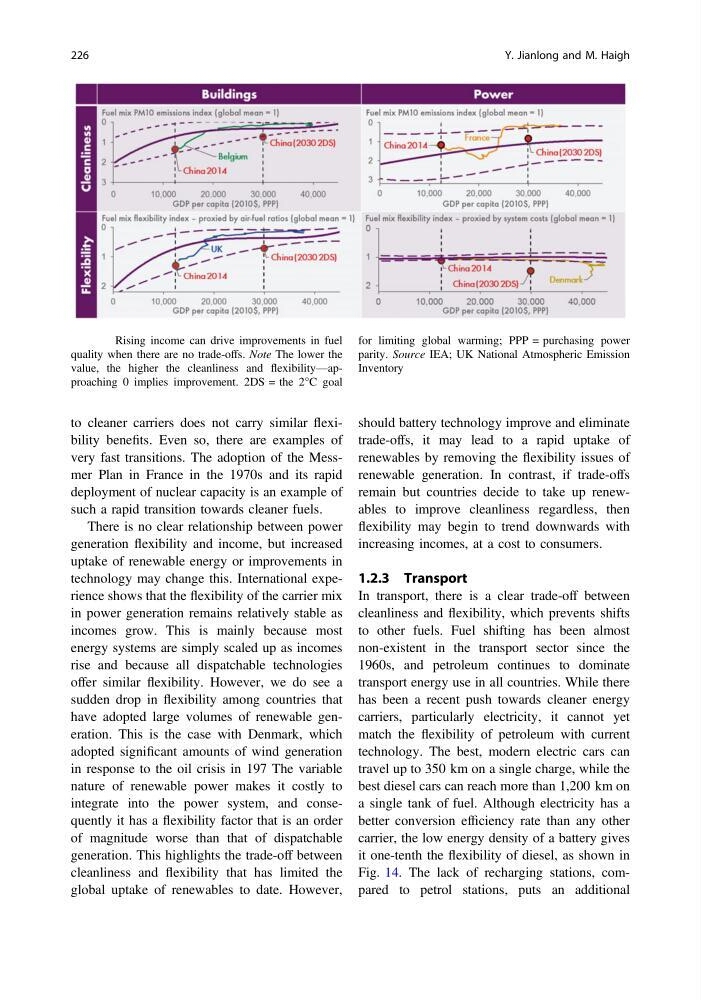
There is no clear relationship between power
generation flexibility and income, but increased
uptake of renewable energy or improvements in
technology may change this. International experience shows that the flexibility of the carrier mix
in power generation remains relatively stable as
incomes grow. This is mainly because most
energy systems are simply scaled up as incomes
rise and because all dispatchable technologies
offer similar flexibility. However, we do see a
sudden drop in flexibility among countries that
have adopted large volumes of renewable generation. This is the case with Denmark, which
adopted significant amounts of wind generation
in response to the oil crisis in 197 The variable
nature of renewable power makes it costly to
integrate into the power system, and consequently it has a flexibility factor that is an order
of magnitude worse than that of dispatchable
generation. This highlights the trade-off between
cleanliness and flexibility that has limited the
global uptake of renewables to date. However,
should battery technology improve and eliminate
trade-offs, it may lead to a rapid uptake of
renewables by removing the flexibility issues of
renewable generation. In contrast, if trade-offs
remain but countries decide to take up renewables to improve cleanliness regardless, then
flexibility may begin to trend downwards with
increasing incomes, at a cost to consumers.
1.2.3 Transport
In transport, there is a clear trade-off between
cleanliness and flexibility, which prevents shifts
to other fuels. Fuel shifting has been almost
non-existent in the transport sector since the
1960s, and petroleum continues to dominate
transport energy use in all countries. While there
has been a recent push towards cleaner energy
carriers, particularly electricity, it cannot yet
match the flexibility of petroleum with current
technology. The best, modern electric cars can
travel up to 350 km on a single charge, while the
best diesel cars can reach more than 1,200 km on
a single tank of fuel. Although electricity has a
better conversion efficiency rate than any other
carrier, the low energy density of a battery gives
it one-tenth the flexibility of diesel, as shown in
Fig. 14. The lack of recharging stations, compared to petrol stations, puts an additional
Fig. 13 Rising income can drive improvements in fuel
quality when there are no trade-offs. Note The lower the
value, the higher the cleanliness and flexibility—approaching 0 implies improvement. 2DS = the 2°C goal
for limiting global warming; PPP = purchasing power
parity. Source IEA; UK National Atmospheric Emission
Inventory
226
Y. Jianlong and M. Haigh
very fast transitions. The adoption of the Messmer Plan in France in the 1970s and its rapid
deployment of nuclear capacity is an example of
such a rapid transition towards cleaner fuels.
There is no clear relationship between power
generation flexibility and income, but increased
uptake of renewable energy or improvements in
technology may change this. International experience shows that the flexibility of the carrier mix
in power generation remains relatively stable as
incomes grow. This is mainly because most
energy systems are simply scaled up as incomes
rise and because all dispatchable technologies
offer similar flexibility. However, we do see a
sudden drop in flexibility among countries that
have adopted large volumes of renewable generation. This is the case with Denmark, which
adopted significant amounts of wind generation
in response to the oil crisis in 197 The variable
nature of renewable power makes it costly to
integrate into the power system, and consequently it has a flexibility factor that is an order
of magnitude worse than that of dispatchable
generation. This highlights the trade-off between
cleanliness and flexibility that has limited the
global uptake of renewables to date. However,
should battery technology improve and eliminate
trade-offs, it may lead to a rapid uptake of
renewables by removing the flexibility issues of
renewable generation. In contrast, if trade-offs
remain but countries decide to take up renewables to improve cleanliness regardless, then
flexibility may begin to trend downwards with
increasing incomes, at a cost to consumers.
1.2.3 Transport
In transport, there is a clear trade-off between
cleanliness and flexibility, which prevents shifts
to other fuels. Fuel shifting has been almost
non-existent in the transport sector since the
1960s, and petroleum continues to dominate
transport energy use in all countries. While there
has been a recent push towards cleaner energy
carriers, particularly electricity, it cannot yet
match the flexibility of petroleum with current
technology. The best, modern electric cars can
travel up to 350 km on a single charge, while the
best diesel cars can reach more than 1,200 km on
a single tank of fuel. Although electricity has a
better conversion efficiency rate than any other
carrier, the low energy density of a battery gives
it one-tenth the flexibility of diesel, as shown in
Fig. 14. The lack of recharging stations, compared to petrol stations, puts an additional
Fig. 13 Rising income can drive improvements in fuel
quality when there are no trade-offs. Note The lower the
value, the higher the cleanliness and flexibility—approaching 0 implies improvement. 2DS = the 2°C goal
for limiting global warming; PPP = purchasing power
parity. Source IEA; UK National Atmospheric Emission
Inventory
226
Y. Jianlong and M. Haigh