

demand intensity paths it follows. Assuming that
conversion technologies are constant, by 2030, if
the conventional energy service demand mode is
followed, China’s energy demand will increase
by 75% from the current level, as shown in
Fig. 3. However, if the low service intensity path
of international experience is taken, China’s
energy demand will fall by 33%. In contrast, if
the high service intensity path of international
experience is followed, China’s energy demand
will increase by 25%. This explains the important
role of service demand in identifying China’s
future energy demand path, and it highlights the
possible impacts of policy interventions on
energy demand.
Policy plays an important role in affecting
service demand, especially for China’s future
economic development. Impacts that can be
changed by policy include those of population
density on transport services, gross capital formation on industrial services, income inequality
on building services, and urbanisation on agriculture energy services. These factors can
explain why the difference in energy demand in
the low and high service intensity paths is significant, when compared with China’s expected
income level in 2030. This highlights the
importance of current policies and their ability to
impact long-term energy demand.
When both energy cleanliness and flexibility
are considered, the fuel mix in buildings, for
example, will change rapidly. As income
increases, the buildings sector shifts rapidly from
coal and biomass to electricity and natural gas,
because these energy carriers are easy to use and
do not cause local pollution. In other sectors,
however, cleanliness and flexibility cannot be
provided by the same energy carrier. In transport,
the cleanest fuel today (electricity) has a lower
driving range than molecular-based fuels (oil or
in future, hydrogen) making it less flexible. Due
to the absence of a dominant fuel, the energy
carrier structure remains constant, unless new
technologies eliminate the trade-off between
cleanliness and flexibility, as shown in Fig. 4.
• in buildings, it is possible to improve quickly
both the flexibility and cleanliness of energy
carriers;
• in power generation, adopting gas and nuclear
improves cleanliness without lowering flexibility, but renewable technologies require a
trade-off between cleanliness and flexibility;
• carriers in transport cannot improve simultaneously in flexibility and cleanliness with
current technologies—future technologies
may do this and eliminate the trade-off; and
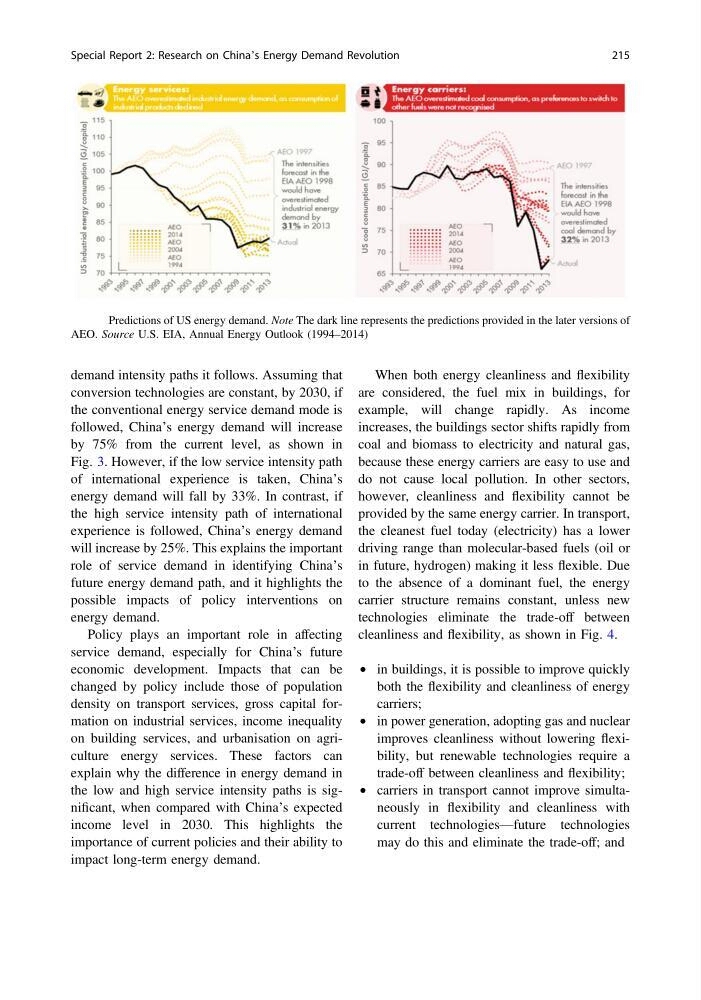
Fig. 2 Predictions of US energy demand. Note The dark line represents the predictions provided in the later versions of
AEO. Source U.S. EIA, Annual Energy Outlook (1994–2014)
Special Report 2: Research on China’s Energy Demand Revolution
215
conversion technologies are constant, by 2030, if
the conventional energy service demand mode is
followed, China’s energy demand will increase
by 75% from the current level, as shown in
Fig. 3. However, if the low service intensity path
of international experience is taken, China’s
energy demand will fall by 33%. In contrast, if
the high service intensity path of international
experience is followed, China’s energy demand
will increase by 25%. This explains the important
role of service demand in identifying China’s
future energy demand path, and it highlights the
possible impacts of policy interventions on
energy demand.
Policy plays an important role in affecting
service demand, especially for China’s future
economic development. Impacts that can be
changed by policy include those of population
density on transport services, gross capital formation on industrial services, income inequality
on building services, and urbanisation on agriculture energy services. These factors can
explain why the difference in energy demand in
the low and high service intensity paths is significant, when compared with China’s expected
income level in 2030. This highlights the
importance of current policies and their ability to
impact long-term energy demand.
When both energy cleanliness and flexibility
are considered, the fuel mix in buildings, for
example, will change rapidly. As income
increases, the buildings sector shifts rapidly from
coal and biomass to electricity and natural gas,
because these energy carriers are easy to use and
do not cause local pollution. In other sectors,
however, cleanliness and flexibility cannot be
provided by the same energy carrier. In transport,
the cleanest fuel today (electricity) has a lower
driving range than molecular-based fuels (oil or
in future, hydrogen) making it less flexible. Due
to the absence of a dominant fuel, the energy
carrier structure remains constant, unless new
technologies eliminate the trade-off between
cleanliness and flexibility, as shown in Fig. 4.
• in buildings, it is possible to improve quickly
both the flexibility and cleanliness of energy
carriers;
• in power generation, adopting gas and nuclear
improves cleanliness without lowering flexibility, but renewable technologies require a
trade-off between cleanliness and flexibility;
• carriers in transport cannot improve simultaneously in flexibility and cleanliness with
current technologies—future technologies
may do this and eliminate the trade-off; and
Fig. 2 Predictions of US energy demand. Note The dark line represents the predictions provided in the later versions of
AEO. Source U.S. EIA, Annual Energy Outlook (1994–2014)
Special Report 2: Research on China’s Energy Demand Revolution
215