

resources over a long time has caused severe
pollution and environmental damage, and the
major coal-producing regions are faced with
daunting challenges. Although China’s coal
demand is about to peak—in some regions it is
already in decline—in the long term, coal will
remain a major source of energy. Without a
revolution in coal production, the energy revolution will be nothing but empty talk.
Developing coal into a secure, economic,
clean and efficient resource is, therefore, an
effective way to drive the energy revolution.
(1) Effective control of coal capacity
Low-carbon energy and decarbonisation are the
megatrends in energy development worldwide.
As the long-term extensive use of coal has
caused severe pollution, environmental damage
and climate change, a reduction in coal use is
inevitable. This will present coal-producing
regions with a formidable challenge. The fundamental idea behind China’s coal production
revolution is to minimise production. In the next
decade, China’s coal capacity will be effectively
controlled to no more than 4.5 Bt and 4.2 Bt
respectively in 2020 and 2030.
(2) Significant increase in scientific coal
To solve the environmental problems caused by
coal extraction and use, coal mining needs to take
into consideration production conditions in the
various coal-producing regions to enable scientific coal production. Geology, coal quality,
reserves, water resources and ecology in each
coal-producing region should be assessed. From
this, we expect a third of China’s coal mines to
meet the criteria for scientific coal production.
A further third will fail to meet the criteria but will
be upgraded, and a third will be too far behind
criteria requirements to warrant upgrading and
will gradually be shut down. As a result of these
measures, scientific coal capacity will increase.
By 2020, forecasts expect scientific coal capacity
to reach 3.5 Bt, which is more than 80% of total
coal production capacity. By 2030, scientific coal
capacity will be 4.2 Bt, or 100% of total coal
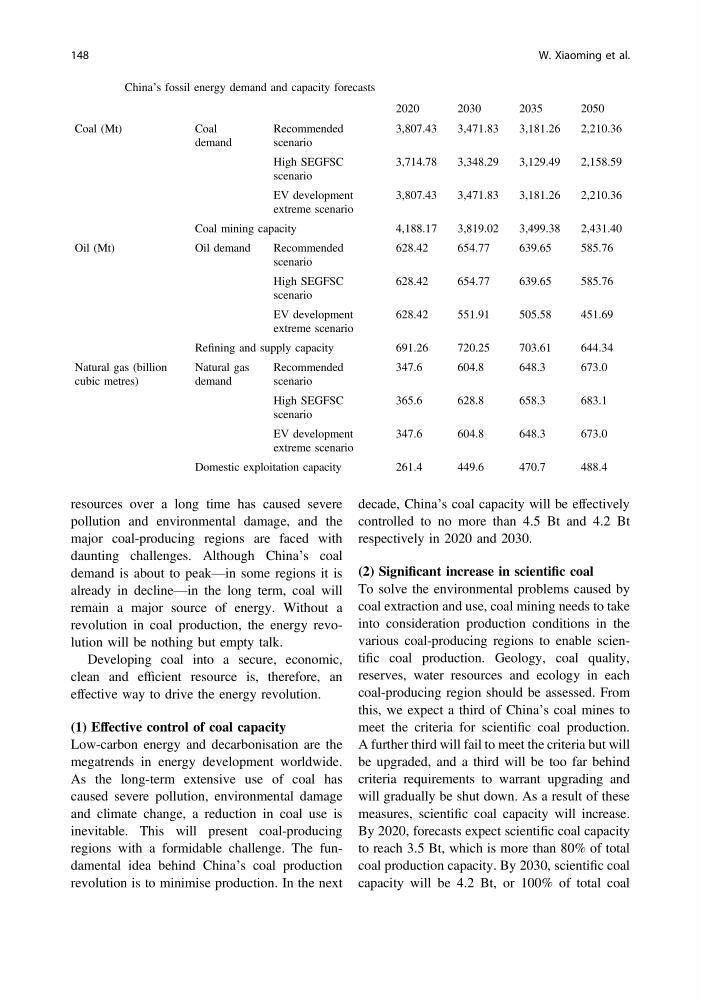
Table 16 China’s fossil energy demand and capacity forecasts
2020
2030
2035
2050
Coal (Mt)
Coal
demand
Recommended
scenario
3,807.43
3,471.83
3,181.26
2,210.36
High SEGFSC
scenario
3,714.78
3,348.29
3,129.49
2,158.59
EV development
extreme scenario
3,807.43
3,471.83
3,181.26
2,210.36
Coal mining capacity
4,188.17
3,819.02
3,499.38
2,431.40
Oil (Mt)
Oil demand
Recommended
scenario
628.42
654.77
639.65
585.76
High SEGFSC
scenario
628.42
654.77
639.65
585.76
EV development
extreme scenario
628.42
551.91
505.58
451.69
Refining and supply capacity
691.26
720.25
703.61
644.34
Natural gas (billion
cubic metres)
Natural gas
demand
Recommended
scenario
347.6
604.8
648.3
673.0
High SEGFSC
scenario
365.6
628.8
658.3
683.1
EV development
extreme scenario
347.6
604.8
648.3
673.0
Domestic exploitation capacity
261.4
449.6
470.7
488.4
148
W. Xiaoming et al.
pollution and environmental damage, and the
major coal-producing regions are faced with
daunting challenges. Although China’s coal
demand is about to peak—in some regions it is
already in decline—in the long term, coal will
remain a major source of energy. Without a
revolution in coal production, the energy revolution will be nothing but empty talk.
Developing coal into a secure, economic,
clean and efficient resource is, therefore, an
effective way to drive the energy revolution.
(1) Effective control of coal capacity
Low-carbon energy and decarbonisation are the
megatrends in energy development worldwide.
As the long-term extensive use of coal has
caused severe pollution, environmental damage
and climate change, a reduction in coal use is
inevitable. This will present coal-producing
regions with a formidable challenge. The fundamental idea behind China’s coal production
revolution is to minimise production. In the next
decade, China’s coal capacity will be effectively
controlled to no more than 4.5 Bt and 4.2 Bt
respectively in 2020 and 2030.
(2) Significant increase in scientific coal
To solve the environmental problems caused by
coal extraction and use, coal mining needs to take
into consideration production conditions in the
various coal-producing regions to enable scientific coal production. Geology, coal quality,
reserves, water resources and ecology in each
coal-producing region should be assessed. From
this, we expect a third of China’s coal mines to
meet the criteria for scientific coal production.
A further third will fail to meet the criteria but will
be upgraded, and a third will be too far behind
criteria requirements to warrant upgrading and
will gradually be shut down. As a result of these
measures, scientific coal capacity will increase.
By 2020, forecasts expect scientific coal capacity
to reach 3.5 Bt, which is more than 80% of total
coal production capacity. By 2030, scientific coal
capacity will be 4.2 Bt, or 100% of total coal
Table 16 China’s fossil energy demand and capacity forecasts
2020
2030
2035
2050
Coal (Mt)
Coal
demand
Recommended
scenario
3,807.43
3,471.83
3,181.26
2,210.36
High SEGFSC
scenario
3,714.78
3,348.29
3,129.49
2,158.59
EV development
extreme scenario
3,807.43
3,471.83
3,181.26
2,210.36
Coal mining capacity
4,188.17
3,819.02
3,499.38
2,431.40
Oil (Mt)
Oil demand
Recommended
scenario
628.42
654.77
639.65
585.76
High SEGFSC
scenario
628.42
654.77
639.65
585.76
EV development
extreme scenario
628.42
551.91
505.58
451.69
Refining and supply capacity
691.26
720.25
703.61
644.34
Natural gas (billion
cubic metres)
Natural gas
demand
Recommended
scenario
347.6
604.8
648.3
673.0
High SEGFSC
scenario
365.6
628.8
658.3
683.1
EV development
extreme scenario
347.6
604.8
648.3
673.0
Domestic exploitation capacity
261.4
449.6
470.7
488.4
148
W. Xiaoming et al.