

the annual need for maintenance and decoration
will also increase, which means growing demand
for glass, ceramics, plastics and other new
building materials.
(4) China’s economic development to 2050
The 19th National Congress of the Communist
Party of China in 2017 identified the strategic
goal of achieving the country’s modernisation by
2035 and developing China into a great modern
socialist country by 2050. Compared with the
previous goal of achieving modernisation by
mid-century, the revised target is 15 years ahead
of the original timeline. This shows that China
has made greater progress than expected and that
there is still huge development potential in the
long term. By 2035, China’s GDP will reach
$33.8 trillion (at 2015 prices), passing the USA
to become the world’s largest economy. GDP per
capita will be more than $20,000, rising to
around $40,000 in 2050, which is above that of
moderately developed countries. China’s share of
global GDP will exceed 20%.
By 2050, China will have shifted from a
production-led to a consumption-driven economy. Manufacturing’s share of the economy will
continue to decrease, while that of the service
sector will rise from 50.2% in 2015 to 58% in
2035 and around 70% by 2050 (at 2015 prices). In
industry, equipment manufacturing and light
industry’s share of the economy will increase from
46% in 2015 to 61% in 2035 and 65% in 2050.
3.3.3 Energy Demand to 2050,
as Forecast by the Strategy
of Energy Production
and Consumption
Revolution (2016–30)
The Strategy of Energy Production and Consumption Revolution (2016-30) uses the same socioeconomic development analysis as above to forecast
China’s energy demand pathway to 2050. It is
important to note that this is not a business as usual
scenario, but an integrated one that takes such factors
as the potential for energy efficiency in various
industries, clean energy requirements and economic
feasibility into consideration. The energy supply
revolution should be carried out on the premise of
meeting end-use energy demand (Fig. 47).
(1) Agriculture
Agriculture is a low energy-consuming sector. Its
share of total end-use energy consumption in
2015 was only 2% and energy consumption per
unit of added value of RMB 10,000 ($1,600) was
only 0.1 tonnes of coal equivalent (tce). China’s
agricultural growth will remain stable for a long
time. The one major factor that influences energy
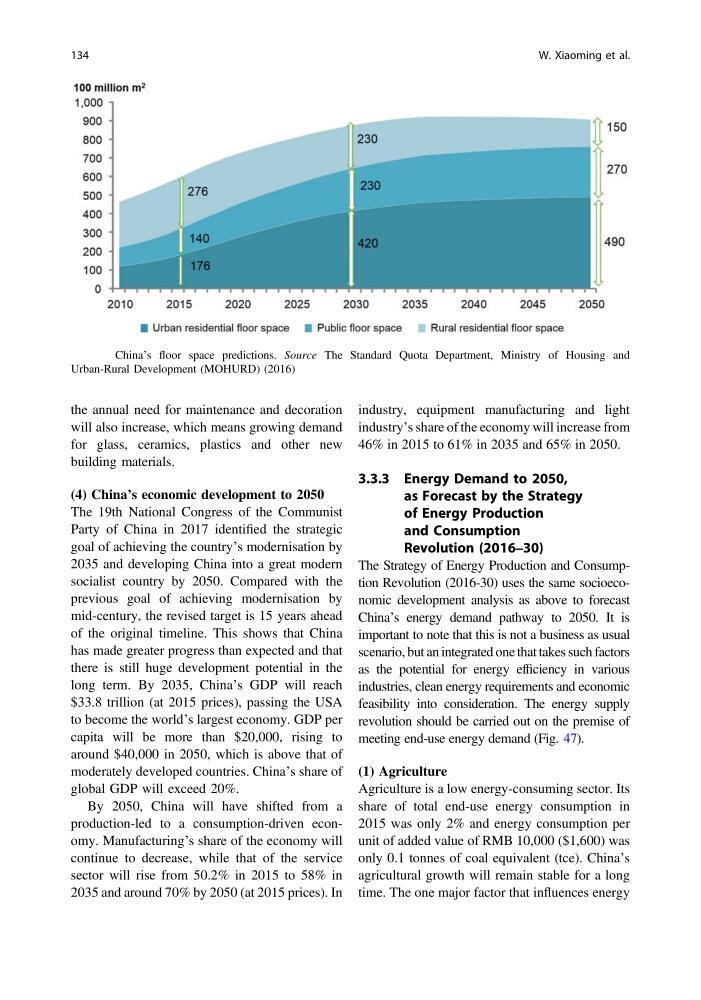
Fig. 46 China’s floor space predictions. Source The Standard Quota Department, Ministry of Housing and
Urban-Rural Development (MOHURD) (2016)
134
W. Xiaoming et al.
will also increase, which means growing demand
for glass, ceramics, plastics and other new
building materials.
(4) China’s economic development to 2050
The 19th National Congress of the Communist
Party of China in 2017 identified the strategic
goal of achieving the country’s modernisation by
2035 and developing China into a great modern
socialist country by 2050. Compared with the
previous goal of achieving modernisation by
mid-century, the revised target is 15 years ahead
of the original timeline. This shows that China
has made greater progress than expected and that
there is still huge development potential in the
long term. By 2035, China’s GDP will reach
$33.8 trillion (at 2015 prices), passing the USA
to become the world’s largest economy. GDP per
capita will be more than $20,000, rising to
around $40,000 in 2050, which is above that of
moderately developed countries. China’s share of
global GDP will exceed 20%.
By 2050, China will have shifted from a
production-led to a consumption-driven economy. Manufacturing’s share of the economy will
continue to decrease, while that of the service
sector will rise from 50.2% in 2015 to 58% in
2035 and around 70% by 2050 (at 2015 prices). In
industry, equipment manufacturing and light
industry’s share of the economy will increase from
46% in 2015 to 61% in 2035 and 65% in 2050.
3.3.3 Energy Demand to 2050,
as Forecast by the Strategy
of Energy Production
and Consumption
Revolution (2016–30)
The Strategy of Energy Production and Consumption Revolution (2016-30) uses the same socioeconomic development analysis as above to forecast
China’s energy demand pathway to 2050. It is
important to note that this is not a business as usual
scenario, but an integrated one that takes such factors
as the potential for energy efficiency in various
industries, clean energy requirements and economic
feasibility into consideration. The energy supply
revolution should be carried out on the premise of
meeting end-use energy demand (Fig. 47).
(1) Agriculture
Agriculture is a low energy-consuming sector. Its
share of total end-use energy consumption in
2015 was only 2% and energy consumption per
unit of added value of RMB 10,000 ($1,600) was
only 0.1 tonnes of coal equivalent (tce). China’s
agricultural growth will remain stable for a long
time. The one major factor that influences energy
Fig. 46 China’s floor space predictions. Source The Standard Quota Department, Ministry of Housing and
Urban-Rural Development (MOHURD) (2016)
134
W. Xiaoming et al.