

198
A. Saxena and A. K. Khare
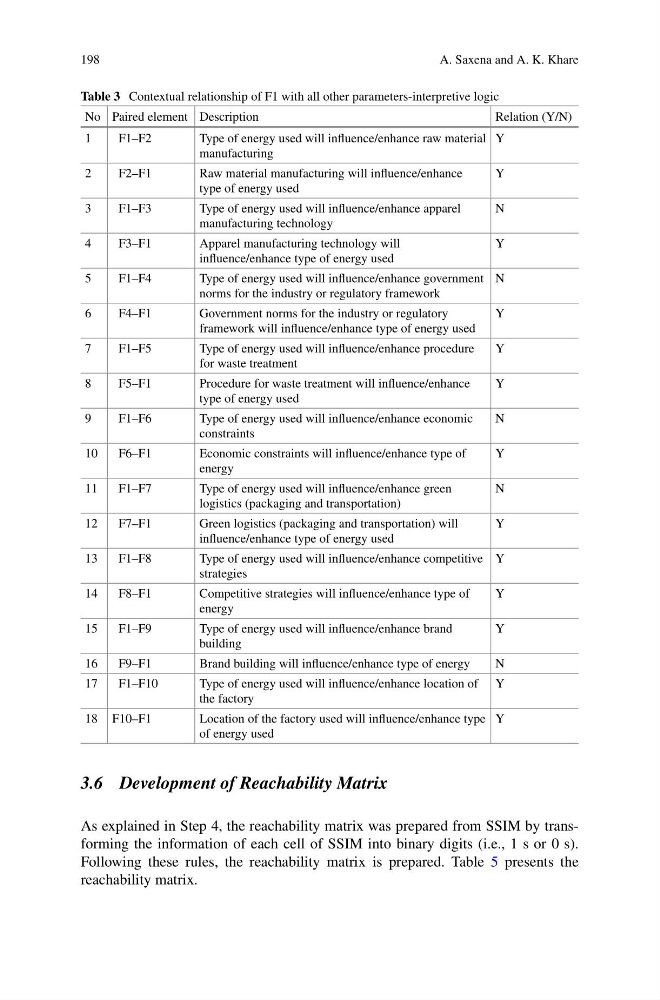
Table 3 Contextual relationship of F1 with all other parameters-interpretive logic
No Paired element Description
Relation (Y/N)
1
F1–F2
Type of energy used will influence/enhance raw material
manufacturing
Y
2
F2–F1
Raw material manufacturing will influence/enhance
type of energy used
Y
3
F1–F3
Type of energy used will influence/enhance apparel
manufacturing technology
N
4
F3–F1
Apparel manufacturing technology will
influence/enhance type of energy used
Y
5
F1–F4
Type of energy used will influence/enhance government
norms for the industry or regulatory framework
N
6
F4–F1
Government norms for the industry or regulatory
framework will influence/enhance type of energy used
Y
7
F1–F5
Type of energy used will influence/enhance procedure
for waste treatment
Y
8
F5–F1
Procedure for waste treatment will influence/enhance
type of energy used
Y
9
F1–F6
Type of energy used will influence/enhance economic
constraints
N
10
F6–F1
Economic constraints will influence/enhance type of
energy
Y
11
F1–F7
Type of energy used will influence/enhance green
logistics (packaging and transportation)
N
12
F7–F1
Green logistics (packaging and transportation) will
influence/enhance type of energy used
Y
13
F1–F8
Type of energy used will influence/enhance competitive
strategies
Y
14
F8–F1
Competitive strategies will influence/enhance type of
energy
Y
15
F1–F9
Type of energy used will influence/enhance brand
building
Y
16
F9–F1
Brand building will influence/enhance type of energy
N
17
F1–F10
Type of energy used will influence/enhance location of
the factory
Y
18 F10–F1
Location of the factory used will influence/enhance type
of energy used
Y
3.6 Development of Reachability Matrix
As explained in Step 4, the reachability matrix was prepared from SSIM by transforming the information of each cell of SSIM into binary digits (i.e., 1 s or 0 s).
Following these rules, the reachability matrix is prepared. Table 5 presents the
reachability matrix.
A. Saxena and A. K. Khare
Table 3 Contextual relationship of F1 with all other parameters-interpretive logic
No Paired element Description
Relation (Y/N)
1
F1–F2
Type of energy used will influence/enhance raw material
manufacturing
Y
2
F2–F1
Raw material manufacturing will influence/enhance
type of energy used
Y
3
F1–F3
Type of energy used will influence/enhance apparel
manufacturing technology
N
4
F3–F1
Apparel manufacturing technology will
influence/enhance type of energy used
Y
5
F1–F4
Type of energy used will influence/enhance government
norms for the industry or regulatory framework
N
6
F4–F1
Government norms for the industry or regulatory
framework will influence/enhance type of energy used
Y
7
F1–F5
Type of energy used will influence/enhance procedure
for waste treatment
Y
8
F5–F1
Procedure for waste treatment will influence/enhance
type of energy used
Y
9
F1–F6
Type of energy used will influence/enhance economic
constraints
N
10
F6–F1
Economic constraints will influence/enhance type of
energy
Y
11
F1–F7
Type of energy used will influence/enhance green
logistics (packaging and transportation)
N
12
F7–F1
Green logistics (packaging and transportation) will
influence/enhance type of energy used
Y
13
F1–F8
Type of energy used will influence/enhance competitive
strategies
Y
14
F8–F1
Competitive strategies will influence/enhance type of
energy
Y
15
F1–F9
Type of energy used will influence/enhance brand
building
Y
16
F9–F1
Brand building will influence/enhance type of energy
N
17
F1–F10
Type of energy used will influence/enhance location of
the factory
Y
18 F10–F1
Location of the factory used will influence/enhance type
of energy used
Y
3.6 Development of Reachability Matrix
As explained in Step 4, the reachability matrix was prepared from SSIM by transforming the information of each cell of SSIM into binary digits (i.e., 1 s or 0 s).
Following these rules, the reachability matrix is prepared. Table 5 presents the
reachability matrix.