

Pepper was brought in and reproduced contents of the built-in program, which
contains several “brain training games” for elderly people.
Interactions between the Pepper and survey participants were recorded with
digital video cameras that were set on a table that the participants regularly used.
Recording began when the participant had shortly finished eating a light meal
provided by the caregiving facility at around 3:00 p.m. and ended about an hour
later. The participant and caregiving staff were not given any special instructions
except to avoid touching the camera and to behave as they normally would. Hence,
there were intermittent instances in the video where the participant changed seats and
her actual time on screen amounted to less than an hour.
The videos recorded with the video camera were analyzed using an emotion
analysis software “Kokoro Sensor” developed by CAC Corporation. The software
automatically records the result of the captured movement of facial muscles as
emotion evaluation values for each frame of the video. The emotion evaluation
values were quantified between 0 (not expressed) and 100 (expressed) in terms of
joy, sadness, anger, fear, disgust, and surprise.
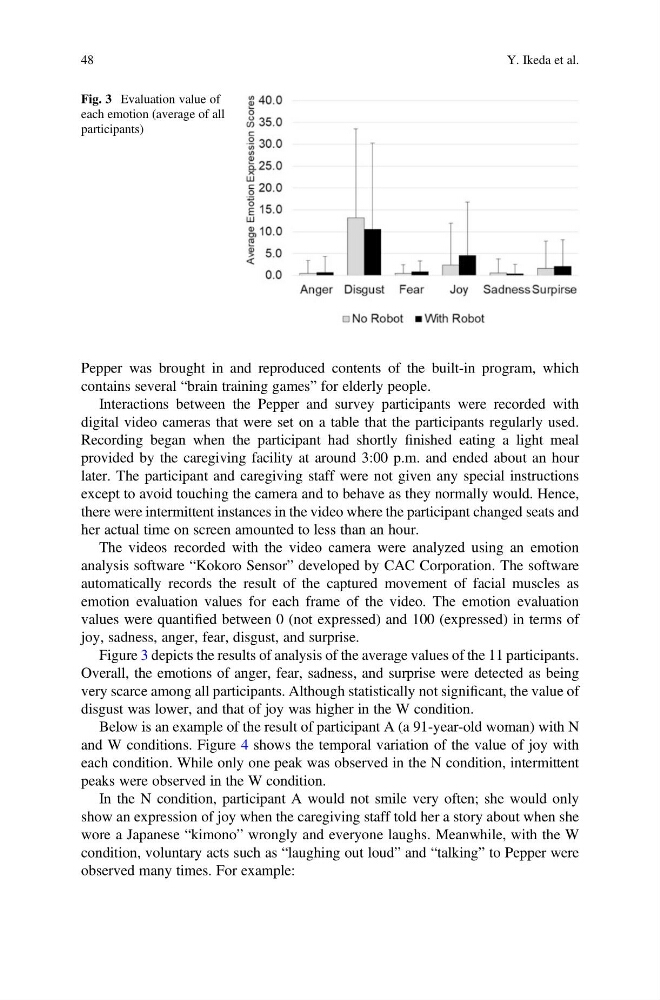
Figure 3 depicts the results of analysis of the average values of the 11 participants.
Overall, the emotions of anger, fear, sadness, and surprise were detected as being
very scarce among all participants. Although statistically not significant, the value of
disgust was lower, and that of joy was higher in the W condition.
Below is an example of the result of participant A (a 91-year-old woman) with N
and W conditions. Figure 4 shows the temporal variation of the value of joy with
each condition. While only one peak was observed in the N condition, intermittent
peaks were observed in the W condition.
In the N condition, participant A would not smile very often; she would only
show an expression of joy when the caregiving staff told her a story about when she
wore a Japanese “kimono” wrongly and everyone laughs. Meanwhile, with the W
condition, voluntary acts such as “laughing out loud” and “talking” to Pepper were
observed many times. For example:
Fig. 3 Evaluation value of
each emotion (average of all
participants)
48
Y. Ikeda et al.
contains several “brain training games” for elderly people.
Interactions between the Pepper and survey participants were recorded with
digital video cameras that were set on a table that the participants regularly used.
Recording began when the participant had shortly finished eating a light meal
provided by the caregiving facility at around 3:00 p.m. and ended about an hour
later. The participant and caregiving staff were not given any special instructions
except to avoid touching the camera and to behave as they normally would. Hence,
there were intermittent instances in the video where the participant changed seats and
her actual time on screen amounted to less than an hour.
The videos recorded with the video camera were analyzed using an emotion
analysis software “Kokoro Sensor” developed by CAC Corporation. The software
automatically records the result of the captured movement of facial muscles as
emotion evaluation values for each frame of the video. The emotion evaluation
values were quantified between 0 (not expressed) and 100 (expressed) in terms of
joy, sadness, anger, fear, disgust, and surprise.
Figure 3 depicts the results of analysis of the average values of the 11 participants.
Overall, the emotions of anger, fear, sadness, and surprise were detected as being
very scarce among all participants. Although statistically not significant, the value of
disgust was lower, and that of joy was higher in the W condition.
Below is an example of the result of participant A (a 91-year-old woman) with N
and W conditions. Figure 4 shows the temporal variation of the value of joy with
each condition. While only one peak was observed in the N condition, intermittent
peaks were observed in the W condition.
In the N condition, participant A would not smile very often; she would only
show an expression of joy when the caregiving staff told her a story about when she
wore a Japanese “kimono” wrongly and everyone laughs. Meanwhile, with the W
condition, voluntary acts such as “laughing out loud” and “talking” to Pepper were
observed many times. For example:
Fig. 3 Evaluation value of
each emotion (average of all
participants)
48
Y. Ikeda et al.