

2.2 Conventional Approaches for Non-hazardous Solid Waste Disposal
31
0
5
10
15
20
25
30
35
40
Canada
N.S.
N.B.
Que.
Ont.
Man.
Sask.
Alta.
B.C.
Dollars
Collection and transportation, current
expenditures
Operation of disposal facilities, current
expenditures
Operation of recycling facilities, current
expenditures
Operation of organics processing facilities, current
expenditures
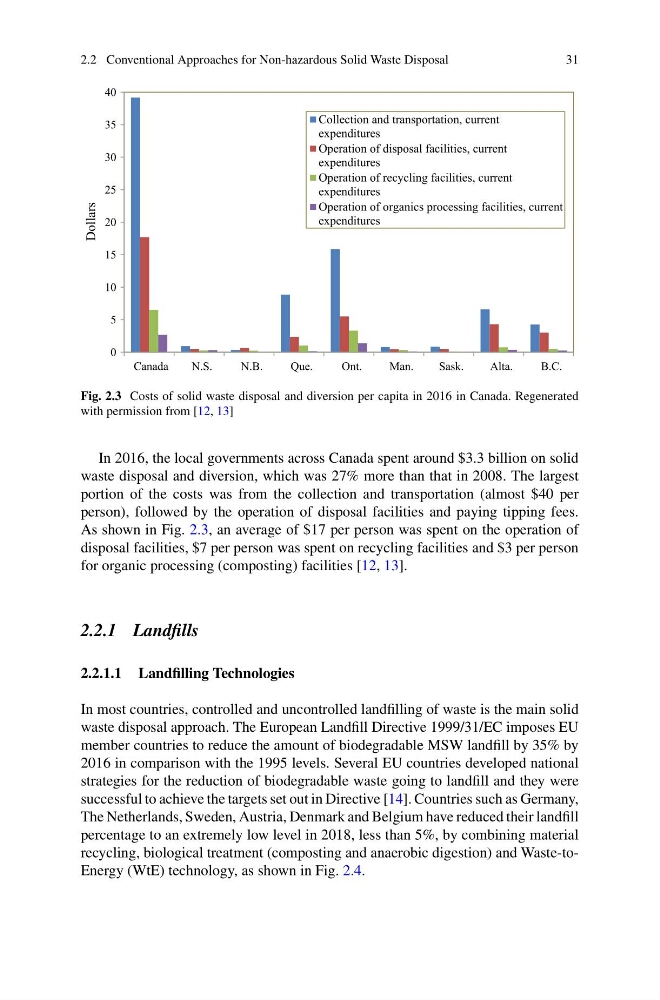
Fig. 2.3 Costs of solid waste disposal and diversion per capita in 2016 in Canada. Regenerated
with permission from [12, 13]
In 2016, the local governments across Canada spent around $3.3 billion on solid
waste disposal and diversion, which was 27% more than that in 2008. The largest
portion of the costs was from the collection and transportation (almost $40 per
person), followed by the operation of disposal facilities and paying tipping fees.
As shown in Fig. 2.3, an average of $17 per person was spent on the operation of
disposal facilities, $7 per person was spent on recycling facilities and $3 per person
for organic processing (composting) facilities [12, 13].
2.2.1 Landfills
2.2.1.1 Landfilling Technologies
In most countries, controlled and uncontrolled landfilling of waste is the main solid
waste disposal approach. The European Landfill Directive 1999/31/EC imposes EU
member countries to reduce the amount of biodegradable MSW landfill by 35% by
2016 in comparison with the 1995 levels. Several EU countries developed national
strategies for the reduction of biodegradable waste going to landfill and they were
successful to achieve the targets set out in Directive [14]. Countries such as Germany,
The Netherlands, Sweden, Austria, Denmark and Belgium have reduced their landfill
percentage to an extremely low level in 2018, less than 5%, by combining material
recycling, biological treatment (composting and anaerobic digestion) and Waste-toEnergy (WtE) technology, as shown in Fig. 2.4.
31
0
5
10
15
20
25
30
35
40
Canada
N.S.
N.B.
Que.
Ont.
Man.
Sask.
Alta.
B.C.
Dollars
Collection and transportation, current
expenditures
Operation of disposal facilities, current
expenditures
Operation of recycling facilities, current
expenditures
Operation of organics processing facilities, current
expenditures
Fig. 2.3 Costs of solid waste disposal and diversion per capita in 2016 in Canada. Regenerated
with permission from [12, 13]
In 2016, the local governments across Canada spent around $3.3 billion on solid
waste disposal and diversion, which was 27% more than that in 2008. The largest
portion of the costs was from the collection and transportation (almost $40 per
person), followed by the operation of disposal facilities and paying tipping fees.
As shown in Fig. 2.3, an average of $17 per person was spent on the operation of
disposal facilities, $7 per person was spent on recycling facilities and $3 per person
for organic processing (composting) facilities [12, 13].
2.2.1 Landfills
2.2.1.1 Landfilling Technologies
In most countries, controlled and uncontrolled landfilling of waste is the main solid
waste disposal approach. The European Landfill Directive 1999/31/EC imposes EU
member countries to reduce the amount of biodegradable MSW landfill by 35% by
2016 in comparison with the 1995 levels. Several EU countries developed national
strategies for the reduction of biodegradable waste going to landfill and they were
successful to achieve the targets set out in Directive [14]. Countries such as Germany,
The Netherlands, Sweden, Austria, Denmark and Belgium have reduced their landfill
percentage to an extremely low level in 2018, less than 5%, by combining material
recycling, biological treatment (composting and anaerobic digestion) and Waste-toEnergy (WtE) technology, as shown in Fig. 2.4.