

30
2 Conventional Approaches for Waste Management …
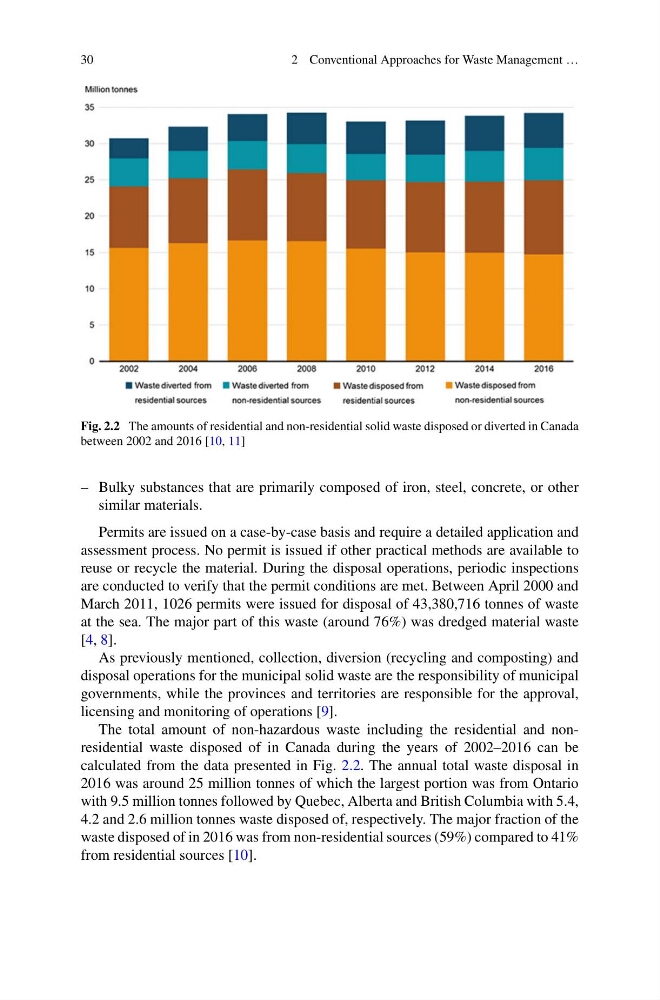
Fig. 2.2 The amounts of residential and non-residential solid waste disposed or diverted in Canada
between 2002 and 2016 [10, 11]
– Bulky substances that are primarily composed of iron, steel, concrete, or other
similar materials.
Permits are issued on a case-by-case basis and require a detailed application and
assessment process. No permit is issued if other practical methods are available to
reuse or recycle the material. During the disposal operations, periodic inspections
are conducted to verify that the permit conditions are met. Between April 2000 and
March 2011, 1026 permits were issued for disposal of 43,380,716 tonnes of waste
at the sea. The major part of this waste (around 76%) was dredged material waste
[4, 8].
As previously mentioned, collection, diversion (recycling and composting) and
disposal operations for the municipal solid waste are the responsibility of municipal
governments, while the provinces and territories are responsible for the approval,
licensing and monitoring of operations [9].
The total amount of non-hazardous waste including the residential and nonresidential waste disposed of in Canada during the years of 2002–2016 can be
calculated from the data presented in Fig. 2.2. The annual total waste disposal in
2016 was around 25 million tonnes of which the largest portion was from Ontario
with 9.5 million tonnes followed by Quebec, Alberta and British Columbia with 5.4,
4.2 and 2.6 million tonnes waste disposed of, respectively. The major fraction of the
waste disposed of in 2016 was from non-residential sources (59%) compared to 41%
from residential sources [10].
2 Conventional Approaches for Waste Management …
Fig. 2.2 The amounts of residential and non-residential solid waste disposed or diverted in Canada
between 2002 and 2016 [10, 11]
– Bulky substances that are primarily composed of iron, steel, concrete, or other
similar materials.
Permits are issued on a case-by-case basis and require a detailed application and
assessment process. No permit is issued if other practical methods are available to
reuse or recycle the material. During the disposal operations, periodic inspections
are conducted to verify that the permit conditions are met. Between April 2000 and
March 2011, 1026 permits were issued for disposal of 43,380,716 tonnes of waste
at the sea. The major part of this waste (around 76%) was dredged material waste
[4, 8].
As previously mentioned, collection, diversion (recycling and composting) and
disposal operations for the municipal solid waste are the responsibility of municipal
governments, while the provinces and territories are responsible for the approval,
licensing and monitoring of operations [9].
The total amount of non-hazardous waste including the residential and nonresidential waste disposed of in Canada during the years of 2002–2016 can be
calculated from the data presented in Fig. 2.2. The annual total waste disposal in
2016 was around 25 million tonnes of which the largest portion was from Ontario
with 9.5 million tonnes followed by Quebec, Alberta and British Columbia with 5.4,
4.2 and 2.6 million tonnes waste disposed of, respectively. The major fraction of the
waste disposed of in 2016 was from non-residential sources (59%) compared to 41%
from residential sources [10].