

10
1 Wastes Generation, Characterization, Management Strategies …
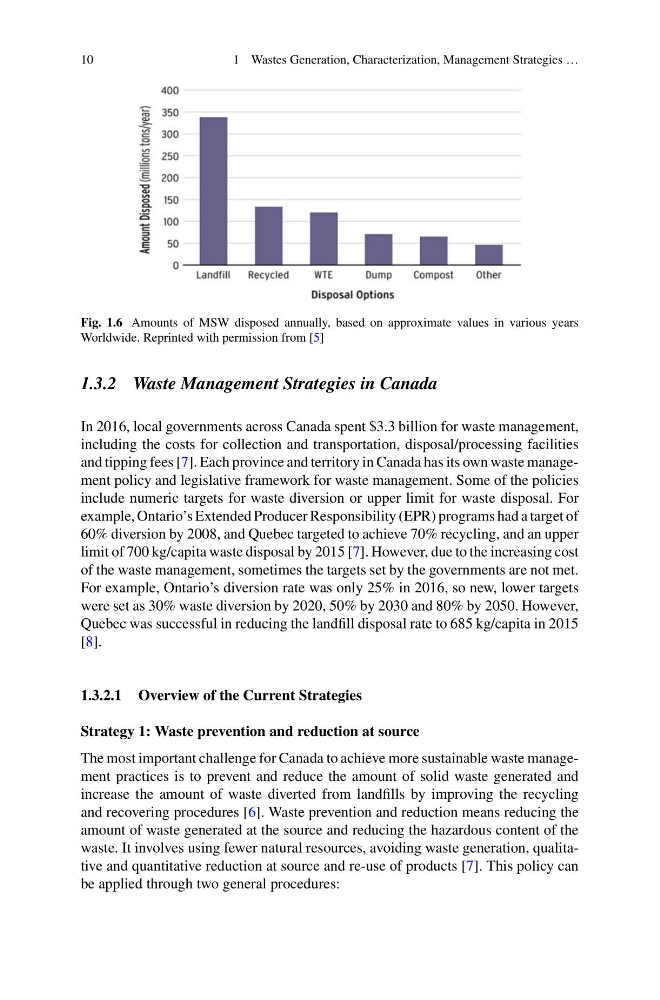
Fig. 1.6 Amounts of MSW disposed annually, based on approximate values in various years
Worldwide. Reprinted with permission from [5]
1.3.2 Waste Management Strategies in Canada
In 2016, local governments across Canada spent $3.3 billion for waste management,
including the costs for collection and transportation, disposal/processing facilities
and tipping fees [7]. Each province and territory in Canada has its own waste management policy and legislative framework for waste management. Some of the policies
include numeric targets for waste diversion or upper limit for waste disposal. For
example, Ontario’s Extended Producer Responsibility (EPR) programs had a target of
60% diversion by 2008, and Quebec targeted to achieve 70% recycling, and an upper
limit of 700 kg/capita waste disposal by 2015 [7]. However, due to the increasing cost
of the waste management, sometimes the targets set by the governments are not met.
For example, Ontario’s diversion rate was only 25% in 2016, so new, lower targets
were set as 30% waste diversion by 2020, 50% by 2030 and 80% by 2050. However,
Quebec was successful in reducing the landfill disposal rate to 685 kg/capita in 2015
[8].
1.3.2.1 Overview of the Current Strategies
Strategy 1: Waste prevention and reduction at source
The most important challenge for Canada to achieve more sustainable waste management practices is to prevent and reduce the amount of solid waste generated and
increase the amount of waste diverted from landfills by improving the recycling
and recovering procedures [6]. Waste prevention and reduction means reducing the
amount of waste generated at the source and reducing the hazardous content of the
waste. It involves using fewer natural resources, avoiding waste generation, qualitative and quantitative reduction at source and re-use of products [7]. This policy can
be applied through two general procedures:
1 Wastes Generation, Characterization, Management Strategies …
Fig. 1.6 Amounts of MSW disposed annually, based on approximate values in various years
Worldwide. Reprinted with permission from [5]
1.3.2 Waste Management Strategies in Canada
In 2016, local governments across Canada spent $3.3 billion for waste management,
including the costs for collection and transportation, disposal/processing facilities
and tipping fees [7]. Each province and territory in Canada has its own waste management policy and legislative framework for waste management. Some of the policies
include numeric targets for waste diversion or upper limit for waste disposal. For
example, Ontario’s Extended Producer Responsibility (EPR) programs had a target of
60% diversion by 2008, and Quebec targeted to achieve 70% recycling, and an upper
limit of 700 kg/capita waste disposal by 2015 [7]. However, due to the increasing cost
of the waste management, sometimes the targets set by the governments are not met.
For example, Ontario’s diversion rate was only 25% in 2016, so new, lower targets
were set as 30% waste diversion by 2020, 50% by 2030 and 80% by 2050. However,
Quebec was successful in reducing the landfill disposal rate to 685 kg/capita in 2015
[8].
1.3.2.1 Overview of the Current Strategies
Strategy 1: Waste prevention and reduction at source
The most important challenge for Canada to achieve more sustainable waste management practices is to prevent and reduce the amount of solid waste generated and
increase the amount of waste diverted from landfills by improving the recycling
and recovering procedures [6]. Waste prevention and reduction means reducing the
amount of waste generated at the source and reducing the hazardous content of the
waste. It involves using fewer natural resources, avoiding waste generation, qualitative and quantitative reduction at source and re-use of products [7]. This policy can
be applied through two general procedures: