

ergost-5-en-3β-ol, cholest-5-en-24-1,3-(acetyloxy)-3β-ol in the species Isochrysis
galbana, Francavilla et al. (2012) described ergosterol and 7-dehydroporiferasterol
in Dunaliella tertiolecta, whereas Hetta et al. (2014) found campesterol, stigmasterol, and β-sitosterol in the Spirulina platensis, and those sterols showed bioactivity
as anticancer, antituberculosis, neuromodulatory, and antimicrobial, respectively.
In the meantime, the potential of microalgae as sources of phytosterols remain to
be fully explored in terms of phycoremediation.
4.5.5 Proteins, Amino Acids, and Peptides
Microalgae may represent innovative sources of proteins, amino acids, and peptides
due to their high contents of those compounds. In view of the demand for food and
the increase of the global population, microalgae have been proposed as a sustainable solution due to their high production of protein, essential amino acids, and
peptides (Koutra et al. 2018).
Microalgae cell contains approximately 45% of protein, and its contents and the
profile of amino acid depend on species and growth conditions (Soto-Sierra et al.
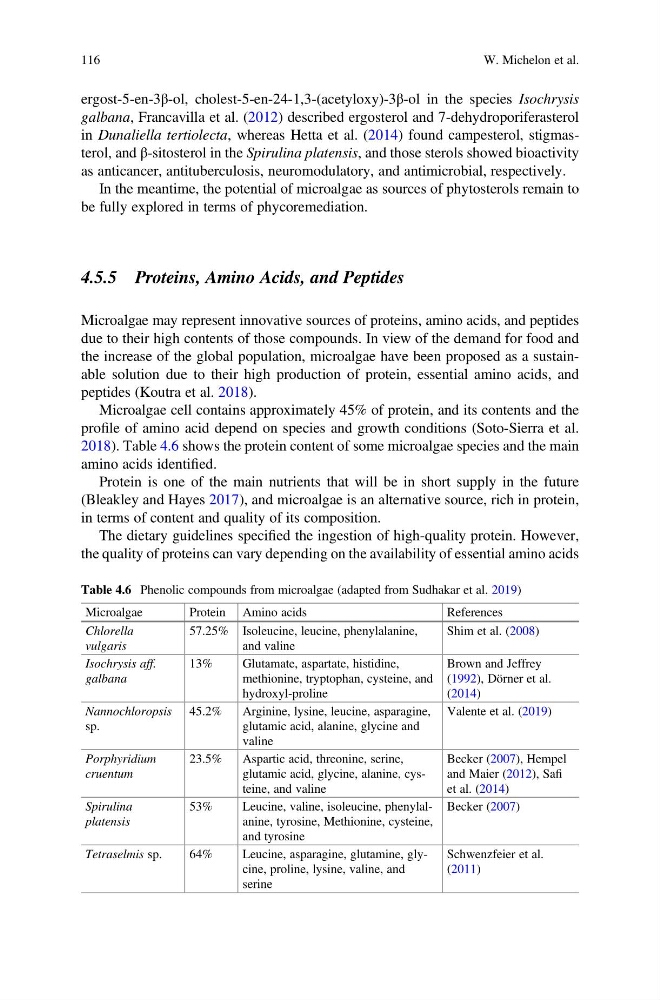
2018). Table 4.6 shows the protein content of some microalgae species and the main
amino acids identified.
Protein is one of the main nutrients that will be in short supply in the future
(Bleakley and Hayes 2017), and microalgae is an alternative source, rich in protein,
in terms of content and quality of its composition.
The dietary guidelines specified the ingestion of high-quality protein. However,
the quality of proteins can vary depending on the availability of essential amino acids
Table 4.6 Phenolic compounds from microalgae (adapted from Sudhakar et al. 2019)
Microalgae
Protein Amino acids
References
Chlorella
vulgaris
57.25% Isoleucine, leucine, phenylalanine,
and valine
Shim et al. (2008)
Isochrysis aff.
galbana
13%
Glutamate, aspartate, histidine,
methionine, tryptophan, cysteine, and
hydroxyl-proline
Brown and Jeffrey
(1992), Dörner et al.
(2014)
Nannochloropsis
sp.
45.2%
Arginine, lysine, leucine, asparagine,
glutamic acid, alanine, glycine and
valine
Valente et al. (2019)
Porphyridium
cruentum
23.5%
Aspartic acid, threonine, serine,
glutamic acid, glycine, alanine, cysteine, and valine
Becker (2007), Hempel
and Maier (2012), Safi
et al. (2014)
Spirulina
platensis
53%
Leucine, valine, isoleucine, phenylalanine, tyrosine, Methionine, cysteine,
and tyrosine
Becker (2007)
Tetraselmis sp.
64%
Leucine, asparagine, glutamine, glycine, proline, lysine, valine, and
serine
Schwenzfeier et al.
(2011)
116
W. Michelon et al.
galbana, Francavilla et al. (2012) described ergosterol and 7-dehydroporiferasterol
in Dunaliella tertiolecta, whereas Hetta et al. (2014) found campesterol, stigmasterol, and β-sitosterol in the Spirulina platensis, and those sterols showed bioactivity
as anticancer, antituberculosis, neuromodulatory, and antimicrobial, respectively.
In the meantime, the potential of microalgae as sources of phytosterols remain to
be fully explored in terms of phycoremediation.
4.5.5 Proteins, Amino Acids, and Peptides
Microalgae may represent innovative sources of proteins, amino acids, and peptides
due to their high contents of those compounds. In view of the demand for food and
the increase of the global population, microalgae have been proposed as a sustainable solution due to their high production of protein, essential amino acids, and
peptides (Koutra et al. 2018).
Microalgae cell contains approximately 45% of protein, and its contents and the
profile of amino acid depend on species and growth conditions (Soto-Sierra et al.
2018). Table 4.6 shows the protein content of some microalgae species and the main
amino acids identified.
Protein is one of the main nutrients that will be in short supply in the future
(Bleakley and Hayes 2017), and microalgae is an alternative source, rich in protein,
in terms of content and quality of its composition.
The dietary guidelines specified the ingestion of high-quality protein. However,
the quality of proteins can vary depending on the availability of essential amino acids
Table 4.6 Phenolic compounds from microalgae (adapted from Sudhakar et al. 2019)
Microalgae
Protein Amino acids
References
Chlorella
vulgaris
57.25% Isoleucine, leucine, phenylalanine,
and valine
Shim et al. (2008)
Isochrysis aff.
galbana
13%
Glutamate, aspartate, histidine,
methionine, tryptophan, cysteine, and
hydroxyl-proline
Brown and Jeffrey
(1992), Dörner et al.
(2014)
Nannochloropsis
sp.
45.2%
Arginine, lysine, leucine, asparagine,
glutamic acid, alanine, glycine and
valine
Valente et al. (2019)
Porphyridium
cruentum
23.5%
Aspartic acid, threonine, serine,
glutamic acid, glycine, alanine, cysteine, and valine
Becker (2007), Hempel
and Maier (2012), Safi
et al. (2014)
Spirulina
platensis
53%
Leucine, valine, isoleucine, phenylalanine, tyrosine, Methionine, cysteine,
and tyrosine
Becker (2007)
Tetraselmis sp.
64%
Leucine, asparagine, glutamine, glycine, proline, lysine, valine, and
serine
Schwenzfeier et al.
(2011)
116
W. Michelon et al.