

83
to form a chemical bond between two different radicals selectively. The α-carboncentered radical losing the single electron to generate a carbon cation is more likely.
Based on these preliminary results, a possible pathway involves the formation of
aryl radical with the aid of nickel catalyst and DTBP, and subsequent addition of
aryl radical to the generated carbon cation generating an oxygen-centered radical
cation is proposed. Final hydrogen abstraction from THF released the desired product (Scheme 3.61) [138].
Later, the same group extended this chemistry to develop another oxidative
cross-coupling between simple alkanes and organoboron reagents (Scheme 3.62)
[139]. In this report, cyclohexane was used as both solvent and reagent, and a range
H
N
N
H
O
MeO
H
(HO) 2 B Ar
CuBr
TBHP
H
N
N
H
O
R
MeO
Ar
R 1
OEt
O
H
N
N
H
O
MeO
H
H
N
O
OEt
O
R 2
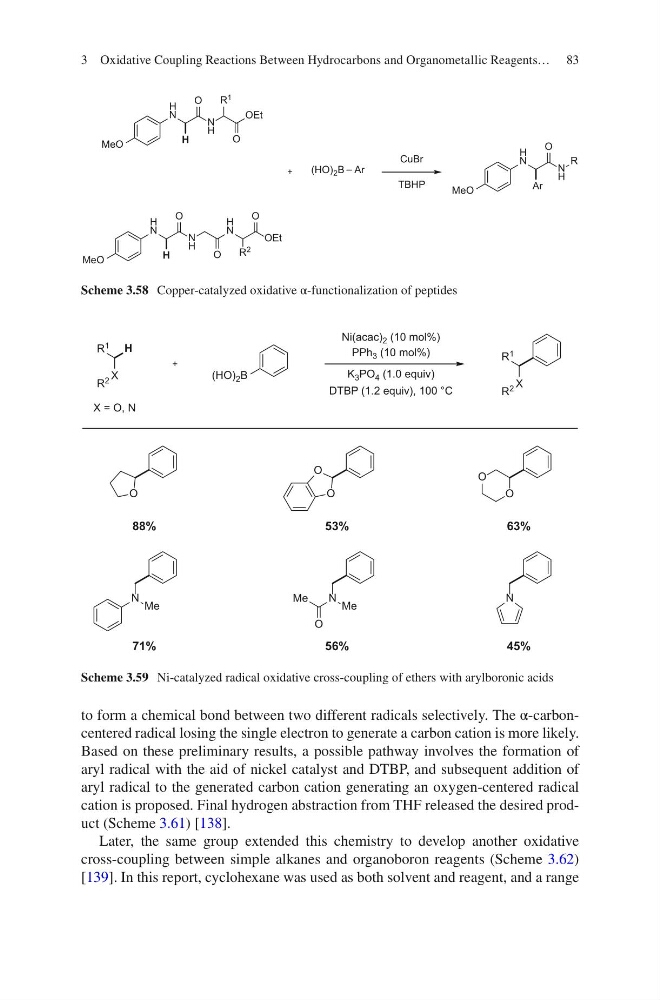
Scheme 3.58 Copper-catalyzed oxidative α-functionalization of peptides
X
H
(HO) 2 B
Ni(acac) 2 (10 mol%)
PPh 3 (10 mol%)
DTBP (1.2 equiv), 100 °C
R 2 X
R 1
K 3 PO 4 (1.0 equiv)
R 1
R 2
X = O, N
O
O
O
O
O
N Me
N Me
O
Me
N
88%
53%
63%
71%
56%
45%
Scheme 3.59 Ni-catalyzed radical oxidative cross-coupling of ethers with arylboronic acids
3 Oxidative Coupling Reactions Between Hydrocarbons and Organometallic Reagents…
to form a chemical bond between two different radicals selectively. The α-carboncentered radical losing the single electron to generate a carbon cation is more likely.
Based on these preliminary results, a possible pathway involves the formation of
aryl radical with the aid of nickel catalyst and DTBP, and subsequent addition of
aryl radical to the generated carbon cation generating an oxygen-centered radical
cation is proposed. Final hydrogen abstraction from THF released the desired product (Scheme 3.61) [138].
Later, the same group extended this chemistry to develop another oxidative
cross-coupling between simple alkanes and organoboron reagents (Scheme 3.62)
[139]. In this report, cyclohexane was used as both solvent and reagent, and a range
H
N
N
H
O
MeO
H
(HO) 2 B Ar
CuBr
TBHP
H
N
N
H
O
R
MeO
Ar
R 1
OEt
O
H
N
N
H
O
MeO
H
H
N
O
OEt
O
R 2
Scheme 3.58 Copper-catalyzed oxidative α-functionalization of peptides
X
H
(HO) 2 B
Ni(acac) 2 (10 mol%)
PPh 3 (10 mol%)
DTBP (1.2 equiv), 100 °C
R 2 X
R 1
K 3 PO 4 (1.0 equiv)
R 1
R 2
X = O, N
O
O
O
O
O
N Me
N Me
O
Me
N
88%
53%
63%
71%
56%
45%
Scheme 3.59 Ni-catalyzed radical oxidative cross-coupling of ethers with arylboronic acids
3 Oxidative Coupling Reactions Between Hydrocarbons and Organometallic Reagents…