

125
A similar tandem radical addition/cyclization process between hydroxymethylacrylamide and 1,3-dicarbonyl compounds has been also developed to produce
N-containing compounds [28]. This method provides a straightforward access to
various spirooxindoles at 50 °C under K 2 S 2 O 8 conditions (Scheme 4.45).
Oxidative alkylarylation of acrylamides with simple alkanes can be conducted
with copper catalysis (Scheme 4.46) [29]. This method provides a useful method for
synthesis of alkyl-substituted oxindoles via a free-radical cascade process. DCP (3
equiv) as an oxidant is found to be the most efficient oxidant/radical initiator than
TBHP, DTBP, and K 2 S 2 O 8 , and good to excellent yields can be obtained at 110 °C.
4.3 Oxidative Radical C-C Couplings via C-C Bond Cleavage
Compared with the mode of cleavage of C-H bonds, cleavage of C-C bond would
also generate carbon center radical species and initiate the oxidative radical C-C
coupling reactions. As we know, carboxylic acids, α-oxocarboxylic acids, aromatic
N
O
N
R 2
R 3
O
N
R 2
O
R 3
R
1
H
R
1
EtOAc
105 °C, 36h
R 4
H
O
2 equiv. TBHP
O
R
4
+
O
OMe
70%
N
O
O
OMe
MeO
74%
N
O
O
OMe
O 2 N
42%
N
O
O
OMe
60%
I
N
Bn
O
O
OMe
69%
N
O
O
70%
2 equiv
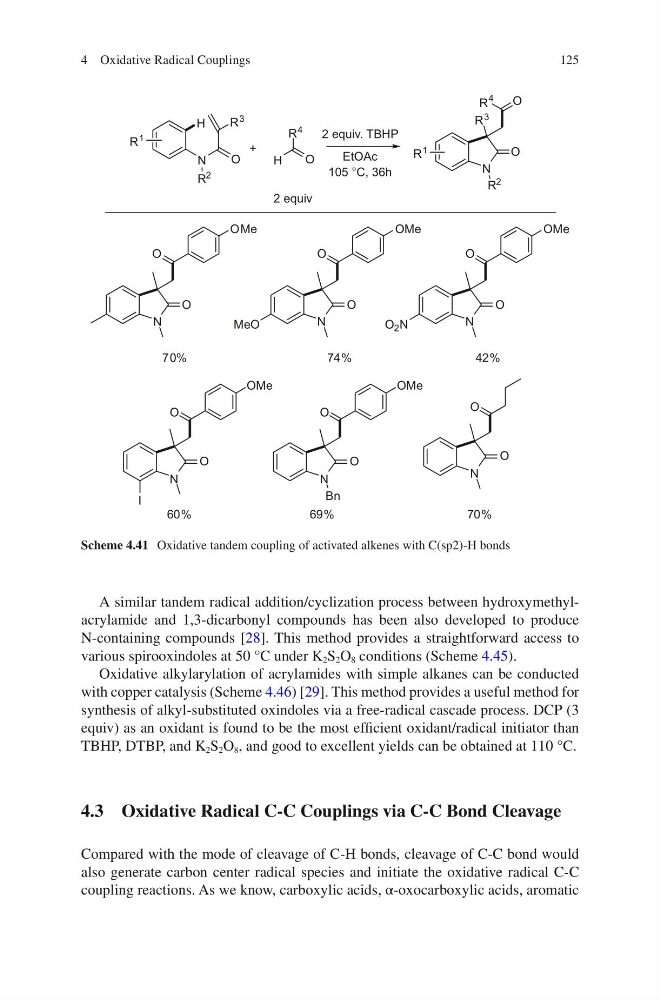
Scheme 4.41 Oxidative tandem coupling of activated alkenes with C(sp2)-H bonds
4 Oxidative Radical Couplings
A similar tandem radical addition/cyclization process between hydroxymethylacrylamide and 1,3-dicarbonyl compounds has been also developed to produce
N-containing compounds [28]. This method provides a straightforward access to
various spirooxindoles at 50 °C under K 2 S 2 O 8 conditions (Scheme 4.45).
Oxidative alkylarylation of acrylamides with simple alkanes can be conducted
with copper catalysis (Scheme 4.46) [29]. This method provides a useful method for
synthesis of alkyl-substituted oxindoles via a free-radical cascade process. DCP (3
equiv) as an oxidant is found to be the most efficient oxidant/radical initiator than
TBHP, DTBP, and K 2 S 2 O 8 , and good to excellent yields can be obtained at 110 °C.
4.3 Oxidative Radical C-C Couplings via C-C Bond Cleavage
Compared with the mode of cleavage of C-H bonds, cleavage of C-C bond would
also generate carbon center radical species and initiate the oxidative radical C-C
coupling reactions. As we know, carboxylic acids, α-oxocarboxylic acids, aromatic
N
O
N
R 2
R 3
O
N
R 2
O
R 3
R
1
H
R
1
EtOAc
105 °C, 36h
R 4
H
O
2 equiv. TBHP
O
R
4
+
O
OMe
70%
N
O
O
OMe
MeO
74%
N
O
O
OMe
O 2 N
42%
N
O
O
OMe
60%
I
N
Bn
O
O
OMe
69%
N
O
O
70%
2 equiv
Scheme 4.41 Oxidative tandem coupling of activated alkenes with C(sp2)-H bonds
4 Oxidative Radical Couplings