

124
Transition-metal-free oxidative tandem coupling of activated alkenes with
carbonyl C(sp2)-H bonds or aryl C(sp2)-H bonds can be achieved under TBHP
conditions (Scheme 4.41) [25]. This protocol provides a new method for the oxidative coupling of alkenes with aldehydes and represents one of the most efficient
straightforward ways to functionalized oxindole synthesis.
An efficient benzylarylation of activated alkenes can be performed with coppercatalyst to form alkyl-substituted oxindole compounds (Scheme 4.42) [26]. This tandem radical addition/cyclization of acrylamides and benzyl hydrocarbons tolerates a
broad range of functional groups, such as esters. And using cheap Cu 2 O as the catalyst and TBPB as the oxidant, this transformation can be achieved in excess amount
of toluenes in 120 °C with good to excellent yields. The mechanism is proposed that
this reaction is initiated by the TBPB promoted oxidation to form the benzyl radical.
A subsequent radical addition process to generate intermediate, followed by intramolecular radical substitution, would produce the corresponding oxindole compounds.
A tandem radical addition/cyclization reaction of activated alkenes and alcohols
can be also achieved under transition-metal-free conditions. This protocol provides
an efficient access to various valuable hydroxyl-containing oxindoles through the
direct sp3 C-H transformation of alcohols (Scheme 4.43). This transformation is
initiated by the TBHP-promoted oxidation to form the a-hydroxyethyl radical I. A
subsequent radical addition to generate intermediate II, followed by intramolecular
radical substitution to form radical III, would produce the corresponding oxindole
compounds.
With similar strategy through a tandem radical addition/cyclization process, an
efficient oxidative cyclization of acrylamides with 1,3-dicarbonyl compounds can
be established in the presence of silver-catalyst (Scheme 4.44) [27]. In this transformation, 1,3-dicarbonyl compound radicals can be generated in the presence of
AgNO 3 and K 2 S 2 O 8 and then added to the carbon-carbon double bonds to afford the
intermediate.
R
H
N
R
3
R 1 R 2
O
R
N
R 1
O
R
2
R 3
R
4
H
+
Oxidant
R
4
R
N
R 1
O
R
2
R
3
R 4
- "2H"
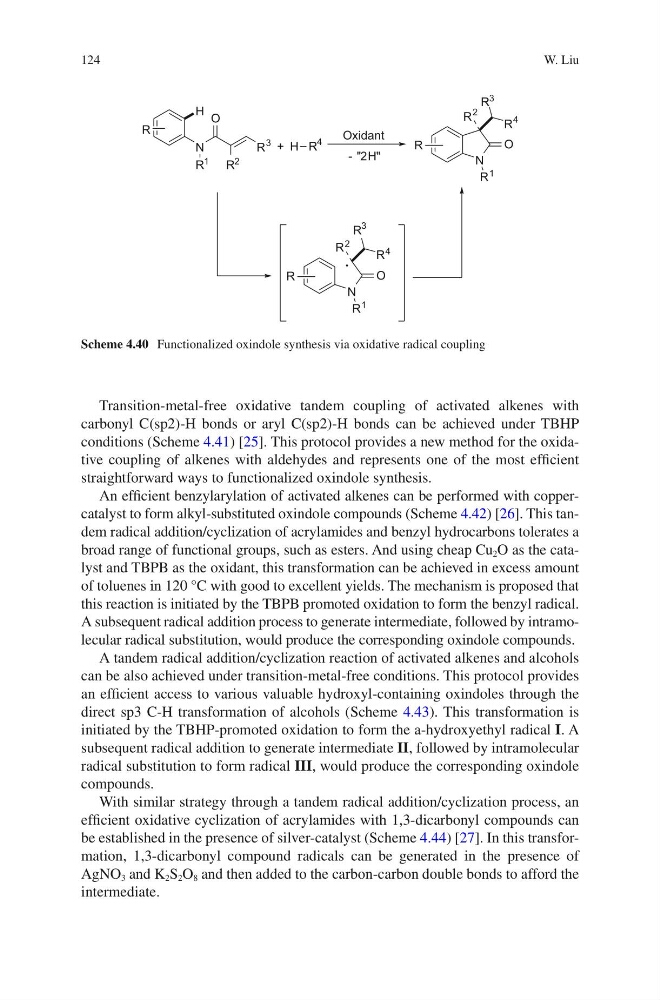
Scheme 4.40 Functionalized oxindole synthesis via oxidative radical coupling
W. Liu
Transition-metal-free oxidative tandem coupling of activated alkenes with
carbonyl C(sp2)-H bonds or aryl C(sp2)-H bonds can be achieved under TBHP
conditions (Scheme 4.41) [25]. This protocol provides a new method for the oxidative coupling of alkenes with aldehydes and represents one of the most efficient
straightforward ways to functionalized oxindole synthesis.
An efficient benzylarylation of activated alkenes can be performed with coppercatalyst to form alkyl-substituted oxindole compounds (Scheme 4.42) [26]. This tandem radical addition/cyclization of acrylamides and benzyl hydrocarbons tolerates a
broad range of functional groups, such as esters. And using cheap Cu 2 O as the catalyst and TBPB as the oxidant, this transformation can be achieved in excess amount
of toluenes in 120 °C with good to excellent yields. The mechanism is proposed that
this reaction is initiated by the TBPB promoted oxidation to form the benzyl radical.
A subsequent radical addition process to generate intermediate, followed by intramolecular radical substitution, would produce the corresponding oxindole compounds.
A tandem radical addition/cyclization reaction of activated alkenes and alcohols
can be also achieved under transition-metal-free conditions. This protocol provides
an efficient access to various valuable hydroxyl-containing oxindoles through the
direct sp3 C-H transformation of alcohols (Scheme 4.43). This transformation is
initiated by the TBHP-promoted oxidation to form the a-hydroxyethyl radical I. A
subsequent radical addition to generate intermediate II, followed by intramolecular
radical substitution to form radical III, would produce the corresponding oxindole
compounds.
With similar strategy through a tandem radical addition/cyclization process, an
efficient oxidative cyclization of acrylamides with 1,3-dicarbonyl compounds can
be established in the presence of silver-catalyst (Scheme 4.44) [27]. In this transformation, 1,3-dicarbonyl compound radicals can be generated in the presence of
AgNO 3 and K 2 S 2 O 8 and then added to the carbon-carbon double bonds to afford the
intermediate.
R
H
N
R
3
R 1 R 2
O
R
N
R 1
O
R
2
R 3
R
4
H
+
Oxidant
R
4
R
N
R 1
O
R
2
R
3
R 4
- "2H"
Scheme 4.40 Functionalized oxindole synthesis via oxidative radical coupling
W. Liu