

480
H. Hirao
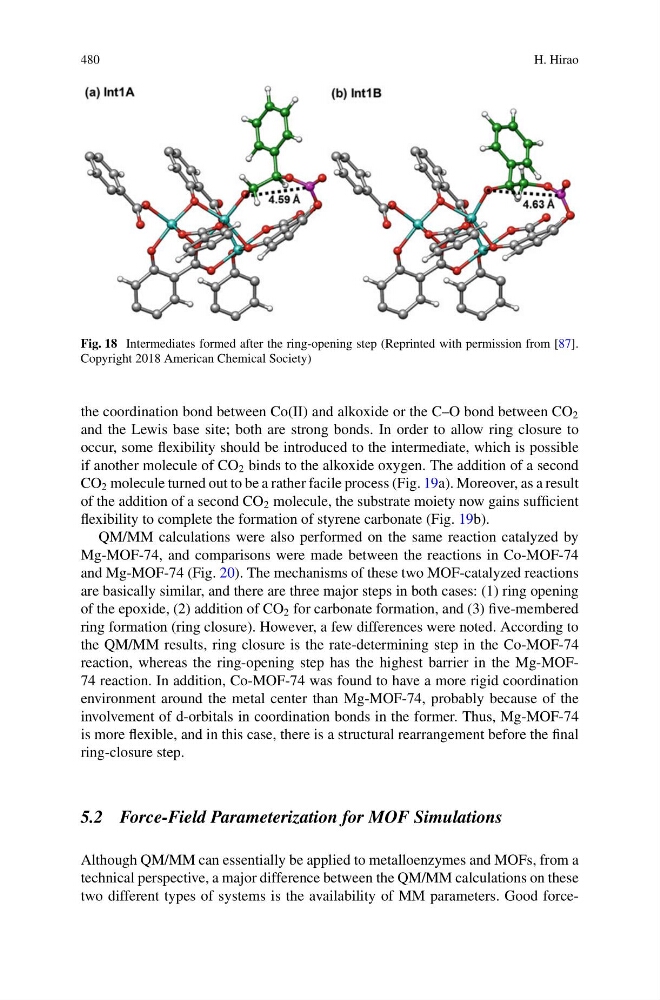
Fig. 18 Intermediates formed after the ring-opening step (Reprinted with permission from [87].
Copyright 2018 American Chemical Society)
the coordination bond between Co(II) and alkoxide or the C–O bond between CO 2
and the Lewis base site; both are strong bonds. In order to allow ring closure to
occur, some flexibility should be introduced to the intermediate, which is possible
if another molecule of CO 2 binds to the alkoxide oxygen. The addition of a second
CO 2 molecule turned out to be a rather facile process (Fig. 19a). Moreover, as a result
of the addition of a second CO 2 molecule, the substrate moiety now gains sufficient
flexibility to complete the formation of styrene carbonate (Fig. 19b).
QM/MM calculations were also performed on the same reaction catalyzed by
Mg-MOF-74, and comparisons were made between the reactions in Co-MOF-74
and Mg-MOF-74 (Fig. 20). The mechanisms of these two MOF-catalyzed reactions
are basically similar, and there are three major steps in both cases: (1) ring opening
of the epoxide, (2) addition of CO 2 for carbonate formation, and (3) five-membered
ring formation (ring closure). However, a few differences were noted. According to
the QM/MM results, ring closure is the rate-determining step in the Co-MOF-74
reaction, whereas the ring-opening step has the highest barrier in the Mg-MOF74 reaction. In addition, Co-MOF-74 was found to have a more rigid coordination
environment around the metal center than Mg-MOF-74, probably because of the
involvement of d-orbitals in coordination bonds in the former. Thus, Mg-MOF-74
is more flexible, and in this case, there is a structural rearrangement before the final
ring-closure step.
5.2 Force-Field Parameterization for MOF Simulations
Although QM/MM can essentially be applied to metalloenzymes and MOFs, from a
technical perspective, a major difference between the QM/MM calculations on these
two different types of systems is the availability of MM parameters. Good force-
H. Hirao
Fig. 18 Intermediates formed after the ring-opening step (Reprinted with permission from [87].
Copyright 2018 American Chemical Society)
the coordination bond between Co(II) and alkoxide or the C–O bond between CO 2
and the Lewis base site; both are strong bonds. In order to allow ring closure to
occur, some flexibility should be introduced to the intermediate, which is possible
if another molecule of CO 2 binds to the alkoxide oxygen. The addition of a second
CO 2 molecule turned out to be a rather facile process (Fig. 19a). Moreover, as a result
of the addition of a second CO 2 molecule, the substrate moiety now gains sufficient
flexibility to complete the formation of styrene carbonate (Fig. 19b).
QM/MM calculations were also performed on the same reaction catalyzed by
Mg-MOF-74, and comparisons were made between the reactions in Co-MOF-74
and Mg-MOF-74 (Fig. 20). The mechanisms of these two MOF-catalyzed reactions
are basically similar, and there are three major steps in both cases: (1) ring opening
of the epoxide, (2) addition of CO 2 for carbonate formation, and (3) five-membered
ring formation (ring closure). However, a few differences were noted. According to
the QM/MM results, ring closure is the rate-determining step in the Co-MOF-74
reaction, whereas the ring-opening step has the highest barrier in the Mg-MOF74 reaction. In addition, Co-MOF-74 was found to have a more rigid coordination
environment around the metal center than Mg-MOF-74, probably because of the
involvement of d-orbitals in coordination bonds in the former. Thus, Mg-MOF-74
is more flexible, and in this case, there is a structural rearrangement before the final
ring-closure step.
5.2 Force-Field Parameterization for MOF Simulations
Although QM/MM can essentially be applied to metalloenzymes and MOFs, from a
technical perspective, a major difference between the QM/MM calculations on these
two different types of systems is the availability of MM parameters. Good force-