

Applications of Computational Chemistry to Selected Problems …
479
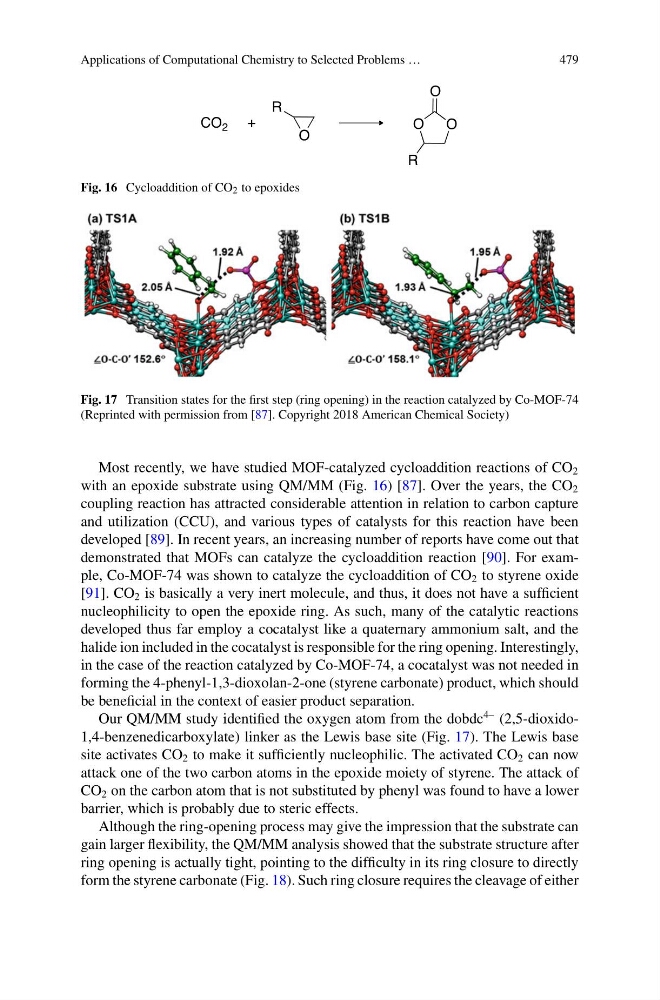
Fig. 16 Cycloaddition of CO 2 to epoxides
Fig. 17 Transition states for the first step (ring opening) in the reaction catalyzed by Co-MOF-74
(Reprinted with permission from [87]. Copyright 2018 American Chemical Society)
Most recently, we have studied MOF-catalyzed cycloaddition reactions of CO 2
with an epoxide substrate using QM/MM (Fig. 16) [87]. Over the years, the CO 2
coupling reaction has attracted considerable attention in relation to carbon capture
and utilization (CCU), and various types of catalysts for this reaction have been
developed [89]. In recent years, an increasing number of reports have come out that
demonstrated that MOFs can catalyze the cycloaddition reaction [90]. For example, Co-MOF-74 was shown to catalyze the cycloaddition of CO 2 to styrene oxide
[91]. CO 2 is basically a very inert molecule, and thus, it does not have a sufficient
nucleophilicity to open the epoxide ring. As such, many of the catalytic reactions
developed thus far employ a cocatalyst like a quaternary ammonium salt, and the
halide ion included in the cocatalyst is responsible for the ring opening. Interestingly,
in the case of the reaction catalyzed by Co-MOF-74, a cocatalyst was not needed in
forming the 4-phenyl-1,3-dioxolan-2-one (styrene carbonate) product, which should
be beneficial in the context of easier product separation.
Our QM/MM study identified the oxygen atom from the dobdc
4– (2,5-dioxido1,4-benzenedicarboxylate) linker as the Lewis base site (Fig. 17). The Lewis base
site activates CO 2 to make it sufficiently nucleophilic. The activated CO 2 can now
attack one of the two carbon atoms in the epoxide moiety of styrene. The attack of
CO 2 on the carbon atom that is not substituted by phenyl was found to have a lower
barrier, which is probably due to steric effects.
Although the ring-opening process may give the impression that the substrate can
gain larger flexibility, the QM/MM analysis showed that the substrate structure after
ring opening is actually tight, pointing to the difficulty in its ring closure to directly
form the styrene carbonate (Fig. 18). Such ring closure requires the cleavage of either
479
Fig. 16 Cycloaddition of CO 2 to epoxides
Fig. 17 Transition states for the first step (ring opening) in the reaction catalyzed by Co-MOF-74
(Reprinted with permission from [87]. Copyright 2018 American Chemical Society)
Most recently, we have studied MOF-catalyzed cycloaddition reactions of CO 2
with an epoxide substrate using QM/MM (Fig. 16) [87]. Over the years, the CO 2
coupling reaction has attracted considerable attention in relation to carbon capture
and utilization (CCU), and various types of catalysts for this reaction have been
developed [89]. In recent years, an increasing number of reports have come out that
demonstrated that MOFs can catalyze the cycloaddition reaction [90]. For example, Co-MOF-74 was shown to catalyze the cycloaddition of CO 2 to styrene oxide
[91]. CO 2 is basically a very inert molecule, and thus, it does not have a sufficient
nucleophilicity to open the epoxide ring. As such, many of the catalytic reactions
developed thus far employ a cocatalyst like a quaternary ammonium salt, and the
halide ion included in the cocatalyst is responsible for the ring opening. Interestingly,
in the case of the reaction catalyzed by Co-MOF-74, a cocatalyst was not needed in
forming the 4-phenyl-1,3-dioxolan-2-one (styrene carbonate) product, which should
be beneficial in the context of easier product separation.
Our QM/MM study identified the oxygen atom from the dobdc
4– (2,5-dioxido1,4-benzenedicarboxylate) linker as the Lewis base site (Fig. 17). The Lewis base
site activates CO 2 to make it sufficiently nucleophilic. The activated CO 2 can now
attack one of the two carbon atoms in the epoxide moiety of styrene. The attack of
CO 2 on the carbon atom that is not substituted by phenyl was found to have a lower
barrier, which is probably due to steric effects.
Although the ring-opening process may give the impression that the substrate can
gain larger flexibility, the QM/MM analysis showed that the substrate structure after
ring opening is actually tight, pointing to the difficulty in its ring closure to directly
form the styrene carbonate (Fig. 18). Such ring closure requires the cleavage of either