

Catalytic Properties of Selected Transition Metal Oxides—Computational Studies
369
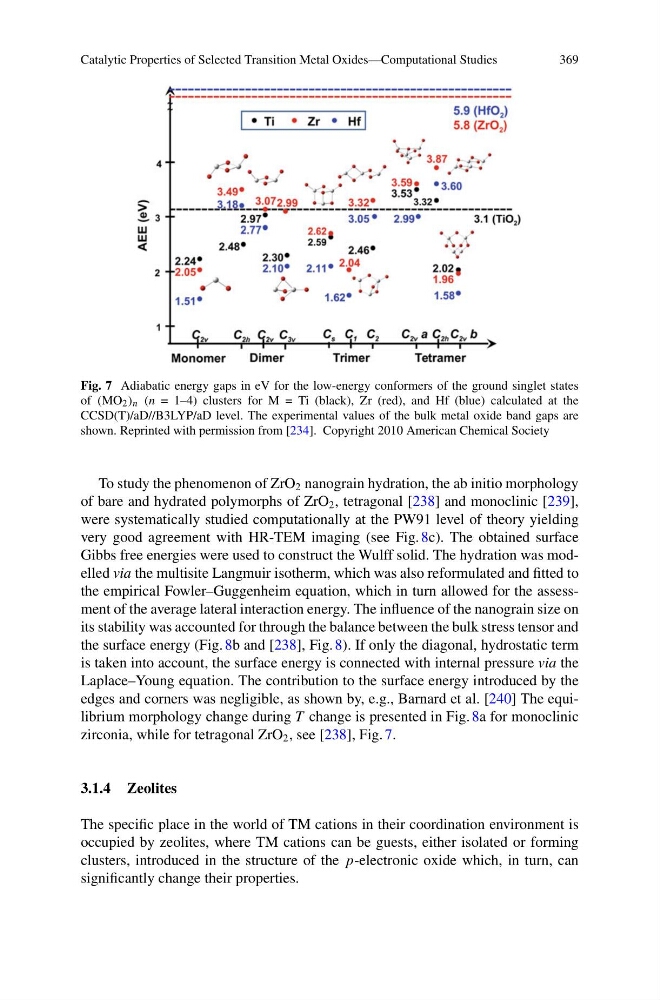
Fig. 7 Adiabatic energy gaps in eV for the low-energy conformers of the ground singlet states
of (MO 2 ) n (n = 1–4) clusters for M = Ti (black), Zr (red), and Hf (blue) calculated at the
CCSD(T)/aD//B3LYP/aD level. The experimental values of the bulk metal oxide band gaps are
shown. Reprinted with permission from [234]. Copyright 2010 American Chemical Society
To study the phenomenon of ZrO 2 nanograin hydration, the ab initio morphology
of bare and hydrated polymorphs of ZrO 2 , tetragonal [238] and monoclinic [239],
were systematically studied computationally at the PW91 level of theory yielding
very good agreement with HR-TEM imaging (see Fig. 8c). The obtained surface
Gibbs free energies were used to construct the Wulff solid. The hydration was modelled via the multisite Langmuir isotherm, which was also reformulated and fitted to
the empirical Fowler–Guggenheim equation, which in turn allowed for the assessment of the average lateral interaction energy. The influence of the nanograin size on
its stability was accounted for through the balance between the bulk stress tensor and
the surface energy (Fig. 8b and [238], Fig. 8). If only the diagonal, hydrostatic term
is taken into account, the surface energy is connected with internal pressure via the
Laplace–Young equation. The contribution to the surface energy introduced by the
edges and corners was negligible, as shown by, e.g., Barnard et al. [240] The equilibrium morphology change during T change is presented in Fig. 8a for monoclinic
zirconia, while for tetragonal ZrO 2 , see [238], Fig. 7.
3.1.4 Zeolites
The specific place in the world of TM cations in their coordination environment is
occupied by zeolites, where TM cations can be guests, either isolated or forming
clusters, introduced in the structure of the p-electronic oxide which, in turn, can
significantly change their properties.
369
Fig. 7 Adiabatic energy gaps in eV for the low-energy conformers of the ground singlet states
of (MO 2 ) n (n = 1–4) clusters for M = Ti (black), Zr (red), and Hf (blue) calculated at the
CCSD(T)/aD//B3LYP/aD level. The experimental values of the bulk metal oxide band gaps are
shown. Reprinted with permission from [234]. Copyright 2010 American Chemical Society
To study the phenomenon of ZrO 2 nanograin hydration, the ab initio morphology
of bare and hydrated polymorphs of ZrO 2 , tetragonal [238] and monoclinic [239],
were systematically studied computationally at the PW91 level of theory yielding
very good agreement with HR-TEM imaging (see Fig. 8c). The obtained surface
Gibbs free energies were used to construct the Wulff solid. The hydration was modelled via the multisite Langmuir isotherm, which was also reformulated and fitted to
the empirical Fowler–Guggenheim equation, which in turn allowed for the assessment of the average lateral interaction energy. The influence of the nanograin size on
its stability was accounted for through the balance between the bulk stress tensor and
the surface energy (Fig. 8b and [238], Fig. 8). If only the diagonal, hydrostatic term
is taken into account, the surface energy is connected with internal pressure via the
Laplace–Young equation. The contribution to the surface energy introduced by the
edges and corners was negligible, as shown by, e.g., Barnard et al. [240] The equilibrium morphology change during T change is presented in Fig. 8a for monoclinic
zirconia, while for tetragonal ZrO 2 , see [238], Fig. 7.
3.1.4 Zeolites
The specific place in the world of TM cations in their coordination environment is
occupied by zeolites, where TM cations can be guests, either isolated or forming
clusters, introduced in the structure of the p-electronic oxide which, in turn, can
significantly change their properties.