

3.2.2 Metal-Heterocycle Polymer Gels
Various heterocycle-based briding ligands have been employed to develop metal–
organic gels, such as pyridine, imidazole, triazole, pyrazole, tetrazole and others.
These ligands are also widely used in coordination chemistry [73].
A series of bridging dipyridyl gelators have been developed with the aid of
amide/urea H-bonding motifs [74–77] or long alkyl/oligoether oxide chain [78–80].
Bhattacharya and co-workers reported that p-pyridyl ended oligophenylenevinylene
57 (Scheme 3.13) forms gels selectively with Cu
2+ among a variety of transition
metal cations [78]. The driving forces of gelation include metal ion coordination,
p–p interactions and interdigitation of the oxyethylene chains through the van der
Waals interactions (Fig. 3.21). The position of the pyridyl N-atom in the molecular
backbone is vital to gelation. The resulting gel is injectable and also shows multistimuli responsiveness, including thixotropy. The reversible nature of the gel–sol
transition is also demonstrated using Cu
2+ /Cu
+ redox chemistry in the presence of
sodium L-ascorbate and O 2 . Ajayaghosh and co-workers reported an oligo
(p-phenylenevinylene) derivative connected to pyridyl end groups through an
amide linkage (58, Scheme 3.13) [79]. Addition of Ag
+ ions to a solution of 58
facilitates the formation of a metal–organic assembly leading to gelation.
Bridging ditrizolyl gelators 59 (Scheme 3.13) with amide H-bonding motif have
been developed by Escuder and co-workers [80]. 59 are able to form
self-sustainable gels in alcohols and H 2 O. On the other hand, Cu
+ gels are prepared
by heating the copper salt [Cu(MeCN) 4 ]PF 6 together with the gelator 59 in a 1:2
ratio, until complete dissolution, followed by sonication, via the CuN 4 coordination
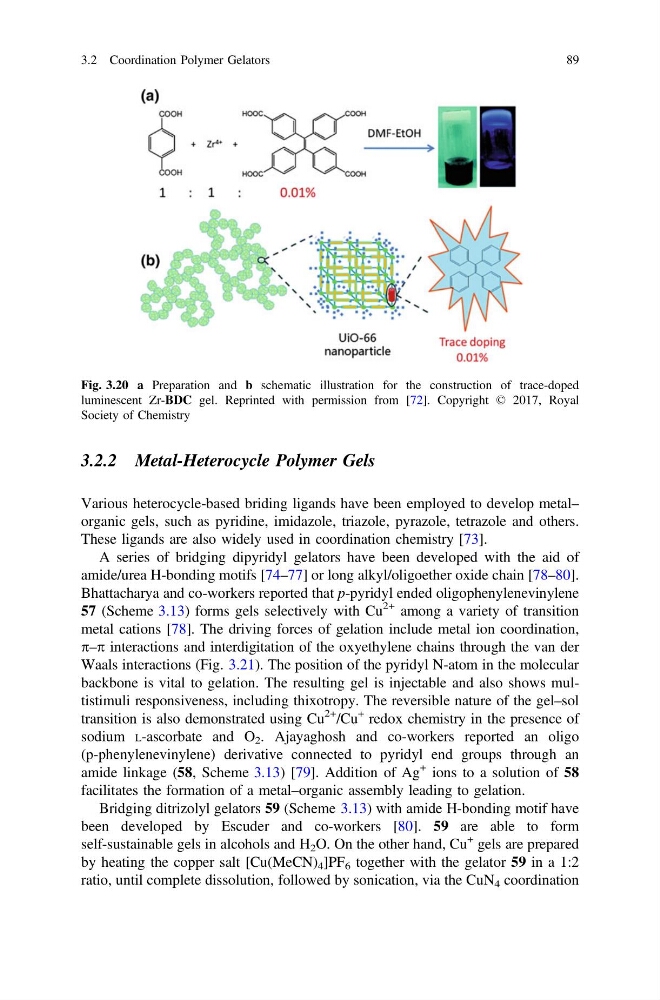
Fig. 3.20 a Preparation and b schematic illustration for the construction of trace-doped
luminescent Zr-BDC gel. Reprinted with permission from [72]. Copyright © 2017, Royal
Society of Chemistry
3.2 Coordination Polymer Gelators
89
Various heterocycle-based briding ligands have been employed to develop metal–
organic gels, such as pyridine, imidazole, triazole, pyrazole, tetrazole and others.
These ligands are also widely used in coordination chemistry [73].
A series of bridging dipyridyl gelators have been developed with the aid of
amide/urea H-bonding motifs [74–77] or long alkyl/oligoether oxide chain [78–80].
Bhattacharya and co-workers reported that p-pyridyl ended oligophenylenevinylene
57 (Scheme 3.13) forms gels selectively with Cu
2+ among a variety of transition
metal cations [78]. The driving forces of gelation include metal ion coordination,
p–p interactions and interdigitation of the oxyethylene chains through the van der
Waals interactions (Fig. 3.21). The position of the pyridyl N-atom in the molecular
backbone is vital to gelation. The resulting gel is injectable and also shows multistimuli responsiveness, including thixotropy. The reversible nature of the gel–sol
transition is also demonstrated using Cu
2+ /Cu
+ redox chemistry in the presence of
sodium L-ascorbate and O 2 . Ajayaghosh and co-workers reported an oligo
(p-phenylenevinylene) derivative connected to pyridyl end groups through an
amide linkage (58, Scheme 3.13) [79]. Addition of Ag
+ ions to a solution of 58
facilitates the formation of a metal–organic assembly leading to gelation.
Bridging ditrizolyl gelators 59 (Scheme 3.13) with amide H-bonding motif have
been developed by Escuder and co-workers [80]. 59 are able to form
self-sustainable gels in alcohols and H 2 O. On the other hand, Cu
+ gels are prepared
by heating the copper salt [Cu(MeCN) 4 ]PF 6 together with the gelator 59 in a 1:2
ratio, until complete dissolution, followed by sonication, via the CuN 4 coordination
Fig. 3.20 a Preparation and b schematic illustration for the construction of trace-doped
luminescent Zr-BDC gel. Reprinted with permission from [72]. Copyright © 2017, Royal
Society of Chemistry
3.2 Coordination Polymer Gelators
89