

mechanism has been proposed for this unusual metal–organic system based on the
known structure. In a metal–organic system, amorphous coordination polymers
usually result in fast reaction, while crystalline metal–organic frameworks are
prepared by slow assembly. The reaction is influenced by reaction conditions such
as the metal-to-ligand ratio, anion, solvent and concentration used. Temperature is
the most important factor for the growth of coordination polymer nanoparticles. If
the concentration is appropriate, with suitable surface tension in a certain solvent,
coordination polymer nanoparticles can be stabilized and further to form gel based
on coordination polymer particles [52].
The above metal–organic gels formed by H 3 BTC and trivalent metal ions represent a major category of metal–organic gels. It has been extended into many metal
ions and carboxylic acid derivatives. Tetravalent and divalent metal ions show
ability to coordinate with bridging carboxylic acids to form gel as well. For
OH
O
NH
O
O
HN
O
OH
O
NH
O
OH
48
O
O
O
OH
OH
HO
H 3 BTC
HO O
OH
O
H 2 BDC
O OH
HO O
H 2 Ox
O
OH
O OH
47
O
O
O
O
COOH
HOOC
- OOC
COO
-
2Et 3 NH
+
49
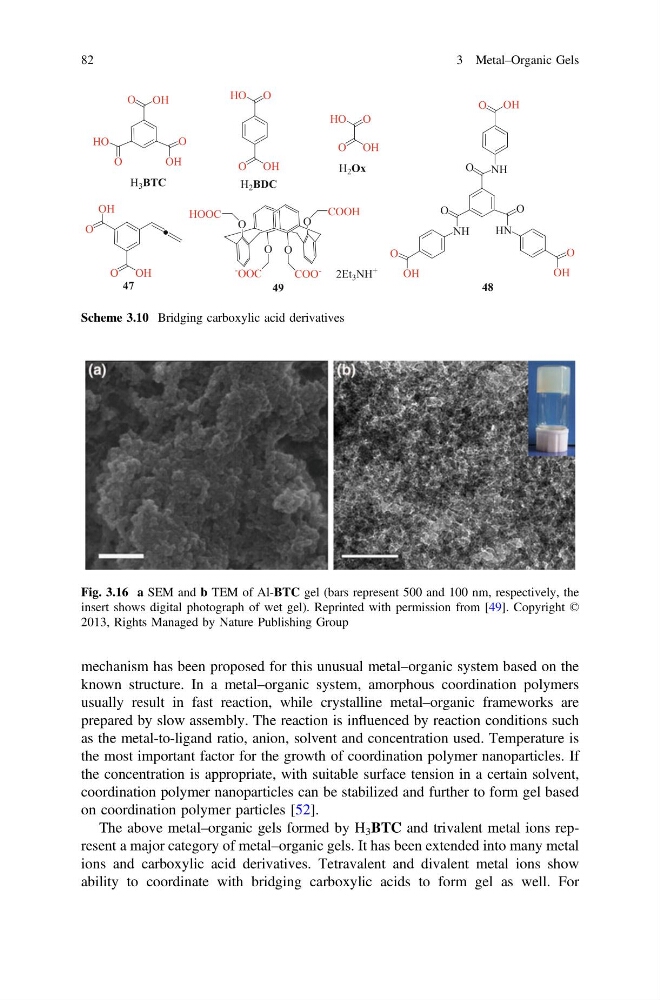
Scheme 3.10 Bridging carboxylic acid derivatives
Fig. 3.16 a SEM and b TEM of Al-BTC gel (bars represent 500 and 100 nm, respectively, the
insert shows digital photograph of wet gel). Reprinted with permission from [49]. Copyright ©
2013, Rights Managed by Nature Publishing Group
82
3 Metal–Organic Gels
known structure. In a metal–organic system, amorphous coordination polymers
usually result in fast reaction, while crystalline metal–organic frameworks are
prepared by slow assembly. The reaction is influenced by reaction conditions such
as the metal-to-ligand ratio, anion, solvent and concentration used. Temperature is
the most important factor for the growth of coordination polymer nanoparticles. If
the concentration is appropriate, with suitable surface tension in a certain solvent,
coordination polymer nanoparticles can be stabilized and further to form gel based
on coordination polymer particles [52].
The above metal–organic gels formed by H 3 BTC and trivalent metal ions represent a major category of metal–organic gels. It has been extended into many metal
ions and carboxylic acid derivatives. Tetravalent and divalent metal ions show
ability to coordinate with bridging carboxylic acids to form gel as well. For
OH
O
NH
O
O
HN
O
OH
O
NH
O
OH
48
O
O
O
OH
OH
HO
H 3 BTC
HO O
OH
O
H 2 BDC
O OH
HO O
H 2 Ox
O
OH
O OH
47
O
O
O
O
COOH
HOOC
- OOC
COO
-
2Et 3 NH
+
49
Scheme 3.10 Bridging carboxylic acid derivatives
Fig. 3.16 a SEM and b TEM of Al-BTC gel (bars represent 500 and 100 nm, respectively, the
insert shows digital photograph of wet gel). Reprinted with permission from [49]. Copyright ©
2013, Rights Managed by Nature Publishing Group
82
3 Metal–Organic Gels