

of the relatively far distance from the alkyne chain of 31 to its terpyridyl part, and the
small size of Cl
− compared to other anions, such as Br
− , HCOO
− , (COO) 2
2− , SO 4
2− ,
NO 3
− . Addition of HNO 3 to Zn-31 resulted in a clear solution and gradually yields
crystals within the gel matrix. In the crystals, two protons attach to two terminal
pyridine rings to get terpyridyl moiety [(31)H 2 ]
2+ . A nanocomposite gel is obtained
for Zn-31 capped with Au nanoparticles via alkynyl group. Interestingly, the
nanocomposite gel exhibits superior viscoelastic properties.
Yam and co-workers designed a series of platinum(II) terpyridine complexes
32–35 (Scheme 3.7) with L-valine-modified alkynyl ligands. They show good
capability of gel formation in MeCN [40]. Hydrogen-bonding interactions between
the chiral valine moities help the platinum
2+ -terpyridine parts align into a helical
arrangement in the gel state and the PtÁÁÁPt interactions, p–p stacking interactions
lead to the close proximity of these Pt
2+ terpyridine parts, then further strengthen
the gel.
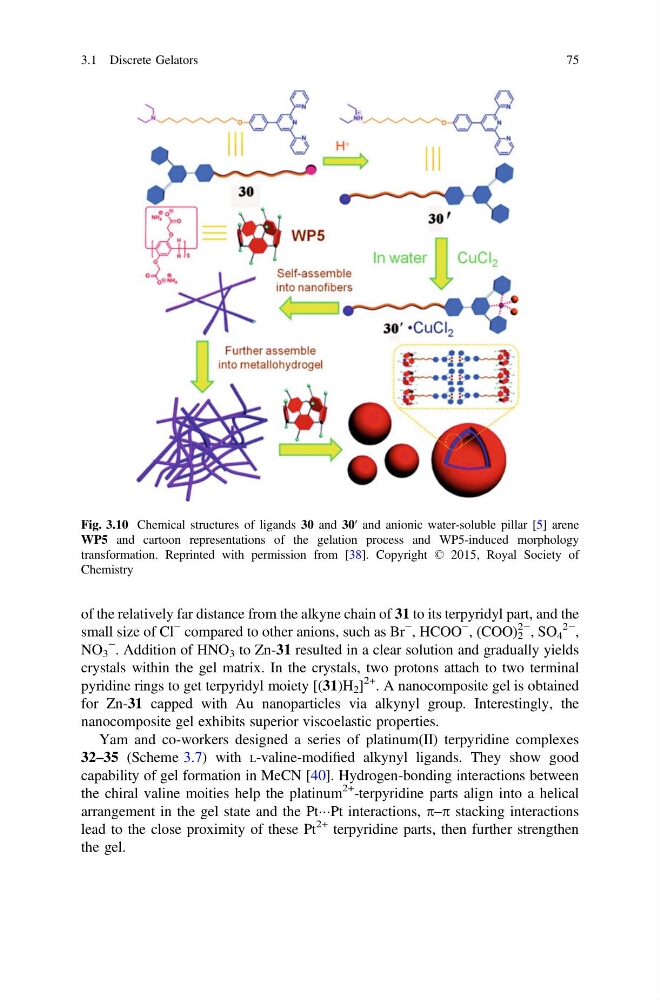
Fig. 3.10 Chemical structures of ligands 30 and 30′ and anionic water-soluble pillar [5] arene
WP5 and cartoon representations of the gelation process and WP5-induced morphology
transformation. Reprinted with permission from [38]. Copyright © 2015, Royal Society of
Chemistry
3.1 Discrete Gelators
75
small size of Cl
− compared to other anions, such as Br
− , HCOO
− , (COO) 2
2− , SO 4
2− ,
NO 3
− . Addition of HNO 3 to Zn-31 resulted in a clear solution and gradually yields
crystals within the gel matrix. In the crystals, two protons attach to two terminal
pyridine rings to get terpyridyl moiety [(31)H 2 ]
2+ . A nanocomposite gel is obtained
for Zn-31 capped with Au nanoparticles via alkynyl group. Interestingly, the
nanocomposite gel exhibits superior viscoelastic properties.
Yam and co-workers designed a series of platinum(II) terpyridine complexes
32–35 (Scheme 3.7) with L-valine-modified alkynyl ligands. They show good
capability of gel formation in MeCN [40]. Hydrogen-bonding interactions between
the chiral valine moities help the platinum
2+ -terpyridine parts align into a helical
arrangement in the gel state and the PtÁÁÁPt interactions, p–p stacking interactions
lead to the close proximity of these Pt
2+ terpyridine parts, then further strengthen
the gel.
Fig. 3.10 Chemical structures of ligands 30 and 30′ and anionic water-soluble pillar [5] arene
WP5 and cartoon representations of the gelation process and WP5-induced morphology
transformation. Reprinted with permission from [38]. Copyright © 2015, Royal Society of
Chemistry
3.1 Discrete Gelators
75