

Quinolinol-functionalized L-glutamide 10 also forms fluorescent metal–organic
gels with Li
+
, Zn
2+ , and Al
3+ in organic solvents [12]. SEM indicates that all metal
gelator molecules self-assembled into fine nanofibres in THF. From the result of
XRD, 10-Li
+ may form bilayers with the interdigitation of the alkyl chains, like
many other L-glutamide gels do; while both of Zn(10) 2 and Al 2 (10) 3 gels form a
layered structure by strong hydrogen bonding interaction, p–p stacking of the
quinolinol rings, and hydrophobic interaction from the interdigitated adjacent aliphatic alkyl tails. The Zn(10) 2 gel exhibits different fluorescence changes between
enantiomeric (R,R)- and (S,S)-1,2-diaminocyclohexane realizing visible chiral
recognition of (S,S)-1,2-diaminocyclohexane.
Xu and co-workers fabricated metallo-hydrogelator 11 (Scheme 3.4) of tripeptide derivative with bipyridine moiety [13]. The intermolecular aromatic–aromatic
interactions of 11 from the overlapping of phenyl and/or naphthyl groups lead to the
supramolecular chains. And the other amide groups and hydroxyl groups contribute
to the formation of hydrogen bonds with water molecules except for the
intramolecular hydrogen bonds formed by amide groups and hydroxyl groups of
11. These interactions make sure that the supramolecular chains are able to hold a
considerable amount of water, even at a quiet low molecular density. The redox
change of the ruthenium metal centre of 11 resulted in a gel–sol transition. The
self-assembled structure of 11 in water changed with the redox change of Ru. With
the tripeptide motifs, 11 is cell compatible at a relatively high concentration, so the
nanofibres of 11 are able to enter the cells (Fig. 3.5).
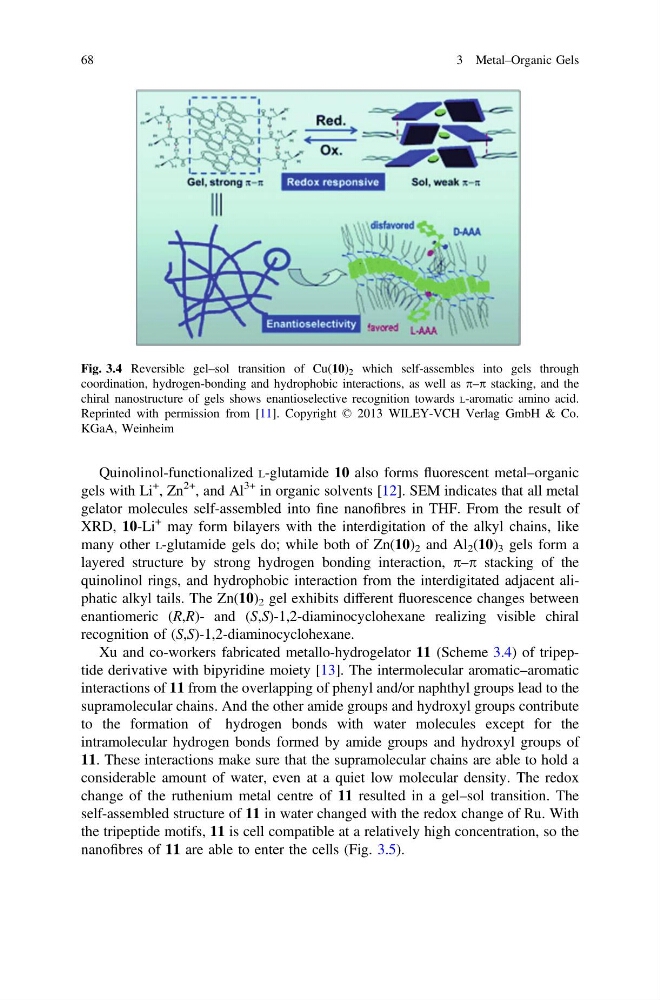
Fig. 3.4 Reversible gel–sol transition of Cu(10) 2 which self-assembles into gels through
coordination, hydrogen-bonding and hydrophobic interactions, as well as p–p stacking, and the
chiral nanostructure of gels shows enantioselective recognition towards L-aromatic amino acid.
Reprinted with permission from [11]. Copyright © 2013 WILEY-VCH Verlag GmbH & Co.
KGaA, Weinheim
68
3 Metal–Organic Gels
gels with Li
+
, Zn
2+ , and Al
3+ in organic solvents [12]. SEM indicates that all metal
gelator molecules self-assembled into fine nanofibres in THF. From the result of
XRD, 10-Li
+ may form bilayers with the interdigitation of the alkyl chains, like
many other L-glutamide gels do; while both of Zn(10) 2 and Al 2 (10) 3 gels form a
layered structure by strong hydrogen bonding interaction, p–p stacking of the
quinolinol rings, and hydrophobic interaction from the interdigitated adjacent aliphatic alkyl tails. The Zn(10) 2 gel exhibits different fluorescence changes between
enantiomeric (R,R)- and (S,S)-1,2-diaminocyclohexane realizing visible chiral
recognition of (S,S)-1,2-diaminocyclohexane.
Xu and co-workers fabricated metallo-hydrogelator 11 (Scheme 3.4) of tripeptide derivative with bipyridine moiety [13]. The intermolecular aromatic–aromatic
interactions of 11 from the overlapping of phenyl and/or naphthyl groups lead to the
supramolecular chains. And the other amide groups and hydroxyl groups contribute
to the formation of hydrogen bonds with water molecules except for the
intramolecular hydrogen bonds formed by amide groups and hydroxyl groups of
11. These interactions make sure that the supramolecular chains are able to hold a
considerable amount of water, even at a quiet low molecular density. The redox
change of the ruthenium metal centre of 11 resulted in a gel–sol transition. The
self-assembled structure of 11 in water changed with the redox change of Ru. With
the tripeptide motifs, 11 is cell compatible at a relatively high concentration, so the
nanofibres of 11 are able to enter the cells (Fig. 3.5).
Fig. 3.4 Reversible gel–sol transition of Cu(10) 2 which self-assembles into gels through
coordination, hydrogen-bonding and hydrophobic interactions, as well as p–p stacking, and the
chiral nanostructure of gels shows enantioselective recognition towards L-aromatic amino acid.
Reprinted with permission from [11]. Copyright © 2013 WILEY-VCH Verlag GmbH & Co.
KGaA, Weinheim
68
3 Metal–Organic Gels