

of the Cu
+ ions ensures Cu
2+ ions appear again and the gel reformed. Moreover, the
supramolecular chirality and morphology also changed reversibly with the gel–sol
transition. Also, this gel recognizes enantio selectively towards chiral aromatic
amino acids. The addition of type aromatic amino acids to Cu(10) 2 gel leads to the
release of free 10 molecules while D-type enantiomers does not.
HN
N
O
O
N
NH
O
Ag
HN
N
O
O
HN
N
O
O
Ag
N
NH
O
O
Ag
O
hydrophobic
interaction
Ag
HN
N
O
O
Ag
H
H
H
O
π−π stacking
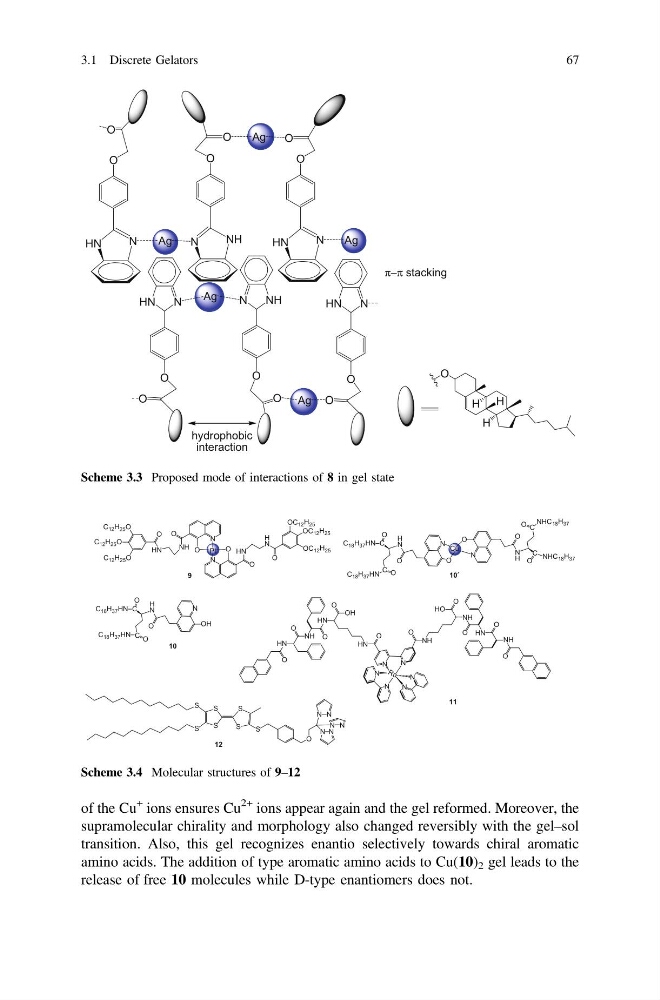
Scheme 3.3 Proposed mode of interactions of 8 in gel state
OH
N
H
N
O
C
C
C 18 H 37 HN
O
C 18 H 37 HN
O
N
O Pt
N
O
NH
O
O
HN
H
N
O
OC 12 H 25
OC 12 H 25
OC 12 H 25
9
HN
O
C 12 H 25 O
C 12 H 25 O
C 12 H 25 O
10
N
O
Cu
O
N
N
H
O
C
C
NHC 18 H 37
O
NHC 18 H 37
O
H
N
O
C
C
C 18 H 37 HN
O
C 18 H 37 HN
O
10′
HN
O
NH
O
HN
O
O
OH
HN
O
N
N
R u
N
N
N
N
NH
O
HN
O
NH
O
O
HO
NH
O
11
S
S
S
S
S
S
S
O
N
N
N
N
N
N
12
Scheme 3.4 Molecular structures of 9–12
3.1 Discrete Gelators
67
+ ions ensures Cu
2+ ions appear again and the gel reformed. Moreover, the
supramolecular chirality and morphology also changed reversibly with the gel–sol
transition. Also, this gel recognizes enantio selectively towards chiral aromatic
amino acids. The addition of type aromatic amino acids to Cu(10) 2 gel leads to the
release of free 10 molecules while D-type enantiomers does not.
HN
N
O
O
N
NH
O
Ag
HN
N
O
O
HN
N
O
O
Ag
N
NH
O
O
Ag
O
hydrophobic
interaction
Ag
HN
N
O
O
Ag
H
H
H
O
π−π stacking
Scheme 3.3 Proposed mode of interactions of 8 in gel state
OH
N
H
N
O
C
C
C 18 H 37 HN
O
C 18 H 37 HN
O
N
O Pt
N
O
NH
O
O
HN
H
N
O
OC 12 H 25
OC 12 H 25
OC 12 H 25
9
HN
O
C 12 H 25 O
C 12 H 25 O
C 12 H 25 O
10
N
O
Cu
O
N
N
H
O
C
C
NHC 18 H 37
O
NHC 18 H 37
O
H
N
O
C
C
C 18 H 37 HN
O
C 18 H 37 HN
O
10′
HN
O
NH
O
HN
O
O
OH
HN
O
N
N
R u
N
N
N
N
NH
O
HN
O
NH
O
O
HO
NH
O
11
S
S
S
S
S
S
S
O
N
N
N
N
N
N
12
Scheme 3.4 Molecular structures of 9–12
3.1 Discrete Gelators
67