

wide range of solvents. Absorption bands were shifted to longer wavelength in the
gel (orange) than in the solution (yellow) due to the columnar p-stacking. The gels
show interesting emission behaviour. The difference in luminescence intensity in
O 2 -saturated conditions and in Ar-saturated conditions was less in the gels than in
solutions, showing that there is indeed protection from quenching by the formation
of gel filaments insulated by peripheral alkoxy groups.
Liu and co-workers reported 8-quinolinol-containing l-glutamic lipid 10
(Scheme 3.4) and found that its derivative with Cu
2+ ions (Cu(10) 2 ) had powerful
gelation ability in low-polar solvents [11]. PXRD exhibited that the alkyl chains of
the complex gelated in an interdigitated or inclined manner. Comparing with the
bilayer structure of ligand 10, the complex showed a monolayer structure. Instead
of intermolecular hydrogen-bonding interaction in 10 gels, the Cu
2+ gels gelated by
coordination interactions between the Cu
2+ ions and the quinolinol head-groups
(Fig. 3.4). Moreover, the square coordination mode of Cu
2+ atoms could enhance
the p–p stacking of the quinolinol rings. A reversible gel–sol phase transition of the
Cu
2+ gels occurred after redox stimuli. Because after reduction, the central Cu
2+
ions change into Cu
+ ions which causes a decrease in p–p stacking between the
adjacent molecules and as a result, the gel collapses into a sol. While the oxidation
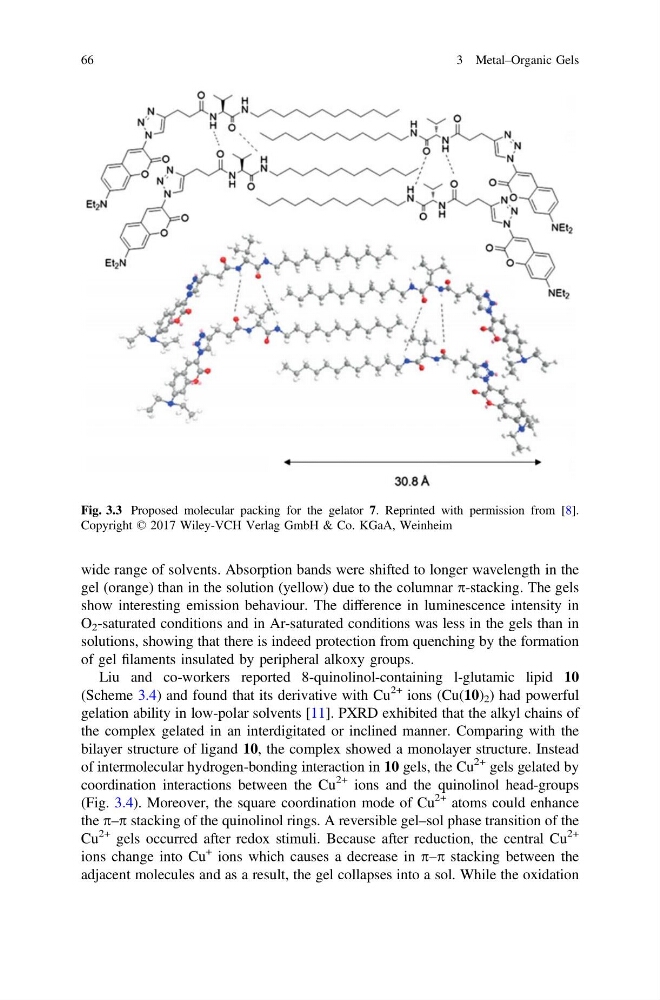
Fig. 3.3 Proposed molecular packing for the gelator 7. Reprinted with permission from [8].
Copyright © 2017 Wiley-VCH Verlag GmbH & Co. KGaA, Weinheim
66
3 Metal–Organic Gels
gel (orange) than in the solution (yellow) due to the columnar p-stacking. The gels
show interesting emission behaviour. The difference in luminescence intensity in
O 2 -saturated conditions and in Ar-saturated conditions was less in the gels than in
solutions, showing that there is indeed protection from quenching by the formation
of gel filaments insulated by peripheral alkoxy groups.
Liu and co-workers reported 8-quinolinol-containing l-glutamic lipid 10
(Scheme 3.4) and found that its derivative with Cu
2+ ions (Cu(10) 2 ) had powerful
gelation ability in low-polar solvents [11]. PXRD exhibited that the alkyl chains of
the complex gelated in an interdigitated or inclined manner. Comparing with the
bilayer structure of ligand 10, the complex showed a monolayer structure. Instead
of intermolecular hydrogen-bonding interaction in 10 gels, the Cu
2+ gels gelated by
coordination interactions between the Cu
2+ ions and the quinolinol head-groups
(Fig. 3.4). Moreover, the square coordination mode of Cu
2+ atoms could enhance
the p–p stacking of the quinolinol rings. A reversible gel–sol phase transition of the
Cu
2+ gels occurred after redox stimuli. Because after reduction, the central Cu
2+
ions change into Cu
+ ions which causes a decrease in p–p stacking between the
adjacent molecules and as a result, the gel collapses into a sol. While the oxidation
Fig. 3.3 Proposed molecular packing for the gelator 7. Reprinted with permission from [8].
Copyright © 2017 Wiley-VCH Verlag GmbH & Co. KGaA, Weinheim
66
3 Metal–Organic Gels