

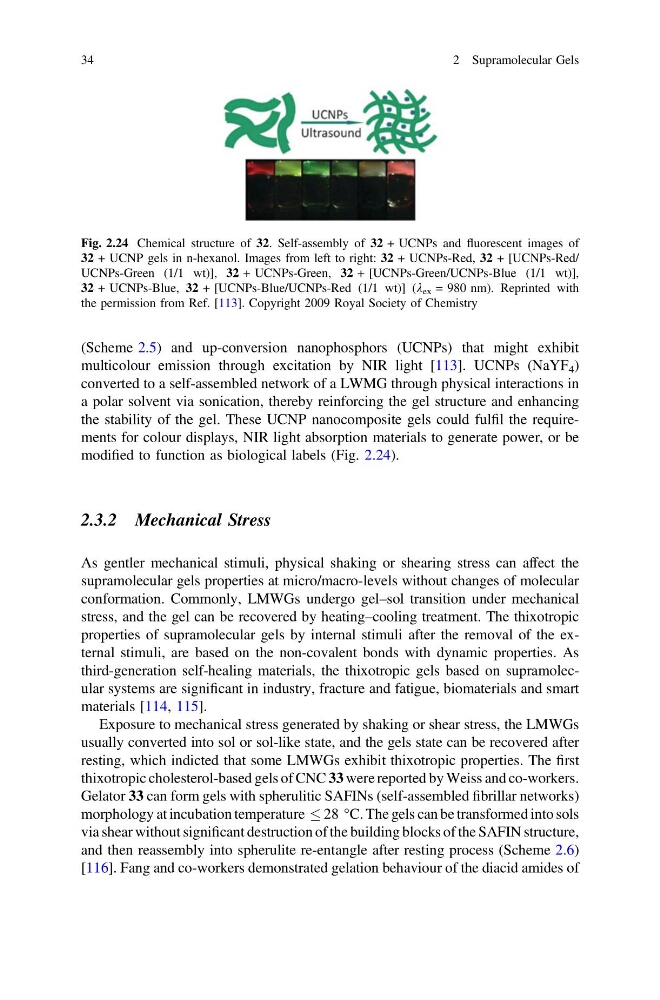
(Scheme 2.5) and up-conversion nanophosphors (UCNPs) that might exhibit
multicolour emission through excitation by NIR light [113]. UCNPs (NaYF 4 )
converted to a self-assembled network of a LWMG through physical interactions in
a polar solvent via sonication, thereby reinforcing the gel structure and enhancing
the stability of the gel. These UCNP nanocomposite gels could fulfil the requirements for colour displays, NIR light absorption materials to generate power, or be
modified to function as biological labels (Fig. 2.24).
2.3.2 Mechanical Stress
As gentler mechanical stimuli, physical shaking or shearing stress can affect the
supramolecular gels properties at micro/macro-levels without changes of molecular
conformation. Commonly, LMWGs undergo gel–sol transition under mechanical
stress, and the gel can be recovered by heating–cooling treatment. The thixotropic
properties of supramolecular gels by internal stimuli after the removal of the external stimuli, are based on the non-covalent bonds with dynamic properties. As
third-generation self-healing materials, the thixotropic gels based on supramolecular systems are significant in industry, fracture and fatigue, biomaterials and smart
materials [114, 115].
Exposure to mechanical stress generated by shaking or shear stress, the LMWGs
usually converted into sol or sol-like state, and the gels state can be recovered after
resting, which indicted that some LMWGs exhibit thixotropic properties. The first
thixotropic cholesterol-based gels of CNC 33 were reported by Weiss and co-workers.
Gelator 33 can form gels with spherulitic SAFINs (self-assembled fibrillar networks)
morphology at incubation temperature 28 °C. The gels can be transformed into sols
via shear without significant destruction of the building blocks of the SAFIN structure,
and then reassembly into spherulite re-entangle after resting process (Scheme 2.6)
[116]. Fang and co-workers demonstrated gelation behaviour of the diacid amides of
Fig. 2.24 Chemical structure of 32. Self-assembly of 32 + UCNPs and fluorescent images of
32 + UCNP gels in n-hexanol. Images from left to right: 32 + UCNPs-Red, 32 + [UCNPs-Red/
UCNPs-Green (1/1 wt)], 32 + UCNPs-Green, 32 + [UCNPs-Green/UCNPs-Blue (1/1 wt)],
32 + UCNPs-Blue, 32 + [UCNPs-Blue/UCNPs-Red (1/1 wt)] (k ex = 980 nm). Reprinted with
the permission from Ref. [113]. Copyright 2009 Royal Society of Chemistry
34
2 Supramolecular Gels
multicolour emission through excitation by NIR light [113]. UCNPs (NaYF 4 )
converted to a self-assembled network of a LWMG through physical interactions in
a polar solvent via sonication, thereby reinforcing the gel structure and enhancing
the stability of the gel. These UCNP nanocomposite gels could fulfil the requirements for colour displays, NIR light absorption materials to generate power, or be
modified to function as biological labels (Fig. 2.24).
2.3.2 Mechanical Stress
As gentler mechanical stimuli, physical shaking or shearing stress can affect the
supramolecular gels properties at micro/macro-levels without changes of molecular
conformation. Commonly, LMWGs undergo gel–sol transition under mechanical
stress, and the gel can be recovered by heating–cooling treatment. The thixotropic
properties of supramolecular gels by internal stimuli after the removal of the external stimuli, are based on the non-covalent bonds with dynamic properties. As
third-generation self-healing materials, the thixotropic gels based on supramolecular systems are significant in industry, fracture and fatigue, biomaterials and smart
materials [114, 115].
Exposure to mechanical stress generated by shaking or shear stress, the LMWGs
usually converted into sol or sol-like state, and the gels state can be recovered after
resting, which indicted that some LMWGs exhibit thixotropic properties. The first
thixotropic cholesterol-based gels of CNC 33 were reported by Weiss and co-workers.
Gelator 33 can form gels with spherulitic SAFINs (self-assembled fibrillar networks)
morphology at incubation temperature 28 °C. The gels can be transformed into sols
via shear without significant destruction of the building blocks of the SAFIN structure,
and then reassembly into spherulite re-entangle after resting process (Scheme 2.6)
[116]. Fang and co-workers demonstrated gelation behaviour of the diacid amides of
Fig. 2.24 Chemical structure of 32. Self-assembly of 32 + UCNPs and fluorescent images of
32 + UCNP gels in n-hexanol. Images from left to right: 32 + UCNPs-Red, 32 + [UCNPs-Red/
UCNPs-Green (1/1 wt)], 32 + UCNPs-Green, 32 + [UCNPs-Green/UCNPs-Blue (1/1 wt)],
32 + UCNPs-Blue, 32 + [UCNPs-Blue/UCNPs-Red (1/1 wt)] (k ex = 980 nm). Reprinted with
the permission from Ref. [113]. Copyright 2009 Royal Society of Chemistry
34
2 Supramolecular Gels