

2.2.2 Coupling Reactions
2.2.2.1 Diacetylenes
In recent years, the self-assembly of diacetylene derivatives has attracted much
attention due to the covalent fixation of supramolecular assembly of polydiacetylenes by photopolymerization reactions. Diacetylene gelators are particularly
interesting because the gel network can be permanently supported by the formation
of covalent cross-links between gelator molecules under photoirradiation conditions, which is generally stabilized by non-covalent interactions. And the morphological characteristics are retained with the increasing of the stiffness and
thermal stability of the gels, which indicates that the polymerization is generally
irreversible [69, 70]. One popular application of gel-based polymerization is to
fabricate conductive arrays of conjugated p bonds. Néabo and co-workers reported
that a toluene gel 18 comprising columnar stacks realized topochemical coupling
upon photoirradiation, and the reaction takes place at solvent-free condition. The
rigid and highly extended p network is achieved by the polymerization and represents a lower optical band gap than its linear counterpart and provides the
potential strategy for preparing low-bandgap nanowires (Fig. 2.12) [71].
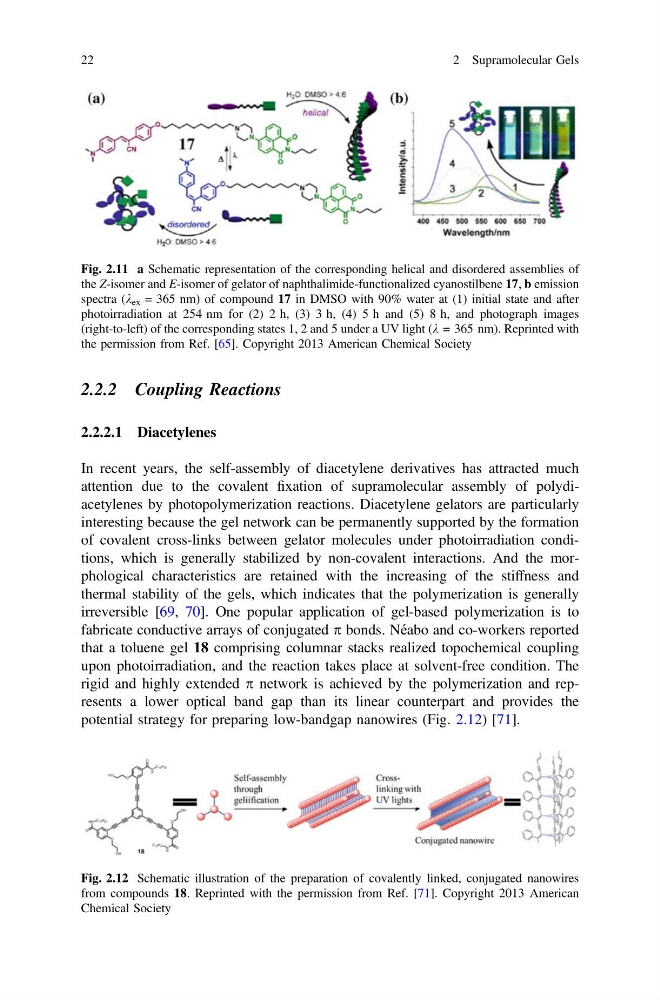
Fig. 2.11 a Schematic representation of the corresponding helical and disordered assemblies of
the Z-isomer and E-isomer of gelator of naphthalimide-functionalized cyanostilbene 17, b emission
spectra (k ex = 365 nm) of compound 17 in DMSO with 90% water at (1) initial state and after
photoirradiation at 254 nm for (2) 2 h, (3) 3 h, (4) 5 h and (5) 8 h, and photograph images
(right-to-left) of the corresponding states 1, 2 and 5 under a UV light (k = 365 nm). Reprinted with
the permission from Ref. [65]. Copyright 2013 American Chemical Society
Fig. 2.12 Schematic illustration of the preparation of covalently linked, conjugated nanowires
from compounds 18. Reprinted with the permission from Ref. [71]. Copyright 2013 American
Chemical Society
22
2 Supramolecular Gels
2.2.2.1 Diacetylenes
In recent years, the self-assembly of diacetylene derivatives has attracted much
attention due to the covalent fixation of supramolecular assembly of polydiacetylenes by photopolymerization reactions. Diacetylene gelators are particularly
interesting because the gel network can be permanently supported by the formation
of covalent cross-links between gelator molecules under photoirradiation conditions, which is generally stabilized by non-covalent interactions. And the morphological characteristics are retained with the increasing of the stiffness and
thermal stability of the gels, which indicates that the polymerization is generally
irreversible [69, 70]. One popular application of gel-based polymerization is to
fabricate conductive arrays of conjugated p bonds. Néabo and co-workers reported
that a toluene gel 18 comprising columnar stacks realized topochemical coupling
upon photoirradiation, and the reaction takes place at solvent-free condition. The
rigid and highly extended p network is achieved by the polymerization and represents a lower optical band gap than its linear counterpart and provides the
potential strategy for preparing low-bandgap nanowires (Fig. 2.12) [71].
Fig. 2.11 a Schematic representation of the corresponding helical and disordered assemblies of
the Z-isomer and E-isomer of gelator of naphthalimide-functionalized cyanostilbene 17, b emission
spectra (k ex = 365 nm) of compound 17 in DMSO with 90% water at (1) initial state and after
photoirradiation at 254 nm for (2) 2 h, (3) 3 h, (4) 5 h and (5) 8 h, and photograph images
(right-to-left) of the corresponding states 1, 2 and 5 under a UV light (k = 365 nm). Reprinted with
the permission from Ref. [65]. Copyright 2013 American Chemical Society
Fig. 2.12 Schematic illustration of the preparation of covalently linked, conjugated nanowires
from compounds 18. Reprinted with the permission from Ref. [71]. Copyright 2013 American
Chemical Society
22
2 Supramolecular Gels