

species and the pH of the liquid medium [13]. Different nanoparticles can be
interconnected into extended 3D networks through further condensation reactions
between the alkoxyl and hydroxyl groups on the particle surfaces. The resulting
silicon alkoxide-based gel has been extensively used as a matrix to encapsulate cells
in the area of biotechnology [14]. However, the application in cell encapsulation is
limited by the pH adaptability of the silica gel structures [15]. The activity of
intracellular enzymes of cells is significantly reduced while the gels are formed in
an acidic solution. If the pH of the solution is adjusted to neutral prior to encapsulating cells, the gel structures may suffer from lack of diffusion leading to weak
structural controllability.
To improve the encapsulation ability of silica gels while maintaining the
bioactivity of guest bio-organisms, Mutlu and co-workers developed a novel silica
gel based on silica nanoparticles cross-linked by silicon alkoxide molecules [16].
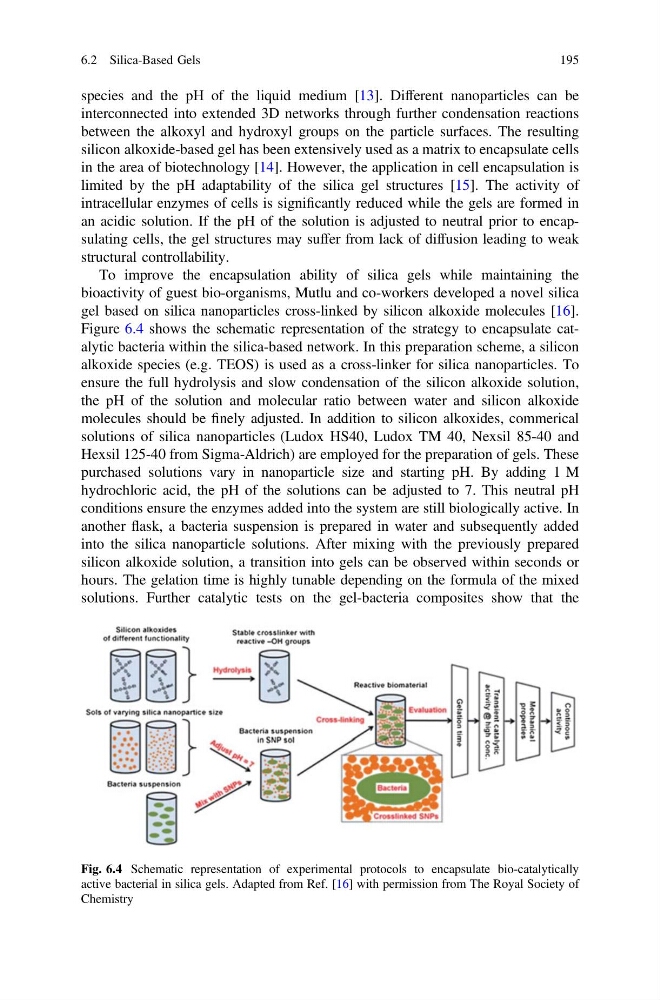
Figure 6.4 shows the schematic representation of the strategy to encapsulate catalytic bacteria within the silica-based network. In this preparation scheme, a silicon
alkoxide species (e.g. TEOS) is used as a cross-linker for silica nanoparticles. To
ensure the full hydrolysis and slow condensation of the silicon alkoxide solution,
the pH of the solution and molecular ratio between water and silicon alkoxide
molecules should be finely adjusted. In addition to silicon alkoxides, commerical
solutions of silica nanoparticles (Ludox HS40, Ludox TM 40, Nexsil 85-40 and
Hexsil 125-40 from Sigma-Aldrich) are employed for the preparation of gels. These
purchased solutions vary in nanoparticle size and starting pH. By adding 1 M
hydrochloric acid, the pH of the solutions can be adjusted to 7. This neutral pH
conditions ensure the enzymes added into the system are still biologically active. In
another flask, a bacteria suspension is prepared in water and subsequently added
into the silica nanoparticle solutions. After mixing with the previously prepared
silicon alkoxide solution, a transition into gels can be observed within seconds or
hours. The gelation time is highly tunable depending on the formula of the mixed
solutions. Further catalytic tests on the gel-bacteria composites show that the
Fig. 6.4 Schematic representation of experimental protocols to encapsulate bio-catalytically
active bacterial in silica gels. Adapted from Ref. [16] with permission from The Royal Society of
Chemistry
6.2 Silica-Based Gels
195
interconnected into extended 3D networks through further condensation reactions
between the alkoxyl and hydroxyl groups on the particle surfaces. The resulting
silicon alkoxide-based gel has been extensively used as a matrix to encapsulate cells
in the area of biotechnology [14]. However, the application in cell encapsulation is
limited by the pH adaptability of the silica gel structures [15]. The activity of
intracellular enzymes of cells is significantly reduced while the gels are formed in
an acidic solution. If the pH of the solution is adjusted to neutral prior to encapsulating cells, the gel structures may suffer from lack of diffusion leading to weak
structural controllability.
To improve the encapsulation ability of silica gels while maintaining the
bioactivity of guest bio-organisms, Mutlu and co-workers developed a novel silica
gel based on silica nanoparticles cross-linked by silicon alkoxide molecules [16].
Figure 6.4 shows the schematic representation of the strategy to encapsulate catalytic bacteria within the silica-based network. In this preparation scheme, a silicon
alkoxide species (e.g. TEOS) is used as a cross-linker for silica nanoparticles. To
ensure the full hydrolysis and slow condensation of the silicon alkoxide solution,
the pH of the solution and molecular ratio between water and silicon alkoxide
molecules should be finely adjusted. In addition to silicon alkoxides, commerical
solutions of silica nanoparticles (Ludox HS40, Ludox TM 40, Nexsil 85-40 and
Hexsil 125-40 from Sigma-Aldrich) are employed for the preparation of gels. These
purchased solutions vary in nanoparticle size and starting pH. By adding 1 M
hydrochloric acid, the pH of the solutions can be adjusted to 7. This neutral pH
conditions ensure the enzymes added into the system are still biologically active. In
another flask, a bacteria suspension is prepared in water and subsequently added
into the silica nanoparticle solutions. After mixing with the previously prepared
silicon alkoxide solution, a transition into gels can be observed within seconds or
hours. The gelation time is highly tunable depending on the formula of the mixed
solutions. Further catalytic tests on the gel-bacteria composites show that the
Fig. 6.4 Schematic representation of experimental protocols to encapsulate bio-catalytically
active bacterial in silica gels. Adapted from Ref. [16] with permission from The Royal Society of
Chemistry
6.2 Silica-Based Gels
195