

position of the Diels–Alder equilibrium to the reformation of furan and maleimide.
As the equilibrium of the Diels–Alder reactions is dependent on temperature, the
release rate of bound moieties from the hydrogel is also thermally controlled.
Elevated temperatures favour the retro-Diels–Alder reaction and therefore increase
the rate and quantity of molecules released from the hydrogel networks.
A large number of dynamic covalent cross-linked gels involving radical species
have been developed [71–74]. Exemplary work includes the polymer gel developed
by Su and co-workers in which dynamic covalent C–O bonds based on alkoxyamine functional groups are involved in the side chains (Fig. 5.19) [71]. As
adducts of styryl radicals and 2,2,6,6-tetramethylpiperidine 1-oxyl, alkoxyamine
functional groups undergo reversible covalent cross-linking to produce gel networks. Chemical equilibrium between the alkoxyamines and radicals as dormant
and active species, respectively, is reached over 60 °C. The radical reaction of
alkoxyamine functional groups is tolerant of water, organic solvents and many
functional groups rendering wide applicability of the polymer reaction. The hydrophilic polymers with radically exchangeable alkoxyamine units are prepared by
copolymerization of 2-(dimethylamino)ethyl methacrylate and methacrylic esters
and subsequent protonation of dimethylaminoethyl groups. Heating the polymers in
water at 100 °C in closed system leads to gelation. The cross-linking of the
alkoxyamine-containing polymers via the radical exchange reaction is the main
reason for the gelation. Following the cross-linking reaction, the gel network can be
de-cross-linked by heating with an excess amount of alkoxyamines. The
de-cross-linking of the polymer gel is initiated by the radical exchange reaction
between the cross-linked polymer chains and the added alkoxyamines.
Figure 5.20 illustrates dynamic covalent gels produced through the radical
exchange reaction of diarylbibenzofuranone (DABBF) units [72]. The polymer
cross-linked by DABBF units is prepared by the polyaddition of DABBF and a
toluene-2,4-diisocyanate-terminated poly(propylene glycol) (M n = 2400). The
cross-linked polymer is de-cross-linked in DMF in air at room temperature by
adding an excessive amount of DABBF. After 24 h, a THF-soluble high molecular
weight component of linear polymers and/or cross-linked oligomers is obtained.
CH2NCH2
CH2NCH2
C
m
H3C
O
N
O
O
O
n
O
C
O
CH2NCH2
CH2NCH2
n
m
C
H3C
O
+
CH2NCH2
CH2NCH2
C
m
H3C
O
N
O
O
n
C
O
CH2NCH2
CH2NCH2
n
m
C
H3C
O
O
O
Bulk film
RT, 7 d
Swollen
or dilute
> 80
o
C
> 2 h
Diene-modifided
polyoxazoline
Dienophile-modifided
polyoxazoline
Polyoxazoline gel
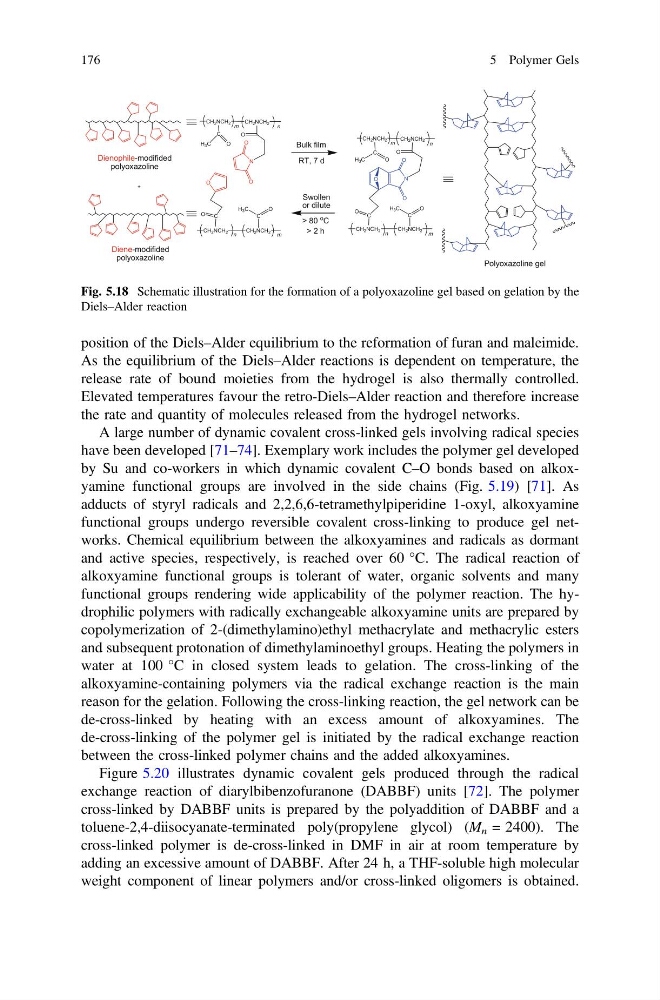
Fig. 5.18 Schematic illustration for the formation of a polyoxazoline gel based on gelation by the
Diels–Alder reaction
176
5 Polymer Gels
As the equilibrium of the Diels–Alder reactions is dependent on temperature, the
release rate of bound moieties from the hydrogel is also thermally controlled.
Elevated temperatures favour the retro-Diels–Alder reaction and therefore increase
the rate and quantity of molecules released from the hydrogel networks.
A large number of dynamic covalent cross-linked gels involving radical species
have been developed [71–74]. Exemplary work includes the polymer gel developed
by Su and co-workers in which dynamic covalent C–O bonds based on alkoxyamine functional groups are involved in the side chains (Fig. 5.19) [71]. As
adducts of styryl radicals and 2,2,6,6-tetramethylpiperidine 1-oxyl, alkoxyamine
functional groups undergo reversible covalent cross-linking to produce gel networks. Chemical equilibrium between the alkoxyamines and radicals as dormant
and active species, respectively, is reached over 60 °C. The radical reaction of
alkoxyamine functional groups is tolerant of water, organic solvents and many
functional groups rendering wide applicability of the polymer reaction. The hydrophilic polymers with radically exchangeable alkoxyamine units are prepared by
copolymerization of 2-(dimethylamino)ethyl methacrylate and methacrylic esters
and subsequent protonation of dimethylaminoethyl groups. Heating the polymers in
water at 100 °C in closed system leads to gelation. The cross-linking of the
alkoxyamine-containing polymers via the radical exchange reaction is the main
reason for the gelation. Following the cross-linking reaction, the gel network can be
de-cross-linked by heating with an excess amount of alkoxyamines. The
de-cross-linking of the polymer gel is initiated by the radical exchange reaction
between the cross-linked polymer chains and the added alkoxyamines.
Figure 5.20 illustrates dynamic covalent gels produced through the radical
exchange reaction of diarylbibenzofuranone (DABBF) units [72]. The polymer
cross-linked by DABBF units is prepared by the polyaddition of DABBF and a
toluene-2,4-diisocyanate-terminated poly(propylene glycol) (M n = 2400). The
cross-linked polymer is de-cross-linked in DMF in air at room temperature by
adding an excessive amount of DABBF. After 24 h, a THF-soluble high molecular
weight component of linear polymers and/or cross-linked oligomers is obtained.
CH2NCH2
CH2NCH2
C
m
H3C
O
N
O
O
O
n
O
C
O
CH2NCH2
CH2NCH2
n
m
C
H3C
O
+
CH2NCH2
CH2NCH2
C
m
H3C
O
N
O
O
n
C
O
CH2NCH2
CH2NCH2
n
m
C
H3C
O
O
O
Bulk film
RT, 7 d
Swollen
or dilute
> 80
o
C
> 2 h
Diene-modifided
polyoxazoline
Dienophile-modifided
polyoxazoline
Polyoxazoline gel
Fig. 5.18 Schematic illustration for the formation of a polyoxazoline gel based on gelation by the
Diels–Alder reaction
176
5 Polymer Gels