

Pratihar and co-workers reported Cu
II -imine complex 30, in which tunable
access of a vacant coordination site for a guest metal via stereoelectronic modulation of a substituent is possible (Scheme 4.9) [20]. 30 is thus utilized as a metalloligand for the formation of a heterobimetallic Cu
2+ /Hg
2+ gel in MeOH. The
gelation property of 30 is dependent upon Hg
2+ content. Initially, a yellow gel was
obtained by adding 4–7 equiv. Hg
2+ and it transforms into a green gel with addition
of a higher equivalent (>8 equiv.) of Hg(OAc) 2 . The as-synthesized heterobimetallic Cu
2+ /Hg
2+ gel shows an excellent ability as a reusable material for the
adsorption of various cationic as well as anionic dyes.
Prasad and co-workers showed that poly(aryl ether) dendron derivative 31 with
pyridine units attached by an acylhydrazone linkage is an efficient gelator with Ag
+
and Cu
2+ ions in THF (Scheme 4.10) [21]. The resulting lamellar metallogel is
assembled through hydrogen bonding between dendron monomers and pyridinemetal ion coordination. In contrast, compound 32 showed partial gel formation due
to steric hindrance, which prevented effective coordination with the metal ions and
intramolecular hydrogen bonding. Silver ions in the Ag
+ gel of 31 can be reduced
in situ leading to the formation of silver nanoparticles without any external reducing
agent/UV light irradiation. In this process, the gels played roles of both reducing
agents and good host systems for stabilizing silver nanoparticles.
Some dynamic covalent gels’ formation does not need to be assisted by metal ions,
but these gels show stimuli-responsive property towards metal ions and may find
potential applications in various fields. Qi, Zhang and co-workers reported a series of
bimetal-acylhydrazone supramolecular gel based on 33 for sensing (Scheme 4.11)
[22]. 33 was synthesized by the condensation of 1-naphthaldehyde and 3,4,5-tris
(hexadecyloxy)benzohydrazide, and 33 showed excellent gelation ability in various
solvents, and among these solvents, 33 showed the lowest critical gelation concentrations and the highest gel–sol transition temperature T gel in EtOH. Hydrogen
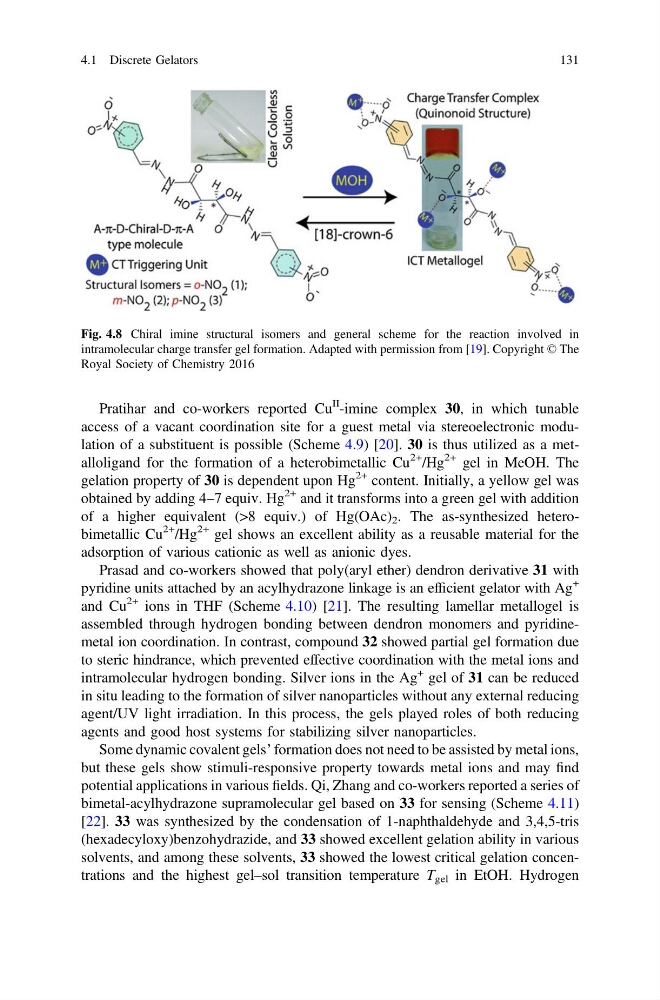
Fig. 4.8 Chiral imine structural isomers and general scheme for the reaction involved in
intramolecular charge transfer gel formation. Adapted with permission from [19]. Copyright © The
Royal Society of Chemistry 2016
4.1 Discrete Gelators
131
II -imine complex 30, in which tunable
access of a vacant coordination site for a guest metal via stereoelectronic modulation of a substituent is possible (Scheme 4.9) [20]. 30 is thus utilized as a metalloligand for the formation of a heterobimetallic Cu
2+ /Hg
2+ gel in MeOH. The
gelation property of 30 is dependent upon Hg
2+ content. Initially, a yellow gel was
obtained by adding 4–7 equiv. Hg
2+ and it transforms into a green gel with addition
of a higher equivalent (>8 equiv.) of Hg(OAc) 2 . The as-synthesized heterobimetallic Cu
2+ /Hg
2+ gel shows an excellent ability as a reusable material for the
adsorption of various cationic as well as anionic dyes.
Prasad and co-workers showed that poly(aryl ether) dendron derivative 31 with
pyridine units attached by an acylhydrazone linkage is an efficient gelator with Ag
+
and Cu
2+ ions in THF (Scheme 4.10) [21]. The resulting lamellar metallogel is
assembled through hydrogen bonding between dendron monomers and pyridinemetal ion coordination. In contrast, compound 32 showed partial gel formation due
to steric hindrance, which prevented effective coordination with the metal ions and
intramolecular hydrogen bonding. Silver ions in the Ag
+ gel of 31 can be reduced
in situ leading to the formation of silver nanoparticles without any external reducing
agent/UV light irradiation. In this process, the gels played roles of both reducing
agents and good host systems for stabilizing silver nanoparticles.
Some dynamic covalent gels’ formation does not need to be assisted by metal ions,
but these gels show stimuli-responsive property towards metal ions and may find
potential applications in various fields. Qi, Zhang and co-workers reported a series of
bimetal-acylhydrazone supramolecular gel based on 33 for sensing (Scheme 4.11)
[22]. 33 was synthesized by the condensation of 1-naphthaldehyde and 3,4,5-tris
(hexadecyloxy)benzohydrazide, and 33 showed excellent gelation ability in various
solvents, and among these solvents, 33 showed the lowest critical gelation concentrations and the highest gel–sol transition temperature T gel in EtOH. Hydrogen
Fig. 4.8 Chiral imine structural isomers and general scheme for the reaction involved in
intramolecular charge transfer gel formation. Adapted with permission from [19]. Copyright © The
Royal Society of Chemistry 2016
4.1 Discrete Gelators
131